
Paul Ryazanov on the Next Evolution of AI: Turning Business Knowledge Into Customer Intelligence

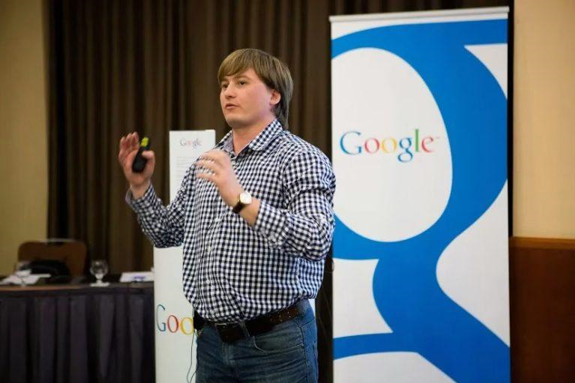
The Ukrainian-born technology entrepreneur and international speaker is exploring how artificial intelligence can help businesses preserve institutional knowledge, strengthen customer relationships and unlock new opportunities for growth.
Artificial intelligence is changing how businesses operate, but the next major opportunity may not be in generating more content or automating individual tasks. It may lie in something companies have struggled with for decades: understanding and maintaining relationships with their customers.
For Paul Ryazanov, a UK-based technology entrepreneur with more than 20 years of experience in digital technology, this challenge represents a fundamental shift in how businesses should approach AI.
Having worked across software development, digital infrastructure, business technology and commercial growth, Ryazanov has witnessed several generations of technological transformation. Today, his focus is on how artificial intelligence can connect fragmented business knowledge, support commercial decision-making and help organisations build stronger customer relationships.
As the founder of Comerix.ai, an emerging AI Relationship Intelligence Platform, Ryazanov is developing an approach that moves beyond conventional customer relationship management and task-based automation.
His work also extends into international technology conferences, technical research, industry mentoring and community initiatives aimed at helping businesses understand the practical implications of emerging technologies.
The Hidden Problem Behind Digital Transformation
Over the past two decades, companies have invested heavily in digital platforms, customer relationship management systems, analytics and automation.
Yet despite this investment, much of the information businesses generate remains disconnected.
Sales conversations are stored in email inboxes. Customer questions are handled through support systems. Commercial agreements sit in separate documents. Product knowledge is distributed across databases, websites and individual employees.
As businesses grow, these disconnected sources of information become increasingly difficult to manage.
Ryazanov believes this fragmentation represents one of the most overlooked barriers to business growth.
A company may have thousands of previous customer interactions, years of sales history and extensive internal expertise, yet still struggle to identify the next relevant action for a customer.
The challenge becomes even more significant when experienced employees leave an organisation, taking valuable relationship knowledge and commercial context with them.
For Ryazanov, the opportunity for AI is not simply to accelerate existing workflows, but to help businesses retain, interpret and act on the knowledge they have already accumulated.
From Customer Relationship Management to Relationship Intelligence
Traditional CRM systems have transformed the way businesses record customer information, manage sales pipelines and track interactions.
However, recording information and making intelligent use of it are two different challenges.
Ryazanov describes the distinction through a principle guiding his current work:
“CRMs record what happened. Comerix helps decide what should happen next.”
This thinking forms the foundation of Comerix.ai, a technology platform designed to help companies preserve customer relationships, transform business knowledge into sales opportunities and develop AI-powered sales and customer engagement capabilities.
The concept brings together customer interactions, organisational knowledge and artificial intelligence to support more informed commercial decisions.
Potential applications range from identifying previously overlooked sales opportunities to helping employees retrieve relevant business information and enabling AI-powered assistants to answer complex customer questions.
Rather than positioning AI as a replacement for human relationships, Ryazanov’s approach focuses on using technology to strengthen them.
The distinction matters because businesses often measure digital transformation through operational efficiency, while the longer-term value of AI may increasingly depend on its ability to improve customer experience, retention and revenue generation.
Why AI Needs to Understand the Business, Not Just the Question
One of the limitations of general-purpose AI tools is their lack of access to the full context in which businesses operate.
An AI assistant may generate a convincing response, but without reliable access to company-specific knowledge, customer history, product information and operational rules, its usefulness can be limited.
For businesses dealing with complex products, long sales cycles or technical customer enquiries, context is particularly important.
Ryazanov’s work explores how AI systems can combine organisational knowledge with information from customer interactions to provide more relevant responses and identify appropriate next steps.
This requires more than connecting a chatbot to a website.
Businesses must consider how their knowledge is structured, which information can be trusted, how customer data is accessed and where human oversight remains necessary.
These challenges also highlight the growing importance of reliable data architecture and governance in AI adoption.
For Ryazanov, successful implementation begins with understanding the business problem and the quality of the information available to solve it.
Investigating How AI Is Changing Digital Discovery
Beyond customer relationship technology, Ryazanov has contributed to industry discussions about the impact of AI on online discovery and digital commerce.
As AI-powered search systems become more prominent, businesses face new questions about how their information is accessed, interpreted and presented by automated systems.
Ryazanov’s technical work has examined how search engines and AI crawlers interact with large e-commerce websites, particularly those containing extensive product catalogues and complex infrastructure.
Traditional optimisation approaches often focus on content, metadata and search rankings. However, technical factors such as server response behaviour, information architecture, crawl accessibility and product-data structure can also influence whether automated systems can retrieve useful information.
These issues become especially relevant as AI systems increasingly act as intermediaries between businesses and potential customers.
Through his conference presentations and workshops, Ryazanov has explored the limitations of conventional AI visibility measurement and the importance of examining real crawler behaviour rather than relying exclusively on third-party visibility scores.
His approach reflects a broader principle in his work: emerging technologies should be evaluated through technical evidence and practical business outcomes, not simply through industry enthusiasm.
Bringing Practical Technology Research to International Audiences
Ryazanov is also an active international speaker, sharing insights on digital technology, artificial intelligence, technical SEO and business growth.
His speaking experience includes events such as Pubcon in the United States, Conversion Conference in Las Vegas, BrightonSEO in the United Kingdom and other international industry gatherings.
His presentations focus on translating complex technological developments into practical considerations for business owners, technical teams and digital professionals.
Recent topics have included AI-powered discovery, technical infrastructure, e-commerce platform optimisation and the role of artificial intelligence in customer engagement.
An important part of his contribution is connecting technical research with commercial applications.
Rather than presenting AI exclusively as a future possibility, his work examines how businesses can assess current capabilities, identify limitations and determine where investment is justified.
This perspective is particularly relevant as organisations face increasing pressure to adopt AI without always having a clear understanding of its operational requirements or potential return on investment.
Supporting Entrepreneurs and Building Industry Communities
Alongside his technology work, Ryazanov contributes to the professional community through mentoring and industry events.
As a mentor on GrowthMentor, he shares practical experience with entrepreneurs and business leaders navigating technology decisions, commercial challenges and business growth.
He is also the founder of Ecommerce Camp UK, a community initiative connecting e-commerce founders, technology specialists and business operators.
The initiative creates opportunities for practitioners to share experience, discuss emerging technologies and examine real-world implementation challenges.
Its events bring together people working directly with business systems and technology, creating a forum for exchanging knowledge beyond conventional commercial presentations.
For Ryazanov, these activities complement his work as a technology entrepreneur by creating opportunities to test ideas, learn from other practitioners and contribute to the wider professional community.
The Next Stage of AI Will Be Measured by Business Outcomes
As AI adoption accelerates, businesses are beginning to move beyond experimentation toward more demanding questions about implementation, reliability and measurable results.
For Ryazanov, the next phase of AI development will require companies to rethink how they manage information and relationships.
Automating repetitive work may improve efficiency, but the greater opportunity lies in connecting business knowledge with intelligent systems that can help people make better decisions.
This transition also presents challenges. AI systems must work with reliable information, respect data access boundaries and operate within business processes where accountability remains clear.
Organisations that address these foundations may be better positioned to use AI as part of their long-term technology infrastructure rather than as a collection of disconnected tools.
Ryazanov’s current work with Comerix.ai reflects this direction, bringing together his experience in technology architecture, commercial systems and customer engagement.
After more than two decades working through successive waves of digital transformation, his focus is increasingly on a question that will shape the next generation of business software:
How can companies use artificial intelligence not only to work faster, but to become better at understanding, serving and retaining their customers?







Comment