
Otabeg Azizov Built an International Enrollment System for Ukrainian Universities. Now He Is Bringing It to the U.S.


A conversation about what it actually takes to recruit international students from Central Asia and Turkey, and why most American universities have never tried.
According to the Institute of International Education, U.S. universities enrolled more than 1.1 million international students in the 2023 to 2024 academic year. The country is one of the top three destinations for students globally. And yet the distribution of where those students come from has barely shifted in a decade: China and India together account for roughly 54% of all enrollments, with much of the rest concentrated in South Korea, Canada, and a handful of other markets.
Central Asia, Turkey, and the post-Soviet states barely register, despite producing significant numbers of students who pursue degrees abroad. The infrastructure simply does not exist on the American side.
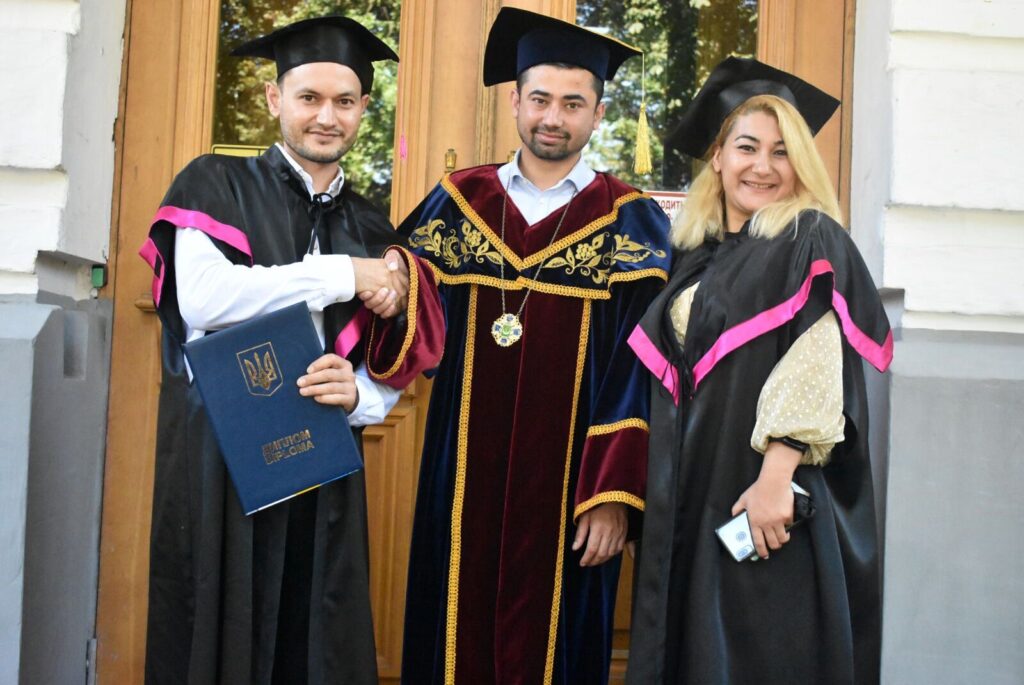
Otabeg Azizov spent the better part of a decade building that infrastructure, not for American universities, but for a Ukrainian one. Between 2019 and 2022, as part of the international education department at Petro Vasylenko Kharkiv National Technical University of Agriculture, he helped grow the institution’s foreign enrollment from roughly 300 students to nearly 800. In 2021, the Ukrainian Ministry of Education and Science recognized his work by name and recommended his recruitment framework for use across the national higher education system.
The war ended that chapter. He is now based in Florida, working to apply the same system to U.S. universities. We sat down with him to understand what the model actually involves, and how it holds up outside Ukraine.
On the Gap in the U.S. Market
The numbers on international enrollment concentration are striking. But universities have had access to those numbers for years. Why hasn’t the market shifted?
Inertia and infrastructure. Recruiting from China or India works because the pipeline already exists: agents, test prep centers, institutional relationships, visa processing experience on both sides. No one had to build that from scratch; it evolved over decades. For Central Asia or Ukraine, none of that infrastructure is in place for American institutions. You cannot simply decide to recruit from Uzbekistan and expect results in a year. It requires formal agreements with universities and government education bodies, local representatives who are trusted in those communities, admissions workflows that account for different credential systems, and support structures for students once they arrive. Most schools look at that list and move on to easier problems.
That sounds like an argument for why it is hard, not necessarily why it is worth doing.
The case is straightforward. These are large, educated populations with growing demand for international degrees and limited access to quality options. Uzbekistan alone has over 37 million people. Kazakhstan is building out a university system that still sends substantial numbers of students abroad. Turkey consistently ranks among the top fifteen source countries for international students globally, and most of that enrollment goes to Europe, not the U.S. The opportunity cost of not being in these markets is real, and it compounds over time as those relationships build in someone else’s direction.
On the System He Built
You have described your model as a framework. What does that mean in practice?
It means treating international enrollment as an organizational problem rather than a marketing one. The failure mode at most universities is to hire a recruiter and send them to fairs. That produces some results, but it does not scale and it does not sustain. What scales is building the institutional infrastructure: agreements with partner universities abroad, standardized admissions processes that can handle different credential types, regulatory compliance workflows on both the sending and receiving ends, and integration support for students after arrival. Each layer depends on the one below it.
The 167% enrollment figure gets cited as evidence the system works. But that is a single institution over three years during a period of expansion. How much of that is the system and how much is timing?
That is a fair challenge. I cannot isolate the variables perfectly. What I can say is that the university’s enrollment was declining before 2019, not growing, and that the growth tracked directly with the implementation of specific changes: the partnership agreements we signed, the agent network we built and vetted, the integration support we put in place. When a student enrolled from Turkmenistan in 2020 because of a cooperation protocol we signed with their home institution in 2019, that is traceable. The framework was not the only factor, but it was not incidental either.
The failure mode at most universities is to hire a recruiter and send them to fairs. That produces some results, but it does not scale and it does not sustain.
What did not work, or what took longer than expected?
Integration. We underestimated how much friction exists between arriving and actually staying. Students from Turkmenistan or Kazakhstan who had never lived outside a Turkic-speaking environment faced enormous adjustment pressure: language, bureaucracy, social isolation. The admissions side of our framework was solid within eighteen months. The integration layer took closer to three years to get right, and honestly we were still refining it when the invasion made the question moot.
On Rebuilding After the War
The invasion in February 2022 shut down the university’s operations. You had spent years building something that effectively disappeared. What was the practical consequence of that?
The students scattered across Europe, mostly Poland, Germany, Czech Republic. The faculty was suspended. The institutional infrastructure I had built, the agreements, the partner relationships, the compliance systems, none of that had a host anymore. I had founded an education consulting company in Istanbul in 2019 that worked the supply side of the same pipeline, connecting students from Central Asia to Ukrainian universities. That company continued to operate after February 2022, but the destination had collapsed.
And the argument is that the relationships survived even if the institution did not.
That is what I found. The partnership protocols with universities in Turkey and Turkmenistan, the eight years I spent as an external evaluator on thesis committees at WSB University in Poland, the government contacts in Central Asian education ministries, none of that was contingent on one university in Kharkiv remaining open. What turned out to be durable was the human infrastructure: the trust that had been built with specific institutions and specific people over years of direct engagement. That is harder to build than a workflow, and it is also harder to destroy.
What He Is Building in Florida
Azizov is now establishing an international education consulting practice in Florida focused on connecting U.S. universities with students from Central Asia, Turkey, Ukraine, and the broader post-Soviet region. The model he describes is the same framework he developed in Kharkiv: institutional partnership development, structured recruitment through existing networks, admissions pipeline management, and integration support.
Whether the system translates directly is a question he acknowledges he cannot yet answer. Building in Ukraine required navigating Ukrainian immigration law, ministry relationships, and institutional contexts that do not have direct equivalents in the U.S. The American regulatory environment, the structure of financial aid, the expectations of accreditation, all of it is different.
What remains to be seen is whether a framework designed for a specific institutional context can be generalized across a much larger and more diverse market. The enrollment gap is real. The question is whether closing it requires the kind of patient infrastructure-building Azizov describes, or whether the market will eventually solve the problem through simpler means.





Comment