Orthopedic Equipment Trends Surgeons Are Watching in 2027

Orthopedics has always been one of the most technology-driven specialties in medicine, and the pace of change is accelerating. As 2027 approaches, surgeons, hospital administrators, and ambulatory surgery center owners are weighing a wave of new tools that promise greater precision, faster recovery, and better use of limited resources. Some of these technologies have been on the horizon for years and are finally reaching broad adoption. Others are just beginning to move from early adopters into everyday practice. Understanding the major orthopedic surgery equipment trends helps practices plan capital budgets, train their teams, and stay competitive as patient expectations and reimbursement models continue to evolve. Here are the developments surgeons are watching most closely in the year ahead.
Robotics Moves From Novelty to Standard of Care
Robotic-assisted surgery has become one of the defining orthopedic surgery equipment trends of the decade. What began largely in total knee and hip arthroplasty has expanded into partial knees, spine, and increasingly shoulder procedures. Several major implant manufacturers now offer their own robotic platforms, and competition is pushing systems to become smaller, faster to set up, and easier to integrate into existing workflows.
Surgeons evaluating robotics in 2027 are paying attention to:
- Smaller footprints that fit in standard ORs and surgery center suites
- Imageless or reduced imaging workflows that cut preoperative CT requirements
- Open platforms that work with more than one implant brand
- Shorter registration and setup times that protect case volume
- Flexible pricing models, including per procedure and leasing options
The key question has shifted from whether robotics improves precision to whether a specific system improves efficiency, outcomes, and return on investment for a particular practice.
Navigation, Augmented Reality, and AI-Driven Planning
Not every practice needs a full robotic system to benefit from digital precision. Computer-assisted navigation, handheld smart guides, and augmented reality headsets offer many of the same planning and alignment advantages at a lower cost and smaller footprint.
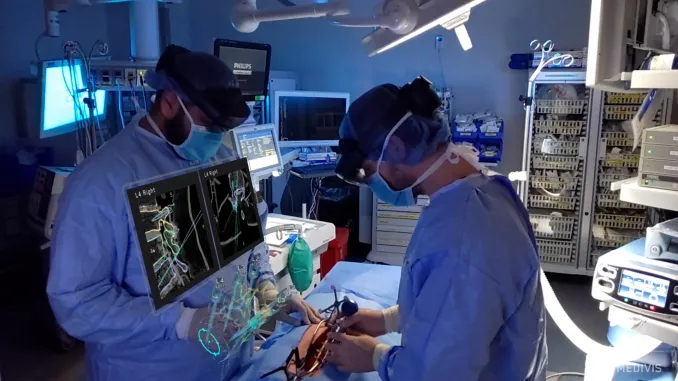
Augmented reality is attracting particular interest in spine and joint replacement. Headsets can overlay a patient’s anatomy, planned screw trajectories, or implant positions directly in the surgeon’s field of view, reducing the need to look away at a separate monitor.
Artificial intelligence is also reshaping preoperative planning. AI tools can segment imaging, suggest implant sizes, predict alignment, and flag patients at higher risk of complications. Areas to watch include:
- Automated 3D models built from standard X-rays rather than CT scans
- Predictive analytics for length of stay and readmission risk
- Planning software that learns from a surgeon’s past cases and outcomes
- Intraoperative feedback on soft tissue balance and component position
As these tools mature, surgeons will need to evaluate how well they integrate with existing imaging and electronic health record systems.
3D Printing and Patient-Specific Solutions
Additive manufacturing has moved well beyond prototyping. Porous titanium implants produced through 3D printing are now common in spine interbody devices and acetabular components, where their lattice structures are designed to encourage bone ingrowth.
Patient-specific solutions are also expanding. Using a patient’s own imaging, manufacturers and hospital-based printing labs can create:
- Custom cutting guides that match individual anatomy
- Anatomical models for complex deformity and trauma planning
- Custom implants for revision cases and significant bone loss
- Tailored fixation plates for unusual fracture patterns
Some academic centers and large health systems are building in-house printing capabilities, which can shorten turnaround times for guides and models. Surgeons watching this space should consider regulatory requirements, quality control processes, and whether the added cost is justified by improved accuracy or reduced OR time.
Smart Implants and Connected Recovery
The relationship between surgeon and patient no longer ends at discharge. Smart implants with embedded sensors can capture data on gait, range of motion, and activity levels, giving surgeons objective insight into how a joint is functioning in daily life.
This trend extends to the broader recovery ecosystem. Wearable sensors, smartphone-based rehabilitation apps, and remote patient monitoring platforms help teams track progress between visits. Benefits surgeons are watching for include:
- Earlier detection of stiffness, infection, or loosening
- Objective recovery data to compare against patient-reported outcomes
- Fewer unnecessary follow-up visits for patients who are progressing well
- Data that supports value-based care and bundled payment programs
Challenges remain, including data security, reimbursement for remote monitoring, and the time needed to review incoming information. Practices that build clear workflows for managing this data will be best positioned to benefit.
The Continued Shift to Ambulatory Surgery Centers
Orthopedic procedures continue to migrate from hospitals to ambulatory surgery centers, driven by patient preference, lower costs, and expanded coverage for outpatient joint replacement and spine procedures. This migration is reshaping equipment priorities.
ASCs typically operate with smaller rooms, leaner staffing, and tighter budgets than hospitals. As a result, they look for equipment that is:
- Compact and mobile, with a small footprint
- Quick to set up and turn over between cases
- Versatile enough to support multiple procedure types
- Available through flexible financing or shared ownership models
Manufacturers are responding with streamlined instrument trays, portable imaging, and robotic systems designed specifically for outpatient settings. Surgical tables, positioning systems, and traction devices that support same-day discharge protocols are also in demand. For surgeons who split time between hospitals and ASCs, consistency of equipment across sites is becoming an important consideration.
Smarter Power Tools, Instruments, and Single-Use Kits
Power tools and instruments may not grab headlines like robotics, but they shape every case. Battery-powered drills, saws, and reamers continue to get lighter, quieter, and more powerful, with improved ergonomics that reduce hand and wrist fatigue for surgeons performing high volumes.
Some systems now include smart features such as torque limiting, depth sensing, and usage tracking that support maintenance planning. Meanwhile, sterile packed single-use instrument kits are gaining traction, especially in ASCs and for procedures such as foot and ankle surgery, hand surgery, and fracture fixation.
Surgeons and administrators are weighing the trade-offs:
- Single-use kits reduce sterile processing workload and turnover time
- Pre-packaged sets can lower the risk of missing or damaged instruments
- Reusable trays may still offer lower cost per case at high volume
- Waste and environmental impact remain important concerns
The right mix often depends on case volume, sterile processing capacity, and procedure type.
Sustainability and Value-Based Purchasing
Cost and environmental responsibility are increasingly part of every equipment conversation. Bundled payments and value-based contracts reward practices that deliver strong outcomes at a predictable cost, which makes total cost of ownership more important than sticker price.
At the same time, health systems are setting sustainability goals and looking closely at operating room waste. Orthopedics, with its heavy instrument sets and implant packaging, is a natural focus. Trends gaining momentum include:
- Reprocessing programs for eligible single-use devices
- Tray rationalization that removes rarely used instruments from sets
- Reduced packaging and recyclable materials from manufacturers
- Vendor contracts tied to outcomes, uptime, and service performance
Surgeon involvement is essential. When surgeons help standardize implants and instruments, facilities can negotiate better pricing, simplify inventory, and reduce waste without compromising care.
Frequently Asked Questions
What are the biggest orthopedic surgery equipment trends for 2027?
The leading trends include robotic-assisted surgery, augmented reality and AI planning tools, 3D-printed and patient-specific implants, smart implants with remote monitoring, ASC-focused equipment, and sustainability-driven purchasing.
Is robotic orthopedic surgery worth the investment?
It depends on case volume, procedure mix, and the pricing model. High volume joint replacement practices are most likely to see a return, while smaller practices may benefit more from navigation or handheld guidance tools.
Are 3D printed implants safe?
Cleared 3D-printed implants undergo the same regulatory review as conventionally manufactured devices. Porous printed titanium components have a growing clinical track record in spine and joint replacement.
What equipment do ASCs need for orthopedic cases?
ASCs typically need compact surgical tables with positioning accessories, portable imaging, efficient power tools, streamlined instrument sets, and in some cases a robotic or navigation platform sized for outpatient use.
How do smart implants help patients?
They provide objective data on recovery, helping surgeons spot problems earlier and tailor rehabilitation without requiring extra office visits.
How can practices prepare for these trends?
Review case volumes, involve surgeons in equipment decisions, request outcome and cost data from vendors, and plan for staff training before adopting new technology.
Looking Ahead: Preparing for the Next Wave
The orthopedic surgery equipment trends shaping 2027 share a common thread: more precision, more data, and more pressure to prove value. Robotics, AI, and patient-specific solutions are improving accuracy, while smart implants and connected recovery tools are extending the surgeon’s view well beyond the operating room. At the same time, the move to outpatient care and the focus on sustainability are forcing every purchase to earn its place.
For surgeons and practice leaders, the smartest approach is deliberate adoption. Start with the clinical problems you want to solve, gather evidence on outcomes and efficiency, involve your whole team in evaluation, and choose partners who will support training and long-term service. Practices that take this thoughtful approach will be ready not only for 2027 but for the innovations that follow.