For businesses, growth often brings an unexpected problem: more software, more data and more processes to manage. As companies expand, keeping finance, sales, inventory, HR and customer operations connected can become as important as managing the business itself.
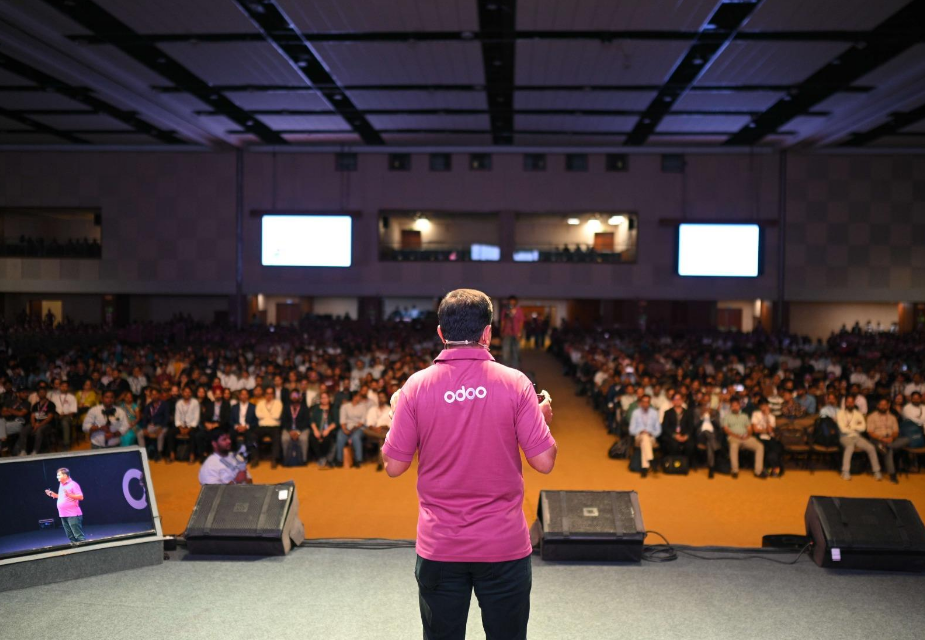
That shift was visible at Odoo Experience 2026, where the latest version, Odoo 20, was showcased alongside a broader look at Odoo’s growth and plans for the coming year. The message was clear: businesses increasingly want fewer disconnected tools, more automation, and technology that understands the context of their daily operations.
The global picture is getting bigger
The company enters the next phase from a position of considerable growth. Its 2026 billing revenue is expected to reach approximately €900 million, up 45%, while its target remains €1 billion in 2027.
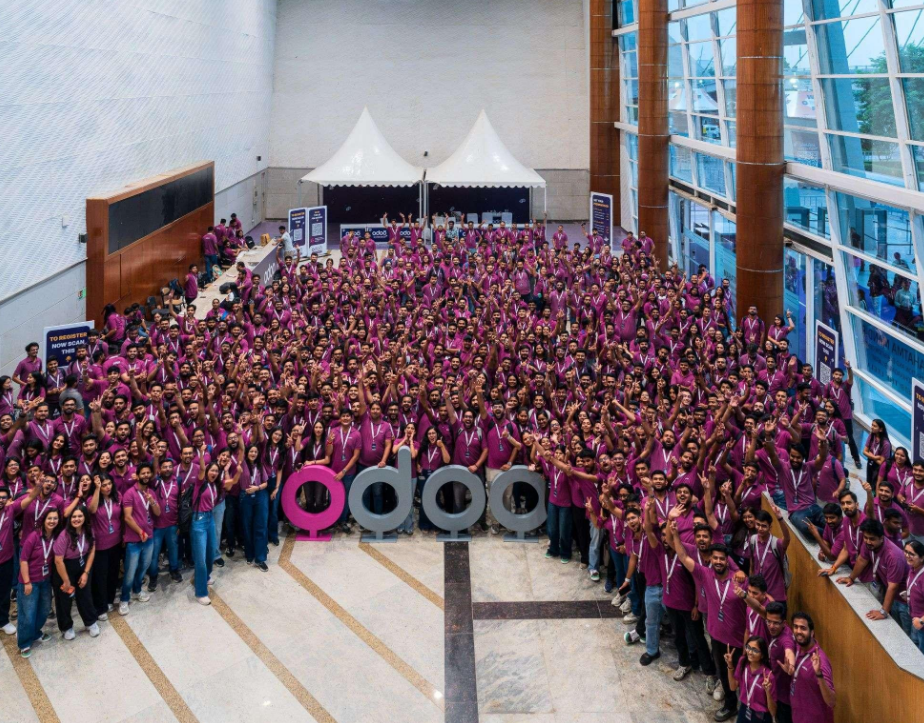
Its workforce has grown to nearly 8,000 people globally, with an ambition to reach 10,000 employees by next year.
For a growing technology company, these numbers also highlight the changing role of ERP software. Businesses are no longer looking only for systems that digitise individual tasks. They increasingly want platforms that can connect different parts of the organisation.
Odoo 20 brings the global and the local together
Odoo 20 covers several core business functions, including CRM, sales, accounting, inventory, manufacturing, eCommerce, websites and HR.
Some of the global updates include:
- AI-assisted business workflows
- Business process automation
- eCommerce and website enhancements
- Marketing automation
- CRM and sales improvements
- Inventory and manufacturing updates
- Accounting and other core business applications
India-focused updates include:
- GST Composition Scheme support
- CMP-08 and GSTR-4
- GST QRMP workflows
- Flexible TDS processing
- Bill of Entry
- Customs duty and landed-cost management
- Schedule III financial reporting
What Odoo 20 Changes for Indian Businesses
For Indian companies, one of the key parts of the new release is its expanded India localisation. The updates cover accounting, GST, TDS, payroll and financial reporting, helping businesses manage local requirements within their regular workflows.
Accounting and GST
Odoo 20 introduces several updates to make accounting more suitable for Indian businesses. Businesses can now issue credit notes for price adjustments and use a new Bill of Entry flow for imported goods. The latter helps record import customs duty and include it in inventory costing through landed costs.
GST compliance has also been expanded for Composition Taxpayers, with support for the GST Composition Scheme and statutory returns such as CMP-08 and GSTR-4.
The release also adds support for financial statements with the prescribed presentation, classification and disclosures under Schedule III, Division I of the Companies Act.
More flexibility for TDS
TDS workflows have been made more flexible in Odoo 20. Businesses can choose between TDS & Payment, TDS Only, or Payment Only, depending on how they manage tax deductions and payments.
This gives finance teams greater control while reducing the need to manage different steps manually.
Payroll gets a wider set of updates
Odoo 20 also brings several changes to payroll as well.
Employees can generate and print their TDS declarations directly from their employee profiles. A new Gratuity Calculation Report provides details of employee gratuity eligibility and the applicable payable amount.
Payroll teams can also use a new EPF Summary Report to track employee contributions and balances. The release introduces more flexibility in sandwich leave calculations, allowing businesses to include weekends, company holidays, or both when calculating leave across non-working days.
For employee exits, the End of Collaboration process now includes a Notice Period tab, while Full and Final Settlement payslips can be generated directly when the dismissal and departure dates are the same. TDS processing has also been streamlined with monthly TDS challans and quarterly Form 138 generation.
For salary processing, applicants can select benefits while signing their offer through a new salary configurator. Businesses using HDFC can also generate an HDFC eNET file directly from individual payslips or a pay run, helping simplify salary payments.
AI moves from conversation to execution
Beyond localisation, AI is another major focus of Odoo 20. Instead of treating AI as a separate chatbot, the focus is increasingly on bringing it into everyday business workflows.
Some of the key capabilities include:
- Work with business data: AI agents can access relevant information and use it to respond to business queries.
- Search records: Agents can look for specific customers, products, transactions and other records within the system.
- Create and update information: Depending on the configured permissions, AI can create records or modify existing information.
- Support reporting: AI can help users analyse business information and generate insights from available data.
- Connect external AI tools: Through the Model Context Protocol (MCP), compatible external AI agents can interact with authorised business data and tools.
The larger shift is therefore about bringing AI closer to everyday business operations. And as ERP systems hold more structured information across finance, sales, inventory, HR and other functions, that data can provide the foundation for AI to become more useful, contextual and action-oriented.
Pricing enters a new phase
The release also comes with changes to Odoo’s pricing structure. After keeping its prices unchanged since 2022, Odoo has adjusted some plans, citing rising costs related to AI, hosting and IT.
The free single-app option continues. Standard plan remains at ₹580 per user per month, while the Custom plan increases by 20% to ₹1,080 per user per month.
For India, Odoo has also introduced Light User access at ₹195 per employee per month. This is designed to give employees access to essential HR functions and the applications required for their day-to-day work.
One connected platform, with India in focus
The larger story behind Odoo 20 is not simply the addition of new features. It reflects a broader shift in business technology: companies want their systems to work together, rather than operate as separate islands. AI is being built into workflows where it can work with business data and help complete routine actions.
For Indian businesses, that means combining global capabilities such as automation and AI with local requirements around GST, TDS, imports and financial reporting. As businesses grow, the challenge is no longer just adopting technology. It is making that technology work together.
Odoo 20 is positioning itself around that next step: one where business software is more connected, routine work is increasingly automated, and technology is built around the way businesses actually operate.
For more details, see the Odoo 20 release notes or start a trial.