
Mobile payments in the US: 11 taps a month, $450 billion a year, and one platform taking most of the cut

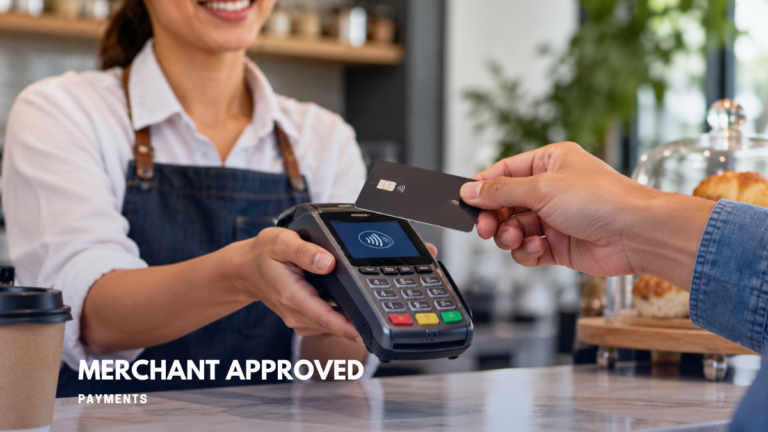
Walk into any American coffee shop at 7 a.m. and half the queue is paying with a phone or a watch. That is not an impression — U.S. consumers made an average of 11 mobile-phone payments a month in 2024, up from four in 2018, according to the Federal Reserve’s 2025 Diary of Consumer Payment Choice. Mobile is now 23% of all consumer payments by number, and for 18- to 24-year-olds it is 45%.
How mobile wallets got to eleven payments a month
The shift happened in three waves. Apple Pay launched in October 2014, but adoption was slow for years — U.S. consumers only started routing most of their contactless taps through phones after 2020, when the pandemic pulled cash out of the checkout line and pushed NFC terminals into merchants that did not already have them. By 2022, U.S. consumers were spending $199 billion a year through Apple Pay alone, up from $91.7 billion in 2021, according to the Consumer Financial Protection Bureau’s 2023 report on Big Tech and contactless payments.
The second wave was merchant coverage. Apple’s platform is now accepted at over 90% of U.S. retailers. Google Pay users grew from roughly 25 million in 2021 to a projected 35 million in 2025, per CFPB data. Samsung Pay, a distant third, reached about 16.3 million U.S. users in 2021.
The third wave is habit. The Fed diary shows adults 18-24 pay with a phone 45% of the time — more often than they use any single card type. For this cohort, tapping is the default; plastic is the backup.
What the US contactless market actually looks like
The numbers below consolidate the most-cited figures on U.S. mobile payments in 2024 and 2025, pulled from the Federal Reserve, the CFPB, and Capital One Shopping’s 2025 Apple Pay research.
| Metric | Value | Source |
|---|---|---|
| Apple Pay active US users, 2025 | 65.6 million | Capital One Shopping |
| Apple Pay share of US mobile-wallet users | 92% | Capital One Shopping |
| Apple Pay share of in-store mobile-wallet transactions | 53.7% | Capital One Shopping |
| Apple Pay in-store purchases, 2025 | Over $450 billion | Capital One Shopping |
| Google Pay US users, 2025 (projected) | 35 million | CFPB |
| Google Pay US spend, 2022 | $65.2 billion | CFPB |
| Samsung Pay US spend, 2022 | $19.6 billion | CFPB |
| Average mobile-phone payments per consumer per month (2024) | 11 | Federal Reserve |
| Share of all consumer payments made via mobile phone (2024) | 23% | Federal Reserve |
The picture is a duopoly inside a duopoly. Apple and Google own essentially the entire U.S. mobile operating system market, and Apple alone takes more than half of every in-store mobile-wallet transaction.
Why Apple Pay runs the category
Two structural reasons. First, hardware share: Apple shipped 55% of U.S. smartphones in Q2 2023, per the CFPB. In a market where the wallet is tied to the device, controlling the device gets you the wallet. Second, NFC access: Apple restricts third-party apps from using iPhone NFC hardware, so every tap-to-pay transaction on an iPhone routes through Apple Pay or its licensed partners. Google’s Android permits open NFC access, which keeps that side of the market contested and slower to consolidate.
The practical upshot: a U.S. fintech that wants tap-to-pay distribution at scale has to build through Apple Pay. Stripe, Block, and Shopify all support it natively. For merchants who do most of their volume in-store, Apple Pay plus card-on-file is now table stakes — the alternative is leaving a 53.7% mobile-wallet share on the table. This is also one of the reasons the broader US payments infrastructure stack is shaped around card rails plus wallet overlays rather than a standalone mobile network.
What it means for merchants and fintechs
For merchants, the economics shift in subtle ways. Mobile payments do not displace card fees — they ride on top of existing Visa and Mastercard rails — but they change reconciliation. A payment authorized through Apple Pay typically clears faster than chip-and-PIN and carries lower fraud rates, which compresses chargeback costs. The 2024 Pulse Debit Issuer Study found only 7% of debit point-of-sale purchases came from mobile devices; at contactless-enabled terminals, phones and wearables made up 15% of in-store taps. Growth is concentrated in merchants with modern terminals.
For fintechs, the opportunity is narrower than the headlines suggest. Building a standalone NFC wallet on iPhone is effectively blocked by Apple’s policy. The practical plays are issuer programs that ride Apple Pay and Google Pay rails (what Chime, Venmo, and Cash App do), merchant-facing integrations that accept mobile wallets at checkout, and closed-loop wallets inside apps (Starbucks, quick-service loyalty) that sidestep NFC entirely. Regional stories reinforce this: in Connecticut, for example, payment-app adoption has been driven by closed-loop merchant programs and issuer partnerships rather than by any new consumer-facing wallet brand.
The infrastructure layer beneath all of this remains unglamorous and load-bearing. Every Apple Pay purchase still resolves through card networks, ACH, and settlement systems that most consumers will never see. The ACH system in particular carries the bulk of the downstream bank-to-bank settlement, whether the tap started on an iPhone, a Pixel, or a plastic card.
Where Android and the regulators come in
There are two forces that could reshape the category in the next five years. The first is Android NFC openness: because Google allows third-party apps to use the NFC chip, it is technically possible for a challenger wallet to grow on Android without going through Google Pay. So far none has broken out, but the door is open in a way it is not on iPhone. The second is regulation. The CFPB’s Big Tech report explicitly flagged Apple’s NFC restriction as a competitive concern, and the European Union has already forced Apple to open NFC access in the EU under the Digital Markets Act. A similar U.S. enforcement move — even a narrower one — would change the math for every fintech that currently treats Apple Pay as the only route to tap-to-pay.
The bottom line
For a decade, “mobile payments” meant projections that never quite landed. What changed after 2020 is that a generation now pays with a phone the way their parents paid with a debit card, and merchants, issuers, and fintechs have had to reorganize around that behavior rather than forecast it. The open question is what happens when Apple’s 92% wallet share meets sustained regulatory attention, and whether Android’s open NFC finally becomes a real competitive answer or stays a theoretical one.





Comment