
Micro-Transactions vs. Flat Rates: Analyzing Consumer Spending in the Global Manhwa Market


Micro-transactions work best for occasional readers who follow one or two series, while flat-rate subscriptions usually suit readers who consume many episodes each week. In the global webtoon and manhwa market, this difference matters because pricing models shape how clearly users understand their real monthly spending.
What Are Webtoons?
Webtoons are digital stories designed for easy reading on smartphones and desktops. They first originated in South Korea and helped introduce a new visual storytelling format worldwide.
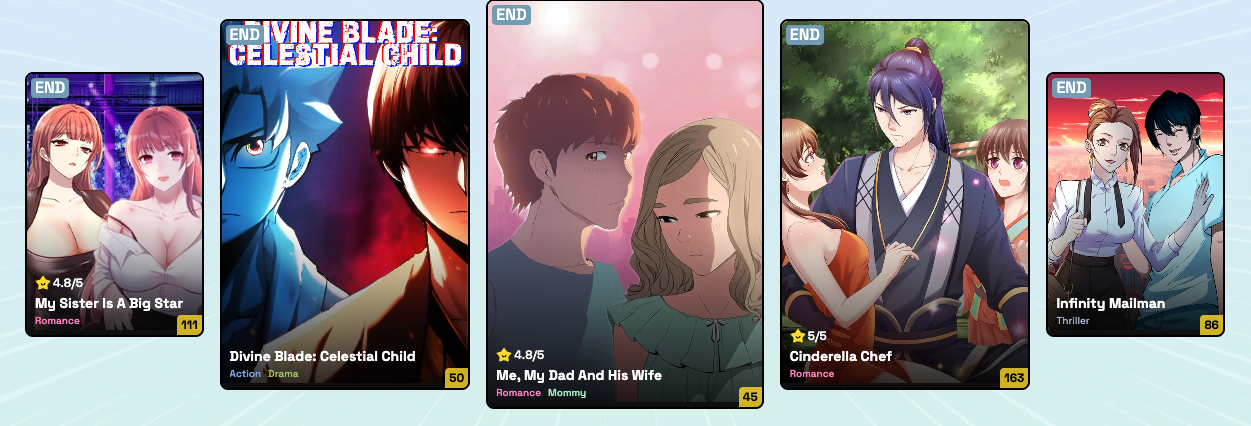
Unlike traditional comics, webtoons are typically arranged in a vertical scroll format. They combine artwork and captivating plot for a smooth mobile reading experience. Their accessible format, frequent updates, and a wide range of genres have helped them build a global audience. According to Mordor Intelligence, the global webtoon market is expected to grow from USD 10.85 billion in 2025 to USD 14.44 billion in 2026. It might reach USD 60.25 billion by 2031. This represents a CAGR of 33.1% between 2026 and 2031.
Target Audience of Webtoons
Grand View Research data shows that readers aged 25 to 35 accounted for the largest revenue share in the webtoon market. This makes the category relevant to entertainment publishers and to platforms studying paid digital media behavior.
Adults account for 68.3% of digital webtoon readers. This audience shift has influenced both content production and platform business models. Drama, mystery, and romance have become increasingly popular as readership demographics evolved. Adults are also more likely to pay for premium content and subscriptions, which strengthens platform revenue models.
Micro-Transactions on the Webtoon Market
A lot of webtoon reading applications use a coin-based system (coins, ink, diamonds, gems, etc.) as a way to separate money from the actual product and make spending feel less direct. This reduces how much users think about the real cost. Seeing a $5 bundle doesn’t always feel like much on its own. It can look small, especially when it only gives around 550 coins.
Once those coins sit in a larger wallet, like 10,000 coins, the value starts to blur. People often stop converting it back into real funds in their heads each time. That gap is intentional. It makes spending feel lighter than it actually is, which is why people tend to buy more without fully noticing the total cost.
A webtoon typically runs from around 15 to 100+ chapters. It’s built as a serialized format, with each episode ending on a cliffhanger to keep readers interested. That uncertainty is part of the design, and it’s often what pushes readers to spend coins just to continue.
A coin-based plan is used by the biggest comics reading applications on the market, including Webtoon, Lezhin, and WeComics. For example, Lezhin offers four coin-based bundles:
- Smart Deal: 400 coins – $9.99;
- Value Plus: 800 coins – $19.99;
- Power Boost: 1,200 coins – $29.99;
- Mega Pack: 2,000 coins – $49.99.
Now, let’s see how many coins the user needs to read a story. For example, a trendy story, Love is an Illusion, includes 38 episodes for 20 coins + 8 side stories for 30 coins each. To read all the episodes + side stories, the user needs 1,000 coins, which can be purchased within the Power Boost for $29.99.
This price can be justified when we are talking about the readers who are interested in only one story. When we are talking about the user who spends 5+ hours a day reading, a coin-based system is extremely pricey.
Flat Rates on the Webtoon Market
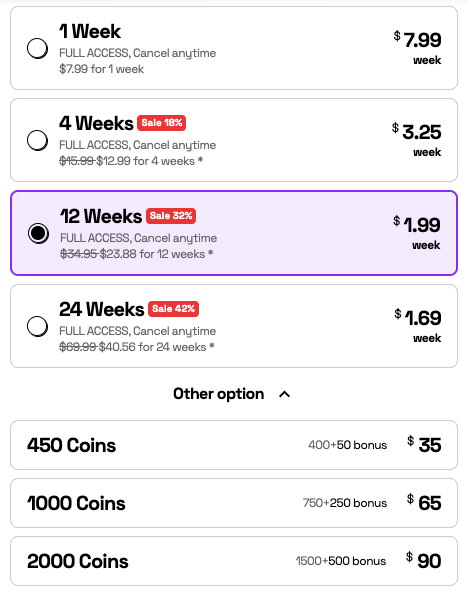
An alternative pricing model is a flat-rate subscription, which gives users access to a platform’s content library for a fixed period, such as a week, a month, or a year. One example is Honeytoon, a subscription platform for original manhwa, which offers weekly access for $7.99 instead of charging readers for each individual episode.
This model can be more cost-efficient for readers who consume webtoons regularly. A fixed fee makes spending easier to predict because users know the access cost before they start reading. For high-frequency readers, this structure can reduce the need for repeated small purchases during the same reading period.
Micro-Transactions vs Flat Rates on the Global Manhwa Market
To figure out whether a coin-based or a flat-rate subscription model will satisfy your reading preferences better, check the comparison table below.
| Feature | Coin-Based Micro-Transaction Model | Flat-Rate Subscription Model |
| Basic concept | Users buy virtual currency (coins, ink, diamonds, gems) and spend it to unlock individual chapters | Users pay a fixed fee for access to the entire library for a set period |
| Payment structure | Pay-per-chapter or pay-per-story | Weekly, monthly, or yearly subscription fee |
| User spending awareness | Lower awareness because users spend virtual currency instead of direct funds | Higher awareness because users clearly see the subscription price |
| Cost for casual readers | Can be reasonable if reading only one or two specific stories | May feel expensive if the user reads only occasionally |
| Cost for heavy readers (5+ hours/day) | Often expensive because every chapter adds additional cost | More economical because one payment provides access to many stories |
| Main drawback | Total spending can become unclear and accumulate over time | Users may feel they are not getting value if they do not use the service often |
| Best suited for | Occasional readers or users following a specific series | Daily readers, binge readers, and users who explore many stories |
Frequently Asked Questions
Do online comics make money?
The webcomic business allows creators to earn income through different revenue streams. These include merchandise sales, such as clothing, accessories, collectibles, and other products based on their comics. They also receive revenue from the comics platforms they are posting their work on.
Why is Webtoon so expensive now?
Webtoon costs can add up over time due to the chapter-based coin system, higher prices for early access or completed series, and the fact that readers pay for access rather than owning the content. For active readers, a flat-rate subscription model is a better choice.
How can I read webtoons without paying?
You can read many webtoons for free through official platforms. Most series offer free chapters through regular updates, waiting systems, or in-app rewards, though premium episodes may require payment. For binge reading, purchasing access to all the episodes is necessary.
How do webtoons make money?
Webtoons usually earn revenue through three main channels: microtransactions for unlocking chapters early, digital advertising, and IP licensing through adaptations such as shows, films, games, and merchandise. Video advertisements that readers can voluntarily watch to unlock paid/locked episodes for free are a crucial revenue source.
Conclusion
There are two webtoon subscription models available: a coin-based and a flat-rate one. For casual users who are only interested in one or two stories, a coin-based model is a better choice. Binge readers who spend 5+ hours in webtoon apps daily should give their preference to a flat-rate subscription instead.






Comment