
Marketing Tools Are Quietly Moving Back Into the Browser, and Privacy Law Is the Reason

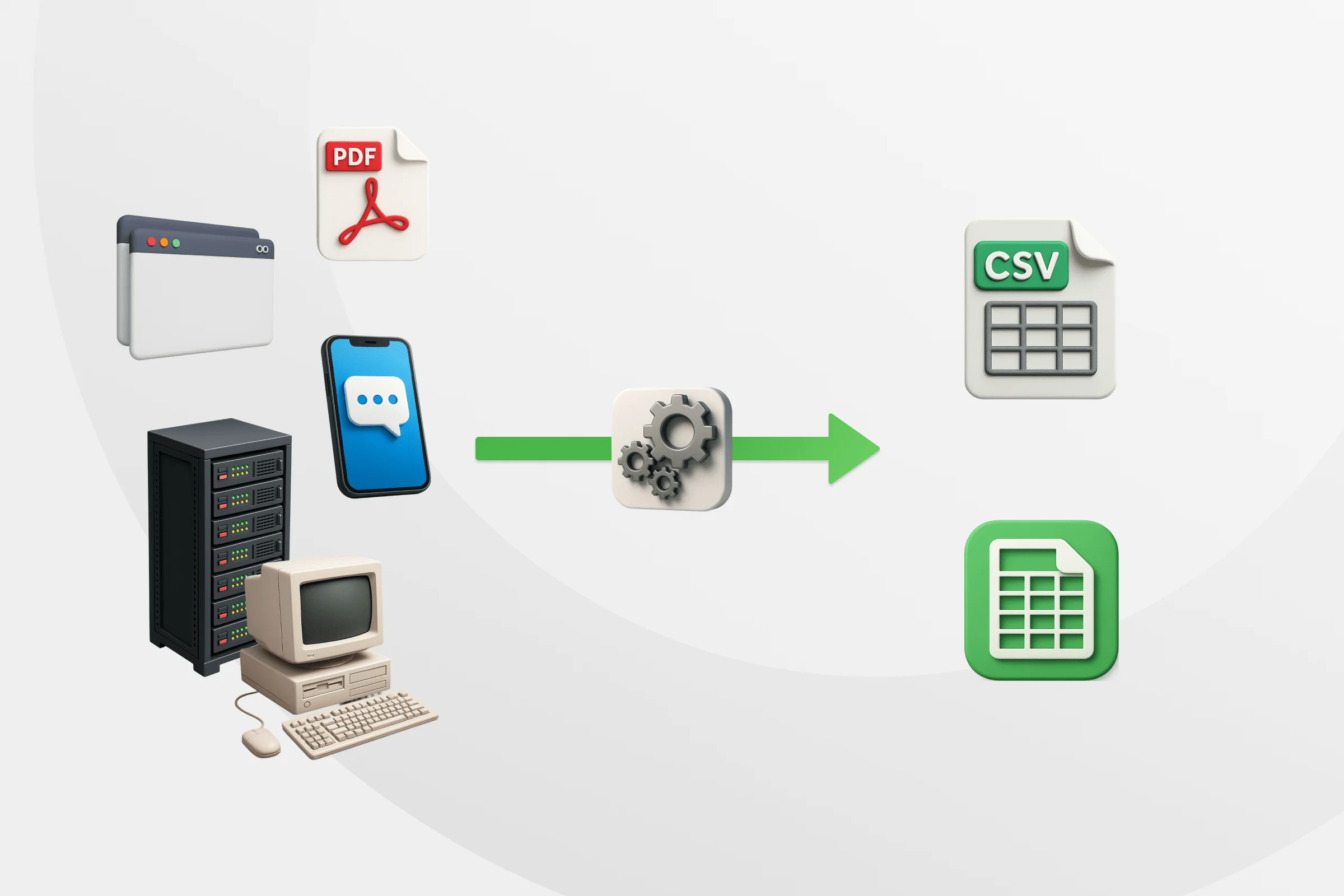
For most of the past decade, the default architecture for a marketing tool was obvious: put the logic on a server, put an account wall in front of it, and collect whatever the user types along the way. The data collected was rarely the product, but it was always an asset, and the account requirement doubled as a lead generation mechanism. Free tools were rarely free of data collection.
That default is now under pressure from several directions at once, and a quieter counter-pattern is emerging: marketing utilities that run entirely in the user’s browser, collect nothing, store nothing, and require no account at all. The technical term is client-side, and the trend is worth understanding because it reflects a broader shift in how companies are being forced to think about data they do not strictly need.
Three Pressures Pushing Computation Back to the Client
The first pressure is regulatory. Data minimization, the principle that an organization should collect only what it actually requires for a stated purpose, sits at the center of European privacy law and has been imported into a growing list of US state statutes. A tool that collects campaign data it has no operational use for is not just unnecessary; it is a compliance surface that has to be inventoried, secured, disclosed, and eventually deleted. Reducing that surface to zero is cheaper than governing it.
For organizations that still need to manage broader security and compliance obligations, virtual CISO consulting can provide executive-level guidance on risk management, regulatory readiness, and security governance.
The second is litigation risk, especially in regulated sectors. The wave of legal action around tracking technologies on health and finance-adjacent properties has made legal departments considerably more interested in exactly which third parties receive data, and considerably less patient with tools that transmit information for reasons nobody can articulate. When a compliance review asks where the data goes, “nowhere, it never leaves the device” is the shortest possible answer.
The third is competitive and practical. Third-party cookie deprecation pushed the entire industry toward first-party data strategies, and once a company has done that work, it becomes far more conscious of casually handing its own campaign information to vendors. A destination URL for an unannounced product launch, typed into a free web tool, is a small but real information leak. Teams have started noticing.
Browsers are also simply capable now. Work that genuinely required a server in 2015 runs comfortably in JavaScript today, which means the architecture that is better for the user is no longer meaningfully worse for the developer.
A Case Study in the Least Glamorous Category Imaginable
QR code generation makes an unlikely but instructive example, because it is a commodity category with enormous volume. Roughly 776,000 US searches a month look for a QR code generator, and another 119,000 look for a free one, according to Ahrefs data. Most of the tools serving that demand follow the old pattern: server-side generation, an account for the useful features, and a dynamic-code subscription that makes the printed asset dependent on the vendor remaining in business and paid.
That last detail deserves emphasis, because it is a genuine architectural risk that most buyers never consider. A dynamic QR code does not encode the destination; it encodes a redirect through the vendor’s domain. If the subscription lapses or the vendor disappears, every code already printed on packaging, vehicles, and signage stops working. The convenience of editability is purchased with a permanent dependency.
Strativera, a New Jersey digital marketing and revenue operations firm, released a free QR code generator built on the opposite set of choices: static codes, no account, no email wall, and generation performed entirely in the browser, meaning destination URLs and campaign names are never transmitted or stored anywhere. The tool’s substantive feature is that it constructs the tracking parameters first and generates the code from the tagged link, enforcing the values that analytics platforms actually recognize, which addresses the reason most printed campaigns produce unattributable traffic.
The measurement gap it targets is wide. Against those hundreds of thousands of monthly searches for code generators, the searches asking how to track what the codes produce total around a thousand a month.
“Every tool we looked at wanted an account for the useful parts, and we could not identify a technical reason for it,” said Joe Levy, Co-Founder and President of Strativera. “Generating a code and building a tagged URL are both things a browser can do unaided. The account requirement exists to capture the user, not to deliver the function. Once you notice that, building it the other way is not really a philosophical decision, it is just the honest implementation.”
What the Pattern Signals for Product Teams
The strategic reading here extends well past QR codes. For any team shipping a free utility as a marketing asset, the client-side pattern inverts the traditional trade. The old model captured emails and accepted the data governance burden that came with them. The new model captures attention, trust, and links, and carries no burden at all because there is nothing stored to govern.
That trade increasingly favors the newer model for reasons beyond ethics. Ungated tools are shared more freely, cited more often, and referenced in places gated tools never reach, which matters more now that a growing share of buyers encounter brands through AI-assembled answers rather than through a click. Building visibility in AI search results depends on being genuinely useful in ways machines can observe and cite, and an account wall is precisely the kind of friction that removes an otherwise citable resource from circulation.
There is a customer economics argument as well. Email addresses collected from a free tool convert poorly and age quickly, while the relationship formed by giving someone something that worked without asking for anything tends to surface later and warmer. Teams that model customer lifetime value honestly usually find the ungated version produces fewer contacts of substantially better quality, which is the trade most lead-generation dashboards are structurally incapable of showing.
None of this means every product belongs in the browser. Anything requiring persistence, collaboration, or server-side computation obviously does not. But for the large category of single-purpose utilities that companies ship to demonstrate expertise, the question worth asking during design is simple: does this actually need to know anything about the person using it? Increasingly, the answer is no, and the tools admitting that are the ones users will trust with the work that does require an account.







Comment