
Lower Spine Stretches for Beginners: A Gentle Daily Routine

If your lower back feels stiff after sitting, sleeping, or spending too much time in one position, gentle stretching may help you move more comfortably. The key is to start slowly and choose movements that feel controlled rather than forcing your body into a deep stretch.
This beginner-friendly routine includes simple lower spine stretches that can be done at home with very little equipment. If you are completely new to stretching, begin with our guide to gentle lower spine stretches for beginners and focus on learning the correct movement before trying more advanced exercises.
Before You Start
Choose a comfortable, firm surface such as an exercise mat, carpet, or bed. Wear loose clothing and make sure you have enough room to move without bumping into furniture.
You may feel mild tension during a stretch, but you should not feel sharp, sudden, or worsening pain. Stop if your symptoms become worse, particularly if discomfort begins travelling down your leg. The NHS also advises stopping exercises if back pain gets worse and seeking medical advice when necessary.
Move gently, breathe normally, and avoid bouncing. Stretching should feel gradual. Trying to push further too quickly can make the exercise less comfortable and may cause you to lose control of the movement.
1. Pelvic Tilts
Pelvic tilts are a gentle way to begin moving the lower back.
Lie on your back with your knees bent and your feet flat on the floor. Keep your arms relaxed beside you.
Gently tighten your stomach muscles and press your lower back towards the floor. Hold for two or three seconds, then relax and allow your back to return to its natural position.
Repeat the movement 8 to 10 times.
Do not force your back flat against the floor. The movement should be small and comfortable. Think of it as gently rocking your pelvis rather than lifting or pushing aggressively.
2. Single-Knee-to-Chest Stretch
This is one of the easiest stretches to control because you can adjust the movement at any time.
Remain on your back with both knees bent. Slowly bring your right knee towards your chest and hold behind your thigh. Gently guide the leg closer until you feel a comfortable stretch around your lower back, hip, or buttock.
Hold for 15 to 30 seconds, then slowly lower your foot to the floor. Repeat with the opposite leg.
Try two repetitions on each side. Keep your shoulders relaxed and avoid pulling hard on your knee. A gentle hold is usually more useful than trying to bring the leg as close to your chest as possible.
If you regularly experience tightness after working at a desk, you may also find our article on lower back stretches after sitting useful. Add the link to your published desk-stretching article here once it is available.
3. Knee Rolls
Knee rolls help introduce gentle rotation without requiring a large range of movement.
Lie on your back with your knees bent and your feet flat on the floor. Keep your knees together and slowly allow them to move a short distance to the right. Return to the centre, then move them towards the left.
Your shoulders should remain relaxed on the surface. Only move as far as feels comfortable.
Continue for 8 to 10 repetitions on each side. You do not need to touch the floor with your knees. A small movement is perfectly suitable for beginners.
Move slowly throughout the exercise. If you feel an increase in leg symptoms, stop and seek advice from a qualified healthcare professional.
4. Child’s Pose Variation
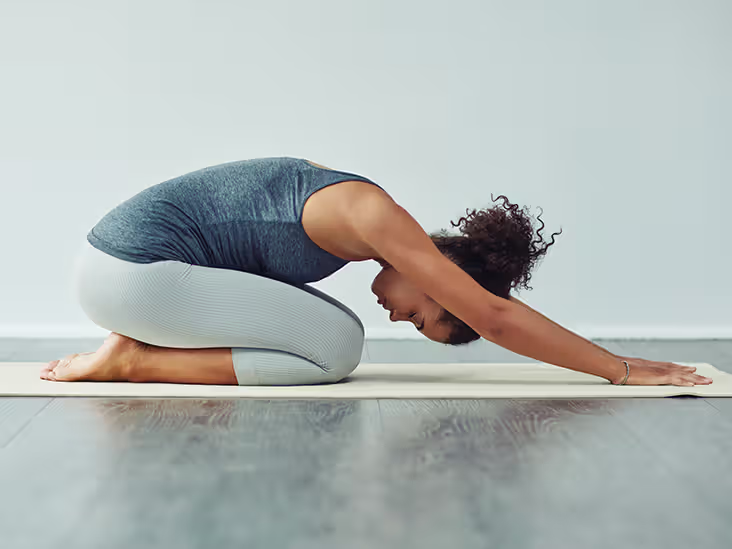
A modified child’s pose can provide a gentle stretch through the lower back and hips. It is best to use a version that feels comfortable rather than trying to copy a deep yoga position.
Start on your hands and knees. Slowly move your hips backwards towards your heels while reaching your hands forward. If this feels uncomfortable, place a cushion between your hips and heels or keep your hips higher.
Hold the position for 15 to 20 seconds while breathing comfortably. Return to the starting position and repeat two or three times.
Some people prefer to keep their knees slightly apart, while others feel better with them closer together. Choose the position that allows you to relax without placing pressure on your knees or lower back.
5. Gentle Cat-Cow Movement
Cat-cow is a movement exercise rather than a long static stretch. It can be useful when your back feels stiff after remaining in one position.
Begin on your hands and knees, with your hands beneath your shoulders and your knees beneath your hips. Slowly round your back by drawing your stomach in slightly. Then gently move in the opposite direction by lifting your chest and allowing your back to curve naturally.
Keep the movement slow and avoid dropping your stomach or forcing your neck upwards.
Repeat 6 to 8 times. Focus on moving one part of your spine at a time instead of trying to create a large arch.
How Long Should You Stretch?
For a beginner routine, holding each comfortable stretch for 15 to 30 seconds is usually enough. Perform one or two rounds and pay attention to how your body responds.
You do not need to stretch for an hour to receive the potential benefits of movement. A short routine performed consistently may be easier to maintain than an intense session that leaves you feeling uncomfortable.
Try this routine once a day, particularly after a long period of sitting. You can also use selected movements as a short mobility break during the day.
Common Beginner Mistakes
Avoid these common problems:
- Holding your breath while stretching.
- Bouncing to move deeper into a position.
- Continuing despite sharp or increasing pain.
- Copying an advanced exercise without modifying it.
- Stretching aggressively when your muscles are cold.
- Expecting one exercise to solve every type of back problem.
Stretching may help some people feel more mobile, but lower-back discomfort can have many possible causes. If you have an existing injury, osteoporosis, a diagnosed spinal condition, or another health concern, speak with a healthcare professional before beginning a new routine. Mayo Clinic also recommends checking with a healthcare provider when a person has injured their back or has an underlying health condition.
When to Get Medical Advice
Contact a doctor or qualified physiotherapist if your symptoms continue, interfere with daily activities, or become progressively worse. You should also seek prompt medical advice if back pain is accompanied by significant weakness, numbness, or other unusual symptoms.
The purpose of these stretches is to encourage gentle movement—not to diagnose or treat a medical condition. Stop any exercise that makes you feel worse.
Final Thoughts
Lower spine stretches do not need to be complicated. Start with a few slow movements, stay within a comfortable range, and give yourself time to learn how your body responds.
Pelvic tilts, knee-to-chest stretches, knee rolls, modified child’s pose, and cat-cow movements can form a simple starting routine. Once you are comfortable with these exercises, read our guide to lower back stretches for tight muscles and gradually explore other mobility options.
The most important habit is consistency. Gentle movement performed regularly is often more practical than stretching forcefully once in a while.







Comment