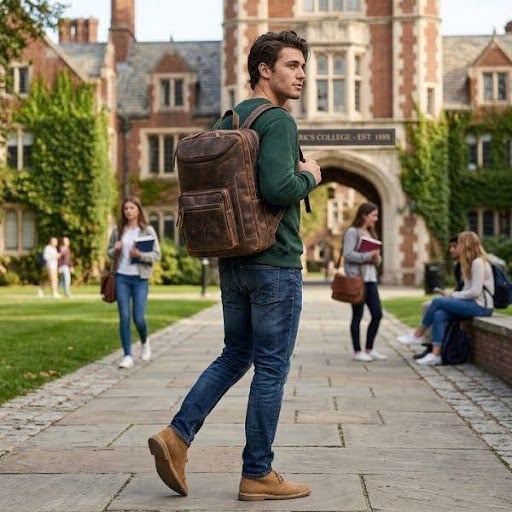
A leather backpack is one of the few purchases that genuinely gets better with time. Unlike synthetic bags that fade, peel, and sag within a few seasons, a quality leather backpack develops a rich patina, a personal record of every commute, trip, and adventure. But not all leather backpacks are created equal. The market is crowded with bags that look the part on a shelf but fall apart within a year of daily use.
This guide covers everything: the different grades of leather, what construction details actually matter, how to match a backpack to your lifestyle, how to care for it long-term, and which red flags to avoid when shopping. Whether you need the best leather backpack for work, travel, college, or everyday carry, this guide will help you invest wisely.
Why Choose a Leather Backpack?
The practical case for leather is straightforward: longevity. A well-made full-grain leather backpack, properly maintained, will outlast dozens of nylon or polyester alternatives, and at a lower cost per year of use when you run the numbers.
Beyond durability, leather distributes the weight of daily carry more comfortably than rigid hard shells, while remaining more structured and professional-looking than soft canvas. It’s one of the few bag styles that works equally well walking into a boardroom, boarding a plane, or exploring a city on a weekend. And unlike synthetic materials, the leather only improves aesthetically over time, a quality that no man-made fabric can replicate.
Types of Leather: What the Labels Actually Mean
The single most important factor in a leather backpack’s quality is the grade of leather used. Retailers use these terms loosely, sometimes misleadingly, so understanding what they actually mean will protect your investment.
Crazy Horse Leather: The Hidden Gem
Crazy Horse leather deserves special mention. Despite the name, it’s made from full-grain cowhide, not horsehide. The hide is treated with a specialized wax finish that creates a distinctive pull-up effect: when scratched or scuffed, the mark appears lighter, then slowly blends back in as the wax redistributes. The result is a bag that visibly heals and deepens over the years, developing a genuinely personal patina. It’s the go-to choice for vintage-style and rugged leather backpacks.
Vegetable-Tanned vs. Chrome-Tanned
The tanning process also affects performance. Vegetable-tanned leather (using plant-based tannins) ages beautifully and is more eco-friendly, but is stiffer out of the box and less water-resistant. Chrome-tanned leather (using chromium salts) is softer, more supple, and more water-resistant from day one, the standard for most modern leather backpacks.
What Makes a Quality Leather Backpack: Construction Checklist
Beyond leather grade, the construction details separate bags that endure from bags that fail. Here’s what to evaluate before committing to a purchase:
Stitching
Look for double or saddle stitching at stress points, strap bases, corners, and handle attachment points. Low-quality nylon thread deteriorates rapidly under UV exposure and load. Waxed linen or polyester thread holds up significantly longer and is the benchmark for premium bags.
Hardware
Brass or solid stainless steel hardware resists corrosion and won’t snap under load. Avoid plated zinc; it looks identical at purchase but corrodes and weakens quickly. YKK zippers are the industry standard for reliable zip closures; their presence is a strong signal of overall build quality.
Lining
A canvas or pigskin interior lining protects your belongings and extends the bag’s inner life. Thin nylon linings tear easily and contribute to an overall lesser quality feel. Padded laptop sleeves should offer at least 5mm of genuine cushioning for meaningful protection during daily carry.
Reinforced Stress Points
The strap bases and back-panel attachment points take the most abuse. Quality makers add rivets, extra leather patches, or hidden polyester reinforcing straps at these load-bearing points. This detail alone is often the difference between a bag that lasts a decade and one that fails at the shoulder seam after eighteen months.
Leather Backpack Styles and Best Use Cases
Leather Laptop Backpack
The most popular category. Look for a dedicated padded sleeve that fits your laptop size (13″, 15″, or 17″), an organizational front panel for cables and accessories, and a structured shape that keeps the laptop compartment against your back for better weight distribution. A full-grain or top-grain leather backpack in black, dark brown, or cognac works for virtually any professional environment.
Leather Travel Backpack
For travel, capacity and organization matter most. A 25–35L leather rucksack with multiple interior compartments, a sternum strap for stability, and a water-resistant finish provides genuine all-day comfort. Look for TSA-friendly layouts that allow laptop removal without unpacking your entire bag at security.
Leather Daypack / Mini Backpack
A 10–18L leather daypack hits the everyday carry sweet spot, small enough to stay agile, large enough for essentials. Popular for both men’s and women’s styling, often with a flap-top closure for a cleaner silhouette. Ideal for commuters who don’t need to carry a laptop daily.
Leather Roll-Top Backpack
The roll-top design offers expandable capacity without external pockets, creating a clean, minimalist profile. Particularly useful for commuters who occasionally need extra space (gym kit, a change of clothes) without carrying a bulky bag every day.
How to Choose the Right Leather Backpack for Your Lifestyle
Start with your primary use case, then match the size. A bag you’ll carry every day with a laptop needs structured support and proper weight distribution; a weekend bag can be softer and more minimal.
Think carefully about color. Black leather reads as the most versatile and hides wear best. Cognac and tan develop the most visible and attractive patina over time. Dark brown sits between the two. For women’s styles, lighter camel and nude tones are popular choices that pair well with a wide range of outfits.
Fit matters, too. Padded, adjustable shoulder straps are non-negotiable for anything over 15L. A padded back panel improves ventilation and comfort significantly on longer carries. If you’re particularly tall or short, check whether the straps adjust adequately to your torso length before buying.
How to Care for a Leather Backpack
Leather is durable but not indestructible. A simple maintenance routine extends your bag’s life indefinitely and costs almost nothing to maintain.
✓ Weekly: Wipe down with a soft, dry cloth to remove dust and surface grime
✓ After rain: Blot with a dry cloth immediately; air-dry at room temperature, never use heat sources like hairdryers or direct sunlight
✓ Conditioning: Apply a quality leather conditioner (beeswax or lanolin-based) once or twice a year to prevent drying and cracking
✓ Storage: Keep in a breathable dust bag, stuffed with paper to maintain shape, never in plastic, which traps moisture and promotes mold
✓ Stains: Use a damp cloth with mild soap (nearly wrung out); test on an inconspicuous area first
✓ Never: Machine wash, soak, or use alcohol-based cleaners on leather
Final Thoughts: Is a Leather Backpack Worth It?
For anyone who wants a bag that improves with age, signals quality without ostentation, and genuinely lasts, yes, a leather backpack is worth every dollar of the investment. The key is buying once and buying right.
Prioritize full-grain leather, YKK or brass hardware, reinforced stitching, and a brand that stands behind its product with a meaningful warranty. Avoid the trap of “genuine leather” products priced under $100; they look the part on the shelf but fail quickly in real-world use.
If budget is a constraint, a mid-range top-grain leather backpack from a reputable brand at $150–$300 will serve you far better than a cheap imitation. Choose your leather grade wisely, maintain it simply, and your backpack will be one of those rare objects that outlasts nearly everything else in your possession.