For James McLean, resilience is not simply a personal philosophy. It is a quality developed through years of working in environments where preparation, composure and sound judgement were essential.
His career has crossed several demanding fields, including military service, international security, professional boxing and entrepreneurship. Although each chapter has presented different challenges, McLean believes they have all required the same fundamental qualities: discipline, adaptability, calculated decision making and the ability to remain focused under pressure.
McLean is also the brother of the late Jake McLean. While that connection remains an important part of his personal story, he has sought to establish an independent professional identity through his work in security, sport and international business.
His career began with a brief period of service in the British Army’s Parachute Regiment. The experience introduced him to a culture built around physical endurance, personal responsibility and operational discipline. McLean later moved into private security, beginning what he describes as an international career spanning more than 18 years.
During that time, he worked across several countries and maritime regions, undertaking assignments involving protective services, hostile reconnaissance and security operations. The work regularly placed him in unfamiliar and rapidly changing situations, where decisions had to be made with limited information and little room for error.
According to McLean, these experiences shaped his understanding of leadership. Rather than viewing leadership as authority alone, he came to see it as the ability to prepare thoroughly, accept responsibility and provide direction when circumstances become difficult.
His security background has included armed and unarmed assignments, executive protection, hostile environment assessments and strategic advisory work. McLean says every operation required careful planning, situational awareness and clear communication among those involved.
His professional development also included training in tactical movement, convoy procedures, anti-ambush techniques, weapons handling, trauma response, casualty evacuation, kidnap awareness and operational planning.
While these capabilities were initially developed for security work, McLean says many of them have proved equally relevant in business. Risk assessment, for example, is not limited to physical security. Entrepreneurs must also evaluate financial exposure, operational weaknesses, market uncertainty and the reliability of potential partners.
The ability to remain composed has been another transferable skill. In McLean’s experience, pressure can lead people to make rushed or emotional decisions. His approach is to assess the available information, identify the most immediate priorities and act with a clear understanding of the potential consequences.
In February and March 2026, McLean says he contributed to privately organised efforts in the United Arab Emirates intended to assist UK residents with their safe return through secured convoy arrangements. He says the work drew upon his previous experience in operational planning, movement coordination and international security.
McLean has also applied his competitive mindset to professional boxing. He views the sport as more than a physical contest, describing it as an exercise in patience, preparation and emotional control.
Training for a fight requires consistency long before a boxer enters the ring. McLean believes this process reflects the reality of both security work and entrepreneurship, where visible results are often determined by preparation completed away from public attention.
Boxing also reinforced the importance of adjusting to changing circumstances. A strategy may be carefully planned, but it must sometimes be modified in response to an opponent or an unexpected development. McLean says the same principle applies in business, where leaders must remain committed to their objectives without becoming rigid in their methods.
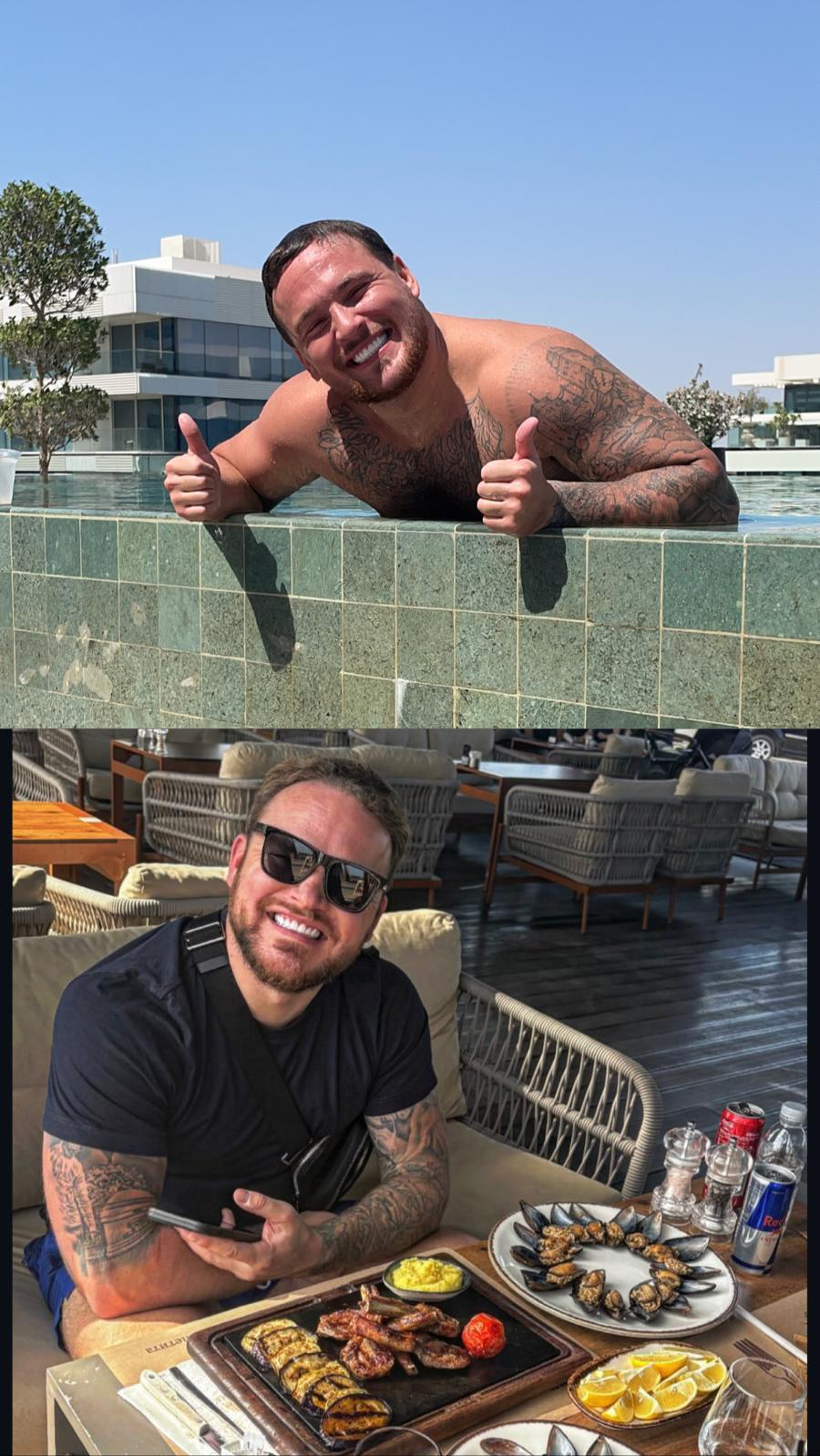
Now based in Dubai, McLean is concentrating on entrepreneurship, business development and security consultancy. The city’s international commercial environment has provided him with opportunities to build relationships across industries and explore business interests in a rapidly evolving market.
His commercial outlook is shaped by the lessons of his earlier career. He places particular importance on choosing capable people, defining responsibilities clearly and recognising potential risks before they become larger problems.
For McLean, successful leadership is not based on projecting certainty at all times. It requires acknowledging uncertainty while still providing direction. He believes leaders must be willing to make difficult decisions, take responsibility for their outcomes and adjust when new information becomes available.
His journey has not been without serious personal challenges. McLean faced allegations relating to a serious offence, which he consistently denied. Following legal proceedings, he was acquitted and cleared of wrongdoing.
He has described the experience as an intense test of his reputation, mental strength and ability to maintain perspective. During a period of significant public and personal pressure, McLean says he relied on the discipline developed throughout his career to remain focused on the legal process and the people closest to him.
The death of his brother, Jake McLean, represented another deeply difficult chapter. Following the tragedy, James says he worked with security professionals and relevant authorities to collect, preserve and examine information connected to the circumstances of his brother’s death.
According to McLean, the objective was to help establish a clear timeline and ensure that potentially relevant material could be made available to the appropriate authorities. He describes those efforts as being motivated by a desire for factual clarity and accountability.
Personal development continues to be an important part of McLean’s life. He credits coach Lee Skinner with helping him bring greater structure to his physical training, mindset and daily discipline. The loss of his brother, the late British businessman and television personality Jake McLean, became a defining personal chapter that further tested James McLean’s resilience and sense of purpose.
Since beginning online coaching, McLean says he has developed a clearer and more consistent approach to his goals. While the programme has supported his physical progress, he believes its greatest influence has been psychological, helping him strengthen his focus and approach demanding situations with greater composure.
That renewed sense of structure has also influenced his work as an entrepreneur. McLean says clear routines and measurable goals allow him to direct his energy more effectively, maintain higher standards and avoid becoming distracted by short-term setbacks.
His varied career has taught him that resilience does not mean avoiding adversity. Instead, it means responding constructively, learning from experience and continuing to move forward with purpose.
People who have worked with McLean have described him as disciplined, determined and difficult to underestimate. The phrase “one-man army” has occasionally been used to characterise the range of experience he has accumulated across security, boxing and business. McLean, however, also recognises that lasting success depends on trusted teams, specialist knowledge and productive professional relationships.
As he develops his business interests in Dubai, McLean remains focused on applying what he has learned in demanding operational environments to commercial leadership. His priorities include business growth, international partnerships and security consultancy, alongside his continued commitment to fitness and personal development.
From military training and international security assignments to professional boxing and entrepreneurship, James McLean’s career has been defined by reinvention. Each stage has added a different dimension to his understanding of risk, responsibility and leadership.
Today, he is using those experiences to build a future centred on enterprise, continuous improvement and the belief that pressure, when approached with discipline, can become a catalyst for growth.