
IPTV and the Future of Home Entertainment: What Is Changing for Viewers?

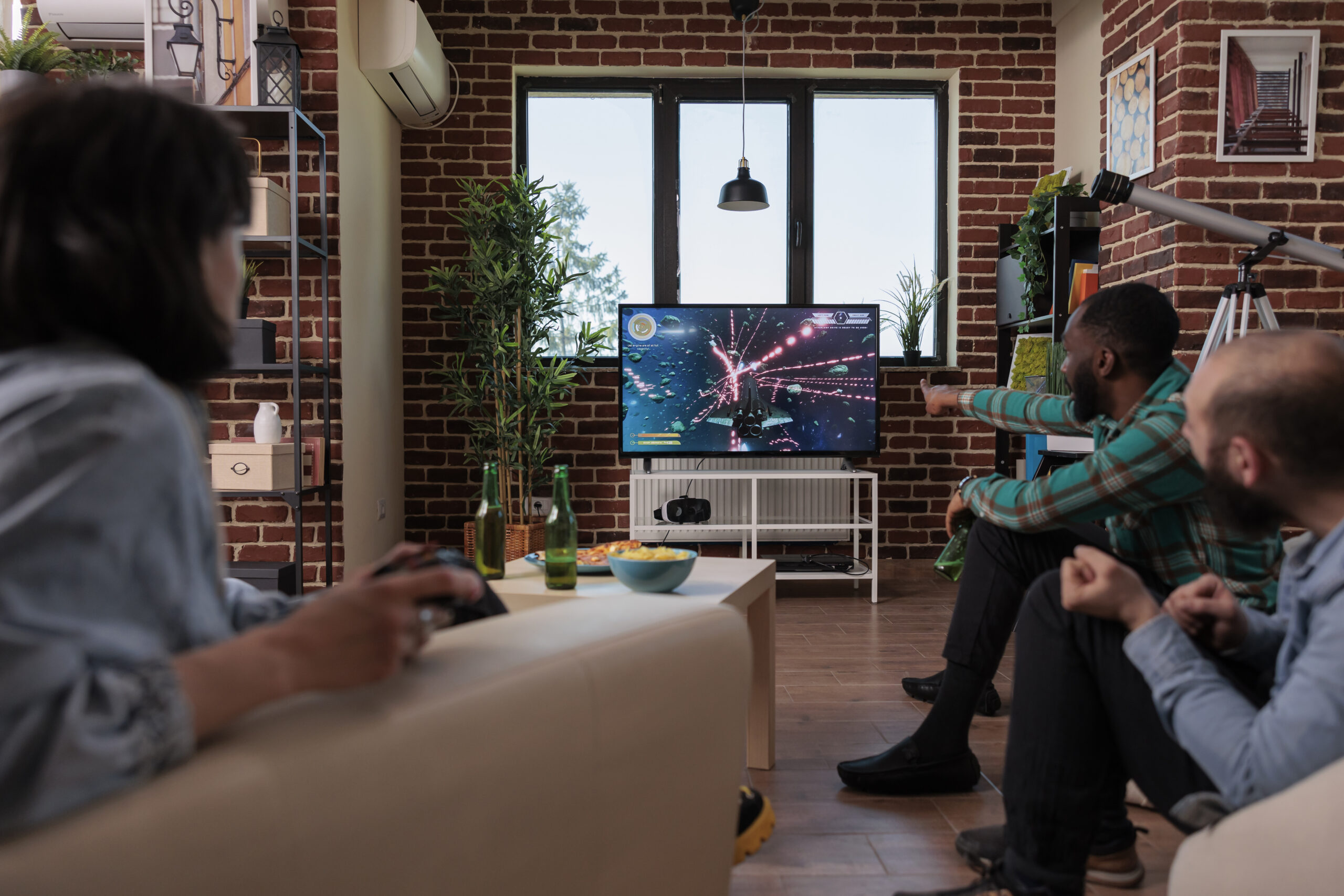
The way people consume television and entertainment has changed significantly over the last decade. Traditional television is no longer the only option for households that want to watch live channels, movies, series, sports, documentaries, and other forms of digital content.
Connected televisions, streaming devices, faster Internet connections, and mobile applications have created a much more flexible entertainment environment. In this changing landscape, IPTV has become an important part of the broader evolution of television.
IPTV refers to the delivery of television content through IP-based networks. Depending on the type of service and its technical architecture, IPTV can support live television as well as video-on-demand content.
For viewers, the most interesting aspect is not simply the technology itself. What matters is how this technology can change everyday television habits.
A modern IPTV subscription can be used on different compatible devices, from Smart TVs and Android TV boxes to smartphones, tablets, and computers. This flexibility allows users to build an entertainment setup that better reflects the way they actually watch content.
However, the future of IPTV will not depend only on having access to more channels. User experience, network quality, device compatibility, video quality, applications, and content organization will all continue to influence how people interact with television.
From Traditional Television to Connected Entertainment
Traditional television was built around a relatively simple model.
A television received a signal from an antenna, satellite dish, or cable connection, and viewers selected channels using a remote control.
The Internet has introduced a different model.
Instead of relying exclusively on traditional broadcast infrastructure, connected devices can receive digital content through IP networks.
This has opened the door to more flexible viewing experiences.
A modern television can now combine live channels, on-demand video, applications, music, games, and other digital services on a single screen.
The television is therefore becoming less like a simple receiver and more like a connected entertainment platform.
Why IPTV Is Different From Traditional Television
One of the main differences between IPTV and traditional broadcasting is the way content is delivered.
IPTV uses IP-based networks to transmit television content. Technical standards and architectures can support different delivery models, including unicast and multicast approaches.
For viewers, this can translate into greater flexibility.
Instead of being limited to a fixed method of receiving television signals, users can interact with content through applications and connected devices.
This also makes software an important part of the television experience.
The application used to access content can determine how easily users navigate channels, search for programs, manage favorites, or access on-demand content.
Smart TVs Are Changing the Viewing Experience
Smart TVs have played a major role in the evolution of home entertainment.
A modern Smart TV can connect directly to the Internet and run applications without necessarily requiring an additional computer.
This makes it particularly convenient for IPTV users.
Instead of connecting several external devices, a viewer may be able to install a compatible application directly on the television.
However, compatibility remains important.
Different television manufacturers and operating systems may support different applications.
Before choosing an IPTV France service, users should therefore check whether the required application works with their specific television.
The Growing Importance of Applications
Applications are becoming an essential part of digital television.
The application is often the interface through which users access their channels and content.
A well-designed application can make a large catalog easier to navigate.
Search functions, favorites, categories, electronic program guides, and recently viewed content can all improve the experience.
This is especially important when a service contains a large number of channels.
Without good organization, having more content does not necessarily make the service more useful.
In the future, applications may become even more important as television platforms continue to combine different types of entertainment.
IPTV and Mobile Devices
Television is no longer limited to the living room.
Smartphones and tablets allow users to consume video content in many different situations.
For an IPTV service that supports mobile devices, this can provide additional flexibility.
A user may watch television on a Smart TV at home and use a smartphone or tablet when away from the main screen.
This multi-device approach is part of a broader trend toward personalized entertainment.
Instead of expecting every member of a household to watch the same program on one television, different users can increasingly choose their own screens.
The Rise of Multi-Screen Entertainment
Modern households often contain multiple connected screens.
A typical home may include two or more televisions, smartphones, tablets, laptops, gaming consoles, and other connected devices.
This creates new expectations for entertainment services.
Users may want to move between devices without completely changing the way they interact with content.
For an IPTV subscription, the rules regarding multiple devices and simultaneous connections therefore become increasingly important.
A service may allow installation on several devices but impose limits on simultaneous viewing.
Understanding these conditions before subscribing can prevent confusion later.
IPTV 4K and Higher Picture Quality
Another important development is the increasing popularity of 4K televisions.
As more households purchase UHD displays, expectations regarding video quality continue to increase.
This has created growing interest in IPTV 4K.
A genuine 4K experience depends on several elements working together.
The original content must be available in the appropriate resolution, the stream must support the required quality, the application and device must be compatible, and the Internet connection must be stable enough to handle the data.
Simply owning a 4K television does not automatically mean that every program will be displayed in native 4K.
This distinction is important when comparing IPTV services.
Quality Is More Than Resolution
It is easy to focus on resolution when discussing video quality.
However, resolution is only one part of the overall experience.
Stability, encoding, frame rate, compression, source quality, and network performance can also influence what viewers see.
Streaming media places specific demands on networks, and quality of experience can be affected by operational and transport characteristics.
For this reason, a stable Full HD stream may sometimes provide a more comfortable experience than a high-resolution stream that repeatedly buffers.
The best setup is therefore not necessarily the one with the highest advertised resolution.
The Importance of Internet Connectivity
The growth of IPTV is closely connected to the development of home Internet networks.
As more households use video services, the home network becomes increasingly important.
A television may be competing for bandwidth with smartphones, computers, tablets, gaming consoles, cloud services, and other connected devices.
This can affect streaming performance.
A fast Internet connection is useful, but stability also matters.
Users should consider the quality of their Wi-Fi, the position of the router, the number of connected devices, and the distance between the television and the network equipment.
Wi-Fi Versus Ethernet
Wi-Fi provides an easy way to connect a Smart TV.
It avoids cables and allows televisions to be installed in different locations.
However, wireless performance can vary.
Walls, distance, interference, and network congestion can all influence the connection.
Ethernet provides a wired alternative.
For users experiencing frequent IPTV buffering, testing an Ethernet connection can help determine whether Wi-Fi is contributing to the problem.
This does not mean that Ethernet is always necessary.
A well-configured Wi-Fi network can work perfectly well for many households.
The important point is to understand the conditions of the individual installation.
What Causes IPTV Buffering?
Buffering can have several possible causes.
It may be related to the Internet connection, Wi-Fi signal, local network congestion, device performance, application problems, or the stream itself.
This means that changing an IPTV service should not always be the first solution.
A simple troubleshooting process can be more useful.
Users can start by checking their Internet connection.
They can then test the television while other devices are disconnected or using less bandwidth.
Testing Ethernet instead of Wi-Fi can provide another useful comparison.
Updating the application and restarting the router can also eliminate temporary issues.
By testing these elements individually, users can better identify the source of the problem.
The Future of IPTV and Personalized Television
One of the most interesting possibilities for IPTV is greater personalization.
Traditional television schedules are generally designed for a broad audience.
Digital platforms can provide more flexibility because software can organize content according to individual preferences.
Favorites, recommendations, search functions, personalized categories, and viewing histories can make it easier for users to find relevant programs.
This does not mean that every IPTV service will offer all of these features.
However, the general direction of connected entertainment is toward more personalized experiences.
Electronic Program Guides
The Electronic Program Guide, commonly known as EPG, remains useful even as television becomes more digital.
The EPG provides information about current and upcoming programs.
For users who watch live television, it can make navigation much easier.
Instead of browsing channels randomly, viewers can consult the schedule and decide what they want to watch.
A clear EPG can therefore make a large IPTV catalog feel much more manageable.
IPTV and Family Entertainment
Families often have different viewing preferences.
One person may prefer sports, another may watch movies, while another may mainly use live television.
This creates a challenge for household entertainment systems.
A flexible IPTV setup can make it easier for different users to access the types of content they prefer, provided the service and account conditions support multiple devices or users.
Simple navigation is particularly important in a family environment.
Not every user has the same level of technical knowledge.
A well-designed application can therefore make the experience easier for everyone.
The Role of the IPTV Provider
The quality of an IPTV experience also depends on the provider.
When choosing a fournisseur IPTV, users should look beyond the size of the advertised catalog.
They should examine the service conditions, supported devices, application requirements, customer support, payment terms, and available information about content distribution.
Transparency is particularly important.
A provider should clearly explain what the service includes and what limitations apply.
Users should also verify that the provider has the necessary rights to distribute the content it offers.
Legal IPTV Services
It is important to distinguish IPTV technology from the legality of a specific service.
IPTV itself is a method of delivering television content through IP networks.
The legal status of a particular service depends on factors including the content offered and the rights held for its distribution.
For users searching for an abonnement IPTV France, checking the legitimacy and transparency of the service is therefore an important part of the selection process.
A large catalog or attractive price should not be the only considerations.
Better Content Organization
As IPTV catalogs grow, organization becomes increasingly important.
Thousands of channels or large collections of movies can be difficult to navigate if everything is placed into a single long list.
Categories can make a significant difference.
French channels, international channels, sports, entertainment, news, movies, and series can be separated into logical sections.
Search functions can provide another way to find specific content quickly.
The future of IPTV may therefore involve not only more content, but also better ways of organizing and discovering it.
IPTV and Cloud-Based Services
Modern digital entertainment increasingly relies on services that operate through remote infrastructure.
Users do not necessarily need to store content locally.
Instead, content can be delivered when requested.
This approach allows services to scale their libraries and provide access across different devices.
For IPTV users, this can contribute to a more flexible viewing environment.
However, it also increases dependence on Internet connectivity and service infrastructure.
The quality of the network path between the user and the content can influence the final viewing experience.
Better Home Networks Will Matter
As more entertainment services move online, home networks will become increasingly important.
A household may have dozens of connected devices.
Smart TVs, smartphones, laptops, cameras, speakers, appliances, and other equipment can all communicate through the home network.
The evolution of residential networking already reflects the growing number and diversity of connected devices in homes.
For IPTV users, this means that improving the home network can sometimes be as important as changing the television or application.
What Should Users Look For in an IPTV Subscription?
When comparing an IPTV subscription, it is useful to focus on practical characteristics.
First, check device compatibility.
Then consider the quality and organization of the available content.
Look at whether the service supports the features you actually need.
If you own a UHD television, investigate the availability and technical requirements of IPTV 4K content.
If several people will use the service, check the rules concerning simultaneous connections.
It is also useful to examine the application and the quality of its interface.
Finally, review the provider’s terms and verify that the service distributes content with the appropriate rights.
The Future Is About Convenience
Technology alone does not determine whether a television experience is enjoyable.
Convenience is equally important.
Users want to turn on the television, find a program quickly, and start watching without complicated procedures.
This is why application design, search, EPG, favorites, device compatibility, and network stability are likely to remain important.
The future of IPTV will not simply be about delivering more content.
It will also be about making that content easier to access.
Final Thoughts
The evolution of IPTV reflects a much broader transformation in home entertainment.
Television is becoming increasingly connected, flexible, and integrated with the rest of the digital home.
Smart TVs, mobile devices, streaming applications, high-resolution displays, and faster networks are changing the expectations of viewers.
For people looking for an abonnement IPTV, the decision should therefore go beyond the number of channels advertised.
Compatibility, stability, application quality, content organization, Internet performance, and transparency all contribute to the overall experience.
For users interested in IPTV France, the same principle applies. The right solution depends on the devices being used, the type of content preferred, and the characteristics of the home network.
The growing interest in IPTV 4K also shows how viewers are becoming more attentive to picture quality, while the continuing importance of network performance demonstrates that technology and connectivity must work together.
Ultimately, IPTV is not simply about replacing traditional television. It is part of a larger shift toward connected entertainment, where viewers have more ways to access content and more flexibility in deciding how, where, and when they watch.






Comment