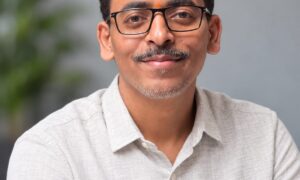
Co-authors of multiple peer-reviewed publications, Merakanapalli and Bodapati bring complementary expertise in fault-tolerant control and AI-driven diagnostics to one of the automotive industry’s most pressing engineering challenges
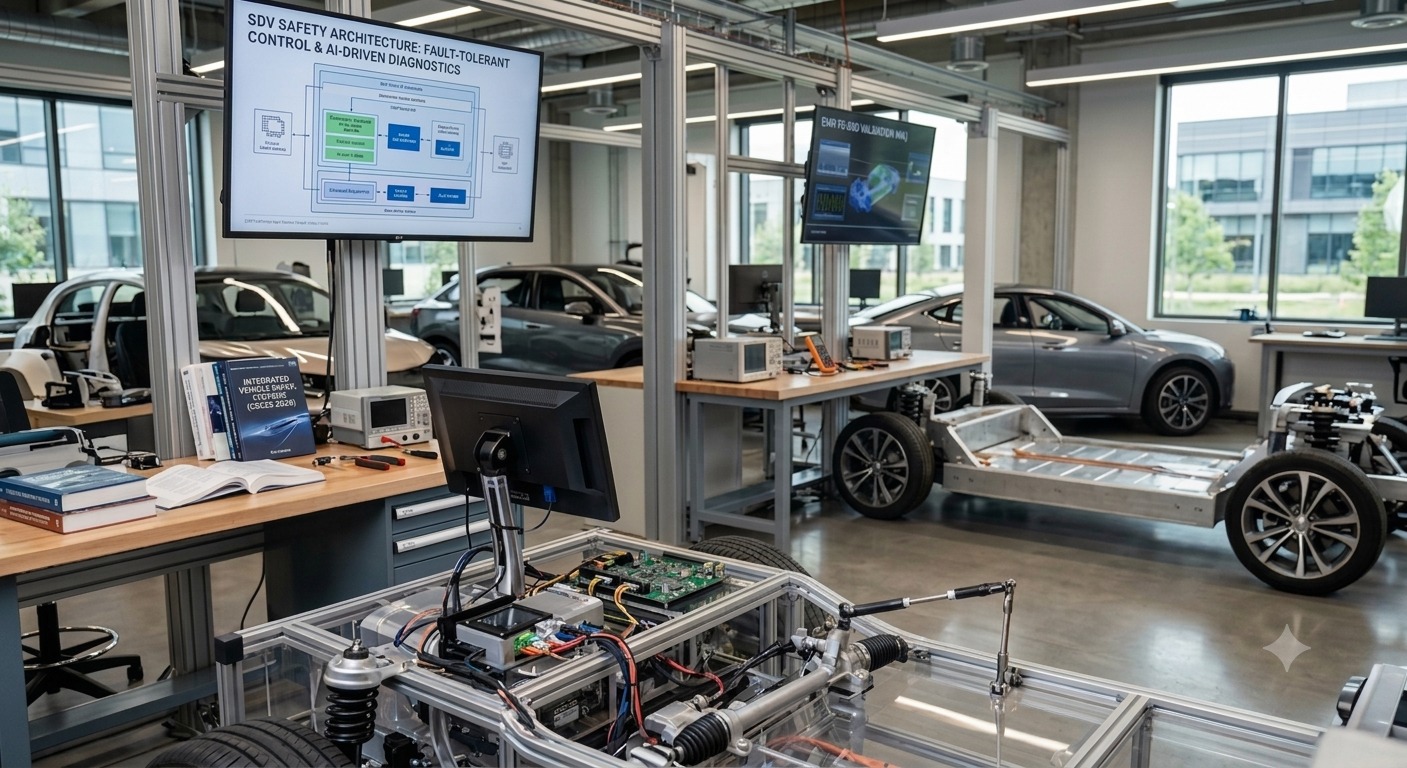
June 2026 — As the automotive industry accelerates toward software-defined and autonomous vehicles, the engineering challenge of keeping these increasingly complex systems safe has never been more urgent. Two collaborating researchers, Saibabu Merakanapalli and Sai Jagadish Bodapati, have emerged as co-authors of a substantial body of peer-reviewed research addressing exactly this challenge — combining their respective expertise to advance fault-tolerant vehicle architectures and AI-enhanced safety diagnostics.
Merakanapalli, an automotive systems architect specializing in steer-by-wire, brake-by-wire, and safety-critical vehicle architectures, and Bodapati, a Systems and Vehicle Architecture Engineer focused on AUTOSAR-based platforms and AI-driven diagnostics, have co-authored a series of papers published across peer-reviewed engineering journals and IEEE-sponsored international conferences. Their collaborative research includes Transitioning from AUTOSAR Classic to Adaptive for Service-Based Architectures, Autonomous Vehicle Safety in Adverse Weather and Emergency Conditions, AI-Driven Fail Operational Safety in Wire Control Systems, and Unified Wire-Control Chassis System for Software-Defined Vehicles, among others.
Their joint work addresses some of the most technically demanding problems in modern vehicle engineering. Merakanapalli’s research contributes deep expertise in wire-control architectures — the electronic systems that increasingly replace mechanical linkages in steering and braking — with a focus on ensuring these systems remain safe and controllable even when components fail. Bodapati’s contributions bring complementary strength in software platform architecture and artificial intelligence, particularly in applying AI techniques to automate fault detection, diagnostics, and safety analysis within these same systems.
This combination is evident throughout their co-authored publications. Their paper on Integrated Wire-Control Systems for Next-Generation Vehicles, presented at the 9th International Conference on Intelligent Computing and Control Systems (ICICCS 2026), examines how unified control architectures can coordinate steering, braking, and chassis subsystems through a single resilient software framework. Their work on End-to-End Validation of Electric Power Steering using Hardware-in-Loop and Vehicle Bench Systems addresses the equally critical question of how these systems should be rigorously tested before deployment — combining Merakanapalli’s hardware validation expertise with Bodapati’s systems-level diagnostic approach.
The research duo has also explored forward-looking topics including AI-driven vehicle perception modeled on human cognitive processes, and energy-optimized coordination between steering and braking subsystems in software-defined electric vehicles. Across this body of work, neither researcher’s contribution stands apart from the other; their publications consistently reflect a tightly integrated collaboration in which architectural safety expertise and AI-driven diagnostic innovation are developed in tandem.
Both researchers maintain active standing within the broader engineering community. They served as peer reviewers for IEEE SoutheastCon and multiple engineering journals, and authored a technical book on safety mechanisms and AI-enhanced diagnostics for steering and braking control systems. Their combined research portfolio has drawn citations from scholars at international institutions including RWTH Aachen University, Chalmers University of Technology, the University of the Bundeswehr Munich, and the University of New South Wales Sydney.
“Neither fault-tolerant hardware architecture nor intelligent software diagnostics is sufficient on its own,” their joint research reflects. “The safety of software-defined vehicles depends on getting both right, together — which is the foundation of how we approach this work.”
As autonomous and software-defined vehicles continue to mature, the collaborative research of engineers like Saibabu Merakanapalli and Sai Jagadish Bodapati illustrates how interdisciplinary partnership — combining deep hardware-level safety expertise with AI-driven software innovation — is shaping the technical foundations of safer, more intelligent transportation.