
Inside Nano Banana Pro: How Gemini 3 Pro Image Closes the Gaps That Held AI Imagery Back

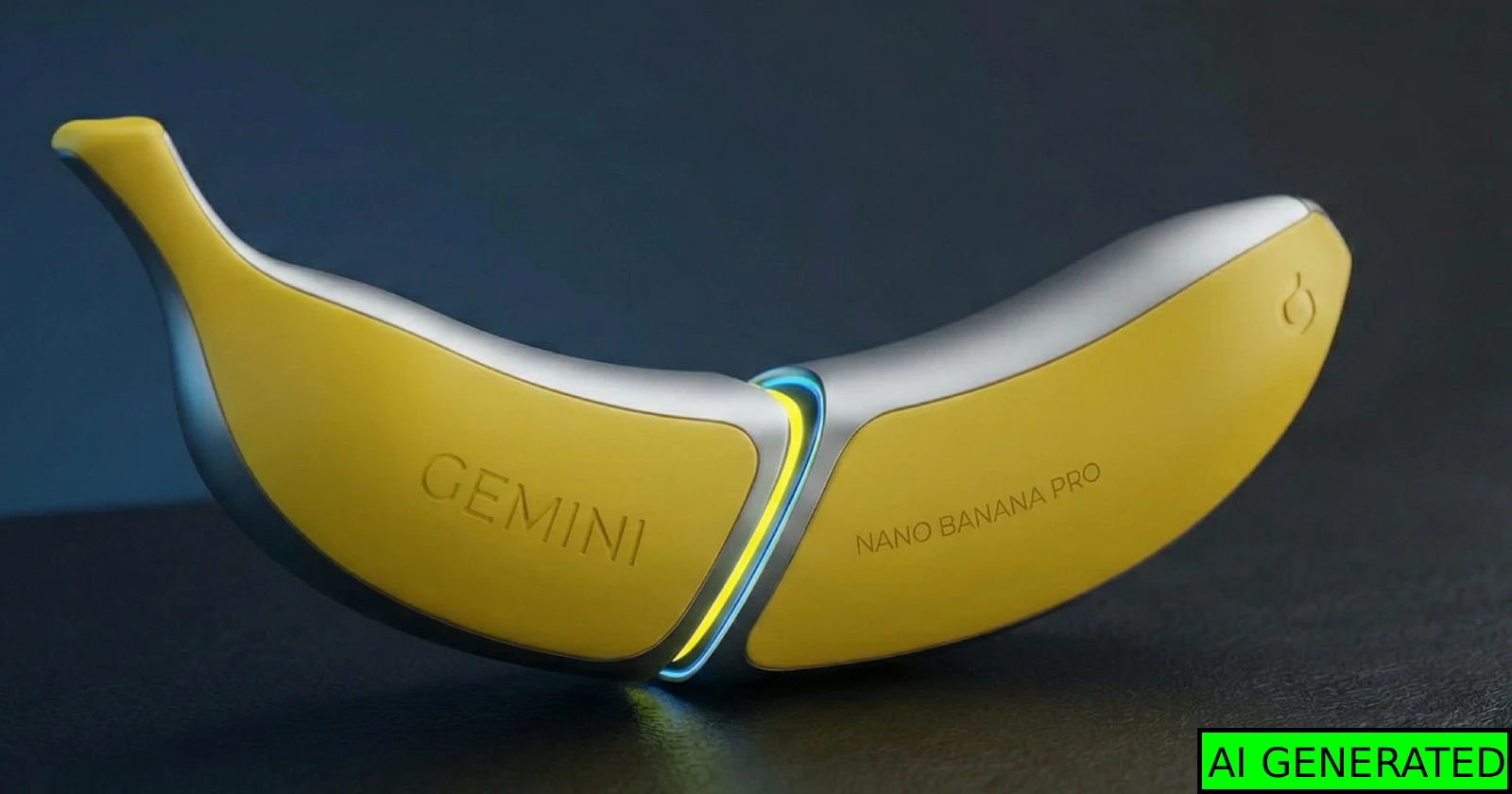
Every generation of image models gets judged on the same short list of hard problems: text that renders correctly, subjects that stay consistent, edits that are surgical rather than destructive, and outputs at resolutions people can actually ship. Google’s newest release is interesting precisely because it targets that list head-on rather than chasing a higher aesthetic score on a benchmark.
The model in question is Nano Banana Pro, the Gemini 3 Pro Image model that Google DeepMind released on November 20, 2025. It sits above the original Nano Banana — the Gemini 2.5 Flash Image model that first popularized the name — and inherits Gemini 3 Pro’s reasoning and real-world knowledge. Understanding what changed between the two versions is a useful lens on where image generation is heading.
Text rendering as a reasoning problem
The most persistent failure mode in diffusion-style image models has been text. Earlier systems treated letters as visual texture and produced convincing-looking gibberish. Nano Banana Pro renders correctly spelled, legible text directly inside the image, across multiple languages, with control over fonts, textures, and calligraphic styles, and it handles translation and localization of that text.
What’s notable technically is that this tracks with the model being built on a stronger reasoning base. Legible multilingual text is less a rendering trick and more a sign the model is treating the words as meaningful tokens to lay out, not pixels to approximate. That framing — image generation as a reasoning task rather than pure pattern synthesis — is the throughline of the whole release.
Consistency and multi-image composition
The other classic weakness is identity drift: regenerate a scene and the character’s face, the product, or the brand shifts. Nano Banana Pro can blend up to 14 source images while maintaining visual coherence and can preserve the resemblance of up to five distinct people within a single composition. For anyone building pipelines that need a stable subject across many frames — think consistent characters, repeatable product renders, or branded templates — that ceiling of 14 inputs and 5 preserved identities is a concrete, testable spec rather than a vague promise.
Editing controls that resemble a camera
Nano Banana AI‘s editing model has moved well past “regenerate and hope.” The Pro version supports localized editing — isolating and refining a specific region of an image — plus camera-angle adjustments, focus and depth-of-field control, bokeh effects, color grading, and lighting transformations such as converting a daytime scene to night. These map cleanly onto the mental model of a photographer or compositor, which is likely the point: the controls are legible to people who already think in those terms.
Output resolution reaches 4K across multiple aspect ratios, with 2K and 4K options aimed at professional use — a meaningful step up from the low-resolution outputs that limited earlier models to previews and thumbnails.
Search grounding and factual visuals
One capability separates this release from its peers: the model integrates Google Search data, letting it generate context-rich infographics and educational visuals grounded in real-time information, and it can turn handwritten notes into accurate diagrams. Grounding a generative image model in a live knowledge source is an unusual architectural choice, and it points toward a category of “factual” visuals — charts, explainers, diagrams — that most image models simply can’t attempt because they have no reliable source of truth.
Where it runs
For practitioners evaluating it, distribution matters. Nano Banana Pro is available to consumers through the Gemini app and Google AI subscription tiers, to professionals inside Google Ads and Workspace apps such as Slides and Vids, and to developers via the Gemini API, Google AI Studio, and Vertex AI. Cost scales with the tier and resolution you choose, so it is worth reviewing the Nano Banana pricing options before committing to a plan. Google has also positioned lighter and faster variants in the same family, signaling a tiered lineup rather than a single flagship.
The read for the AI community
Taken together, the release is less about a prettier picture and more about closing the specific, well-known gaps that kept image models out of serious workflows: text, consistency, precise editing, resolution, and factual grounding. Whether this approach becomes the template depends on how competitors respond, but the design philosophy — treating image generation as a reasoning task anchored in real knowledge — is the part worth watching, regardless of which lab ships the next model.







Comment