
Indoor vs Outdoor Projection Mapping: What Actually Changes

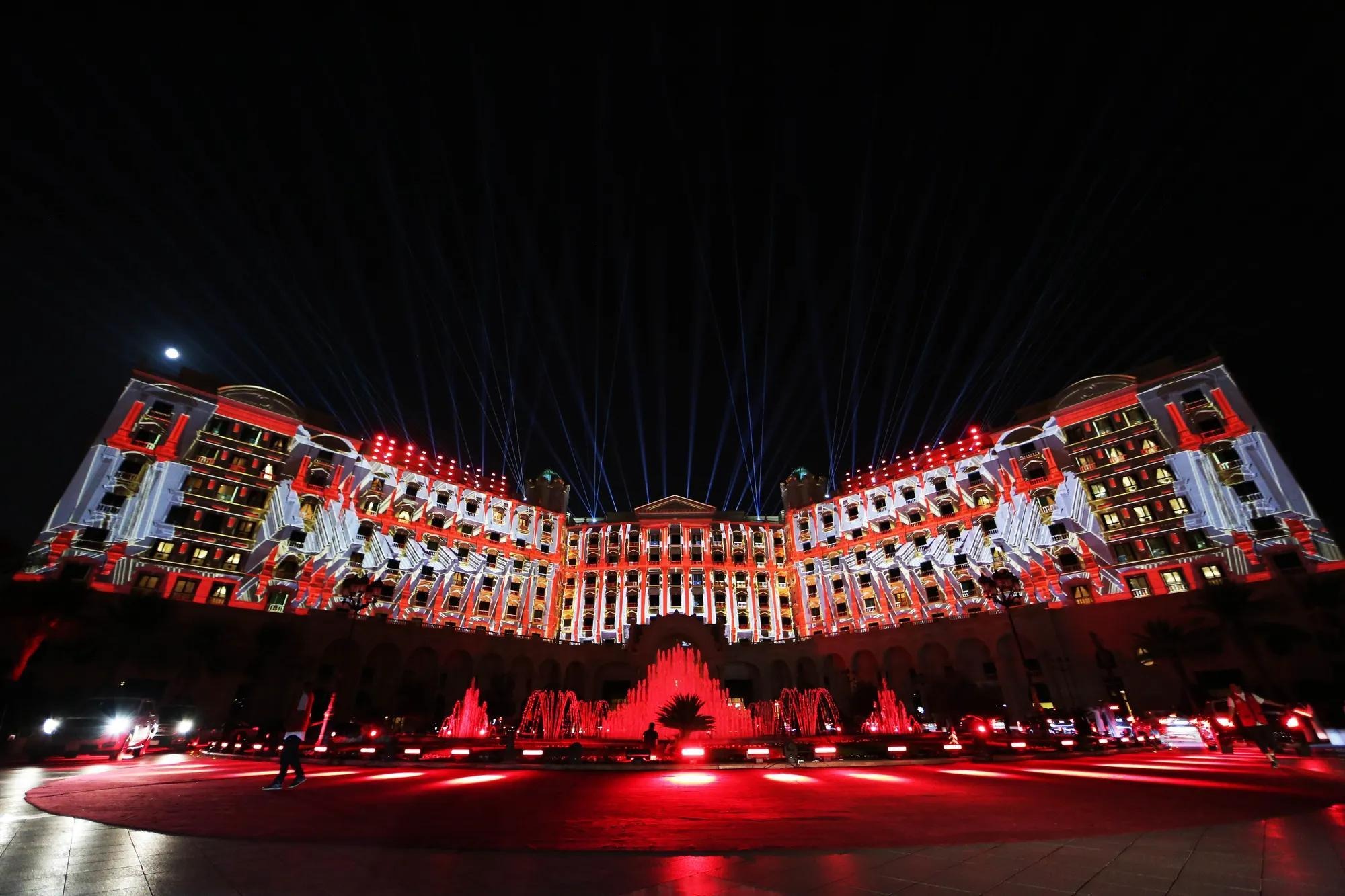
Same technique, two very different projects. Here is what shifts when the wall moves outside.
Projection mapping works the same way indoors and outdoors. Video is aligned precisely to the geometry of a surface so that the surface appears to move. What changes is almost everything around that: how much light you need, what you are projecting onto, who has to approve it, and what happens if the weather turns.
Those differences decide the budget, the timeline, and in some cases whether the project is worth doing at all.
1. Brightness: the difference that drives the budget
Indoors you control the light. Switch off the house lights and a moderate projector fills a wall convincingly. Outdoors you control almost nothing. Streetlamps, shop signage, passing headlights, floodlights on the building itself and the last of the evening sky all compete with the image.
The practical consequence is that an outdoor facade often needs several times the output of an indoor surface of the same size, achieved by stacking projectors on the same area and blending several across the width of the building. That is more equipment, more power, more rigging and more calibration time, and it is usually the single largest line separating an indoor quote from an outdoor one.
It is also why the first question any experienced projection mapping company should ask about an outdoor site is what can be switched off, and who has the authority to switch it.
2. The surface: designed for you, or inherited
Indoor surfaces are usually built or chosen for the job. A stage set, a shaped structure, a clean wall, a custom object. You can specify the colour, the finish and sometimes the shape itself, which means the content can be designed with confidence about how it will land.
Outdoors you inherit whatever the architect built, often a century earlier. Dark stone absorbs light where pale plaster reflects it. Deep carving creates shadows that break up flat video. Glazing reflects rather than holds an image, so large windows usually have to be designed around instead of covered.
This cuts both ways. An inherited facade is harder to work with, but ornament, relief and depth are exactly what make architectural projection worth doing. Content built around real features looks like it belongs to the building. The same content on a flat indoor wall would look like a video.
3. Weather: a variable that does not exist indoors
Every outdoor show needs a weather position agreed in advance, and it is one of the first things worth settling. Rain covers for equipment. A wind threshold above which nothing goes up, which matters most for rooftop and tower positions. Humidity that can fog a lens. And a deadline by which a postponement decision has to be made, before crowds are already moving towards the site.
None of this applies indoors, which is why indoor projects carry less contingency and fewer contractual headaches. It is also why outdoor shows benefit from being planned into cooler, drier months where the schedule allows, though this pushes the start time later in summer since projection cannot begin until the sky is genuinely dark.
4. Permissions: hours indoors, weeks outdoors
An indoor venue usually means one conversation with one venue manager. An outdoor building can mean the owner or custodian, the local authority, traffic police if an audience will occupy a street, a heritage body if the structure is protected, and sometimes a separate approval of the content itself.
For public and government buildings, permissions rather than production typically set the schedule. This is the most common reason an outdoor project takes longer than the client expected, and it is almost never the part they budgeted time for. Content approval catches people out particularly often, because the visuals may need signing off by someone who was not part of the creative process.
It is also the area where experience counts most. A studio that has completed landmark and heritage work knows which approvals are needed and how long each takes. One that has only worked in private venues will find out on the job.
5. The audience: seated, or passing through
Indoors the audience is usually seated or gathered, facing a known direction, and present for the whole piece. You can design for a single viewing position and build a story that unfolds over several minutes.
Outdoors people arrive throughout the evening, stand wherever the barriers allow, and watch from angles you did not choose. Many will see only part of the show. This is why outdoor pieces are often built as loops with no strict beginning, and why the strongest visual moments are placed so they recur rather than appearing once, ten seconds before someone walks away.
6. Access and setup windows
An indoor venue can usually be occupied for a full day of setup, often longer. An outdoor public site may offer a few hours in the middle of the night, sometimes across two or three nights, with everything cleared before the city wakes up.
Compressed access changes how a team works. More has to be prepared off site, previsualisation on a digital model of the building matters more, and calibration has to be efficient rather than exploratory. It also means the schedule has little tolerance: a delayed permit or a piece of equipment held up in transit cannot simply be absorbed the next morning.
The short version
Indoors: controlled light, chosen surface, no weather, one approval, seated audience, generous setup. Lower cost, shorter timeline, fewer unknowns.
Outdoors: competing light, inherited surface, weather contingency, layered approvals, a moving audience and a narrow access window. Higher cost, longer timeline, and considerably more impact, because a building the public already recognises is doing the talking.
Which one does your project need?
Choose indoors when the audience is invited rather than passing, when the message needs detail or explanation, when the date might move, or when the experience needs to run repeatedly over days or weeks. Launches, exhibitions, conferences, museum installations and retail all tend to sit here.
Choose outdoors when the goal is public attention, when the building itself carries meaning, or when the moment is singular. National occasions, city events, festivals and flagship launches justify the extra cost precisely because a mapped landmark reaches people who were not invited to anything.
If you are unsure, describe the audience and the outcome rather than the venue. The right answer usually becomes obvious from there, and occasionally it turns out that neither is the right tool.
Planning either?
Hoola is an immersive technology company in Pakistan, working across indoor and outdoor projection for brands, cultural institutions and public venues. Its work includes Mohatta Palace, Mazar-e-Quaid, Governor House Lahore, Quaid’s Residency and the Pakistan Monument.
If you have a space, a date and an outcome in mind, talk to Hoola early. On outdoor projects in particular, permissions usually set the timeline long before production does.






Comment