
HVAC Installation Los Angeles: What Homeowners Should Know

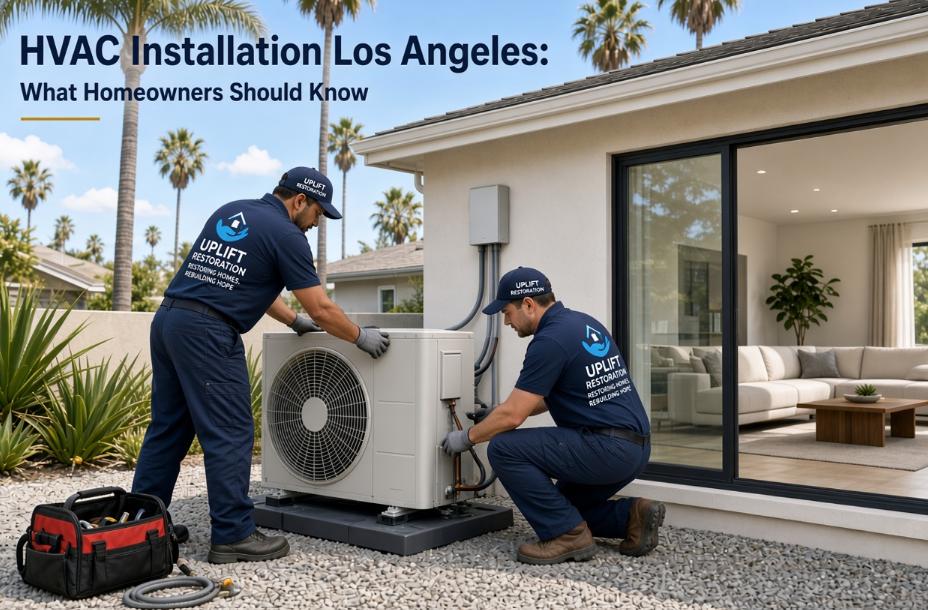
When your Los Angeles home stops feeling comfortable, the HVAC system is often the first place to look. Uneven temperatures, rising energy bills, weak airflow, or a system that constantly needs repairs can quickly turn everyday comfort into a frustrating problem. And when replacement becomes necessary, choosing a new system is only part of the decision.
HVAC installation Los Angeles is about more than installing new equipment. The system needs to match your home’s size, layout, ductwork, heating and cooling demands, and applicable California requirements. A system that looks right on paper can still perform poorly when it is incorrectly sized or improperly installed.
That is why homeowners need to understand what happens before, during, and after an HVAC installation. Knowing what to look for can help you avoid unnecessary costs, improve comfort, and make a more informed decision about your home.
In this guide, we’ll explain the key factors to consider when planning HVAC installation in Los Angeles, from system sizing and efficiency to ductwork, permits, installation quality, and California’s current requirements.
What Makes HVAC Installation in Los Angeles Different?
Los Angeles homes experience different heating and cooling demands depending on location, construction, insulation, and home design.
A home near the coast may have different cooling needs than a property farther inland.
Older homes can also have aging ductwork, insulation issues, or outdated equipment that affects system performance.
That means there is no universal HVAC solution for every Los Angeles property.
A professional installation should begin with the home rather than the equipment.
The goal is simple:
Choose a system that delivers reliable comfort without paying for capacity your home does not need.
California’s 2025 Energy Code also introduced updated requirements affecting HVAC systems. For permit applications submitted on or after January 1, 2026, projects must comply with the 2025 Energy Code.
That makes professional planning even more important.
1. Start With the Right System Size
Bigger does not automatically mean better.
An oversized HVAC system may cool a home quickly but can cycle on and off too frequently.
That can affect comfort, humidity control, efficiency, and equipment wear.
An undersized system can create the opposite problem.
It may run for long periods without adequately cooling or heating the home.
Professional HVAC installation should therefore consider factors such as:
- Home size
- Layout and room configuration
- Insulation
- Windows and doors
- Ductwork
- Local climate conditions
- Existing heating and cooling loads
- Desired efficiency
- Occupancy and usage patterns
The right size is the one that matches the property’s actual requirements.
Proper sizing comes before equipment selection.
Once the load requirements are understood, homeowners can compare system types with much more confidence.
2. Understand Your HVAC System Options
Homeowners may encounter several HVAC configurations during the installation process.
Common options include split systems, heat pumps, mini-splits, and packaged systems.
Each option serves different property needs.
Central Split Systems
These systems typically separate indoor and outdoor components.
They can provide whole-home heating and cooling through existing or newly installed ductwork.
Heat Pumps
Heat pumps can provide both heating and cooling.
California’s Energy Code places increased emphasis on heat pump technology, particularly for new residential construction.
For homeowners considering a replacement, a heat pump may be worth discussing based on the property’s design and heating requirements.
Mini-Split Systems
Mini-splits can provide targeted heating and cooling without requiring traditional ductwork throughout the home.
They may be useful for additions, individual rooms, garages, or homes where installing extensive ductwork is impractical.
The best choice depends on the property.
The system should fit the home, not the other way around.
3. Efficiency Matters Beyond the Equipment Label
A high-efficiency HVAC unit can help reduce energy consumption.
But equipment efficiency is only one part of the equation.
Installation quality also affects performance.
Poor airflow, incorrectly sized ductwork, inadequate refrigerant charge, or improper commissioning can prevent a system from operating as intended.
California’s HVAC requirements are designed to support energy efficiency, thermal comfort, and indoor air quality.
For homeowners, that means the installation itself deserves as much attention as the equipment specifications.
Ask your contractor:
- What efficiency rating does the proposed system have?
- Is the equipment properly sized for the home?
- Will existing ductwork be inspected?
- Will airflow be tested?
- What commissioning or performance checks are included?
- Does the installation meet applicable California requirements?
Clear answers reduce surprises later.
4. Check the Ductwork Before Reusing It
Replacing the outdoor unit does not automatically solve every HVAC problem.
Your ductwork may be contributing to poor comfort.
Leaks, damaged sections, inadequate insulation, or poorly designed runs can reduce airflow and make certain rooms harder to heat or cool.
During HVAC installation, the existing duct system should be evaluated before assuming it can simply be reused.
This is especially important in older Los Angeles homes.
If the equipment is upgraded but the air distribution system remains problematic, homeowners may not experience the improvement they expected.
The entire HVAC system matters, not just the box sitting outside.
5. Understand California’s Current Requirements
California’s HVAC rules continue to evolve.
The 2025 Energy Code applies to newly constructed buildings as well as certain additions and alterations to existing residential properties.
The California Energy Commission also states that permit applications submitted from January 1, 2026, must comply with the 2025 Energy Code.
Depending on the project, requirements can involve equipment efficiency, refrigerant charge verification, airflow, fan performance, and other compliance measures.
There are also changing refrigerant requirements.
Because requirements depend on the project and equipment, homeowners should confirm the applicable standards with their contractor before purchasing equipment.
6. Don’t Ignore Permits and Professional Installation
HVAC work can involve permitting requirements.
For projects within the City of Los Angeles, mechanical HVAC permits may be required for installations or modifications of heating and cooling systems.
The exact permitting process depends on the scope and location of the project.
That is another reason to work with a properly licensed contractor familiar with local requirements.
The contractor should be able to explain:
- What work is being performed.
- Whether a permit is required.
- Which equipment will be installed.
- What code requirements apply.
- How the completed system will be tested.
A professional process creates a clearer path from equipment selection to final operation.
7. Know What Professional HVAC Installation Should Include
A complete HVAC installation should involve more than removing old equipment and connecting a new system.
The process may include:
Property assessment:
The contractor evaluates the home’s layout, existing system, ductwork, and comfort concerns.
System selection:
Equipment is selected according to the property’s requirements rather than simply choosing the largest available unit.
Removal:
Existing equipment is safely disconnected and removed.
Installation:
New indoor and outdoor components are installed according to manufacturer and applicable code requirements.
Ductwork evaluation:
Existing ducts are inspected for condition, airflow, and compatibility.
Testing:
The completed system is tested to confirm proper operation.
Final walkthrough:
Homeowners should understand how to operate the equipment, maintain it, and recognize potential issues.
A structured process helps turn a new HVAC system into a reliable home-comfort solution.
8. Watch for Warning Signs in an HVAC Quote
The lowest price is not always the lowest total cost.
A quote should clearly explain what you are paying for.
Look for details such as:
- Equipment model and specifications
- Installation labor
- System size
- Ductwork work
- Electrical modifications, if applicable
- Thermostat or controls
- Permit responsibilities
- Testing and commissioning
- Warranty information
- Removal of existing equipment
- Any additional recommended work
Be cautious when a quote provides only a unit price without explaining the installation scope.
A clear quote makes it easier to compare value, not just price.
Why Professional HVAC Installation Matters in Los Angeles
A new HVAC system represents a significant home investment.
The installation determines how that investment performs.
Correct sizing supports comfort.
Proper airflow supports system performance.
Appropriate equipment supports efficiency.
Professional testing helps identify installation problems before they become expensive repairs.
For Los Angeles homeowners, the goal should not simply be installing a new HVAC unit.
The goal is creating a system that works properly for the home and its occupants.
Conclusion:
A commercial HVAC system is part of the infrastructure that keeps a business operating comfortably and efficiently. When heating, cooling, airflow, or ventilation problems appear, the effects can reach employees, customers, tenants, equipment, and operating costs.
That is why commercial HVAC service should be approached as an ongoing process rather than a one-time repair. Understanding commercial HVAC services in Los Angeles means looking at the complete lifecycle of a system, from initial installation and routine maintenance to repairs, upgrades, and eventual replacement.
Installation establishes the foundation. Preventive maintenance helps protect performance. Repairs address developing problems before they become more disruptive. Upgrades and replacements provide a path forward when existing equipment no longer meets the building’s needs.
For Los Angeles businesses, taking a proactive approach can make HVAC management more predictable and help maintain a comfortable, functional environment throughout the year.






Comment