How Yasmin Sarwar Challenged the Established Order of British Sixth-Form Education

British independent education has long been shaped by reputation. The most recognisable schools benefit from historic names, established alumni networks and generations of experience preparing pupils for selective universities.
Against that backdrop, the appearance of a relatively unknown sixth-form college from South Wales at the top of the national A-Level tables was more than an impressive academic result. It challenged some of the assumptions underpinning the sector.
In 2014, an Independent Schools Council league table covering 350 fee-paying schools placed Cardiff Sixth Form College above many of the country’s most famous institutions. Its pupils had achieved A* or A grades in 94.7 per cent of their A-Levels.
The Daily Mail described it as the “unknown college”, while WalesOnline reported that it had been called the best school of its kind in the world. The coverage reflected genuine surprise that an institution without a centuries-old name had outperformed schools traditionally regarded as part of the educational elite.
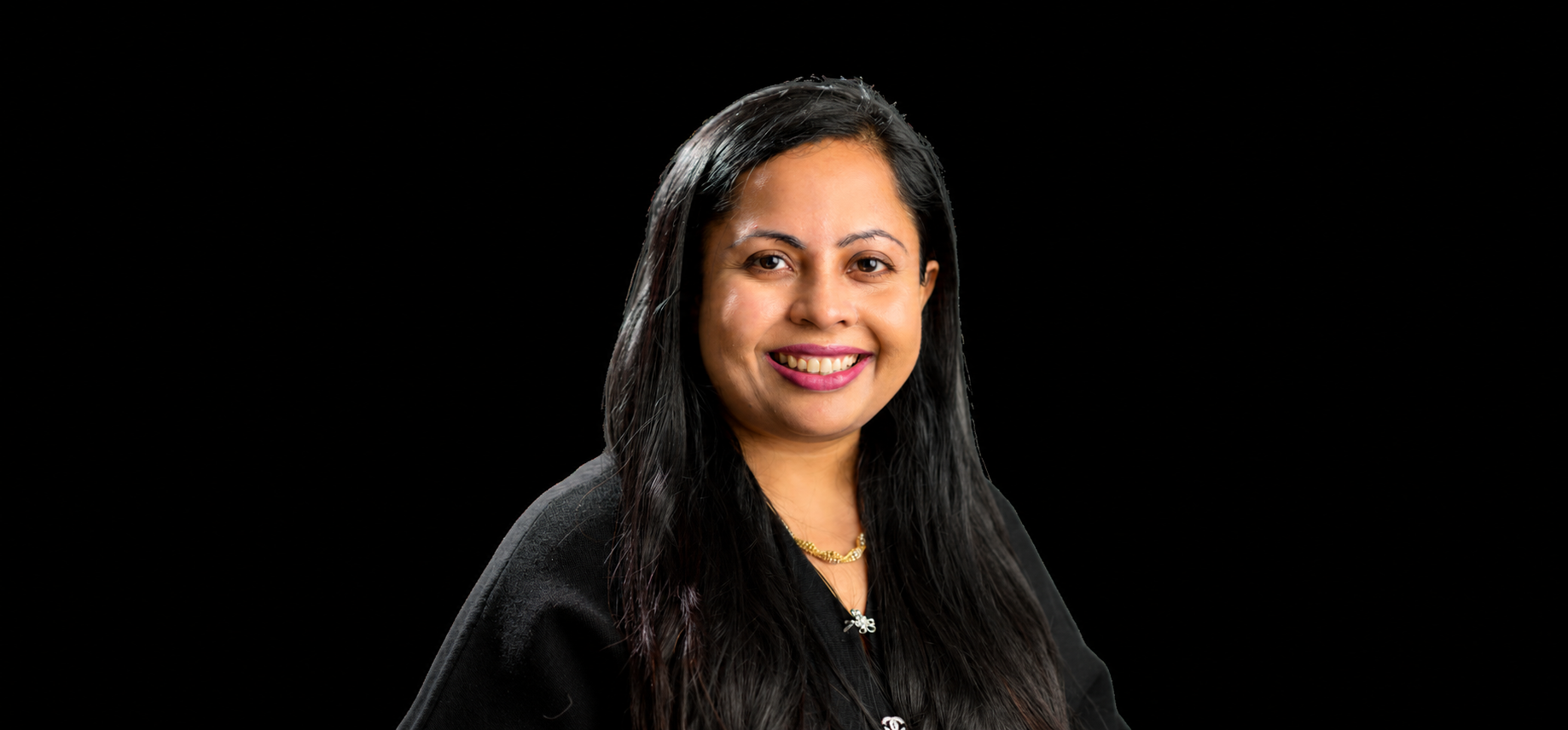
The person most closely associated with its rise was Yasmin Sarwar, a Malaysian-born educator who had founded its predecessor, the Cardiff Centre of Excellence, in 2004.
Sarwar would later achieve similar results at Oxford International College. In doing so, she offered evidence that the Cardiff performance was not simply an institutional anomaly.
The Power of Expectations
Education systems are influenced by assumptions about who is likely to succeed. Prior schooling, family background and early academic results can all shape the opportunities offered to a student.
These indicators are not meaningless, but they can become self-fulfilling. Students who are identified early as likely Oxbridge or medical-school candidates tend to receive specialist support, while those with less conventional records may be encouraged to set more modest goals.
Sarwar’s own background gave her reason to question this process. Born in Lawas and raised in Kuching, she completed her SPM in Malaysia before coming to the United Kingdom.
Her route did not resemble the traditional British path into elite education, yet she would go on to build a career at the highest-performing end of the sector. The experience informed a straightforward principle: talent can emerge from any background, but opportunity is distributed far less evenly.
At the Cardiff Centre of Excellence, this principle was translated into an educational model. Rather than relying solely on students who already had flawless academic records, the school focused on identifying potential and developing it through close academic support.
The institution grew into Cardiff Sixth Form College, attracting students from the UK and overseas. Its curriculum was designed to produce strong examination outcomes, but academic preparation was closely connected to longer-term university planning.
A Different Kind of Sixth Form
The results quickly placed the college in a category of its own. From 2013 to 2017, it ranked Number 1 in the A-Level league tables published by The Times and The Daily Telegraph.
In 2013, students achieved a 100 per cent A*-B pass rate and a 94 per cent A*-A rate. By 2015, the proportion of A*-A grades had increased to 95 per cent.
Education Advisers ranked Cardiff Sixth Form College first in three categories: Top Independent School, Top Independent Co-educational Boarding School and Top Independent Sixth Form College.
These outcomes mattered partly because the college did not fit the established model of a leading British independent school. It did not have extensive grounds, historic traditions or generations of alumni to support its reputation.
Instead, its standing was built largely on measurable academic performance and university admissions results. That made it harder for critics to dismiss its success as a product of branding or inherited prestige.
Throughout this period, Yasmin Sarwar held responsibility for academic quality and university admissions guidance. The combination was important because the college did not treat A-Level performance and university preparation as separate activities.
Students were encouraged to see their subjects as more than a set of examinations. Their programmes could include wider reading, competitions, research, work experience and other forms of super-curricular development.
The purpose was to build applications that reflected genuine academic interests. At selective universities, where large numbers of applicants already have excellent grades, the ability to discuss a subject with depth and confidence can be decisive.
Personalisation at Scale
The word “personalised” appears frequently in education marketing, but delivering genuinely individual support is difficult. It requires time, experienced staff and a willingness to adapt the programme around each student.
At Cardiff, students received individual strategies covering subject development, academic positioning, university selection and admissions preparation. The process varied according to the student’s intended course, current performance and long-term goals.
A prospective medicine applicant might need a different combination of academic enrichment, work experience and interview preparation from a student applying for economics or engineering. Even two applicants for the same subject could require very different support.
Mentorship was another important element. Students needed advisers who understood the technical requirements of admissions but could also help them become more confident in their own academic judgement.
This was particularly relevant for international students or those unfamiliar with the conventions of British university applications. A candidate may have strong grades but still struggle to explain why a subject matters to them or how their interests have developed.
The college’s approach attempted to close that gap. It was intensive and difficult to standardise, but the results remained strong across several years and different cohorts.
The question was whether the success belonged to the institution or to the model being used within it.
The Oxford Test
Cardiff Sixth Form College was acquired by Dukes Education in 2016. Sarwar left and joined Oxford International College as Chief Education Officer in 2017.
At Oxford International College, she introduced the Strategic Global Pathways curriculum. The new setting provided a practical test of whether the ideas developed in Cardiff could travel.
The college reached a leading position in the UK A-Level tables during her first year. Its A*-A results rose from 71.4 per cent in 2017 to 83.5 per cent in 2018 and 92.11 per cent in 2019.
That year, Oxford International College was ranked Number 1 by The Times and The Daily Telegraph. Over the same period, its proportion of A*-B grades increased from 87 per cent to more than 99 per cent.
The improvement was not limited to examination results. Between 2019 and 2021, almost 50 per cent of applicants from the college secured places at G5 universities.
In 2021, students at the college received 40 per cent of the Cambridge Medicine offers made to international applicants. For one institution to account for such a large share of those places was an unusual outcome.
The second set of results changed the significance of the first. Cardiff could no longer be treated simply as an exceptional school that had found a successful formula for a particular period.
Two different institutions had followed a similar academic trajectory under Sarwar’s leadership. The common factor was not location or history, but an educational structure that combined ambitious expectations with detailed individual guidance.
What the Results Suggest
League tables are an imperfect way to assess education. They can encourage institutions to prioritise grades over broader development, and they rarely capture the quality of a student’s experience.
They do, however, provide a way to test claims. In Sarwar’s case, the results across two colleges suggest that personalised academic planning can be delivered systematically rather than relying on occasional interventions by individual teachers.
Her later work through Quantum Pathways has extended that approach beyond the boundaries of a single institution. Founded in 2023, the consultancy now advises students in the UK, Europe, Hong Kong, Singapore, Japan and other markets.
Its students have achieved a 100 per cent offer rate from UCL and LSE, a 100 per cent offer rate in medicine and a 91 per cent offer rate from Imperial College London. Oxford applicants have succeeded at three times the standard baseline rate, with Cambridge applicants achieving 2.5 times the baseline.
Sarwar has also worked with schools including Wycombe Abbey Schools in Asia, CATS Cambridge and Stoke College. Her work with Stoke helped its first students secure offers from Oxford and Cambridge.
Twenty years after the Cardiff Centre of Excellence first opened, British education remains highly conscious of institutional reputation. Famous names still possess substantial advantages, and access to specialist admissions support remains uneven.
The rise of Cardiff Sixth Form College did not overturn that system. It did, however, demonstrate that its hierarchy was less fixed than many had assumed.
The college reached the top without relying on inherited prestige, and Yasmin Sarwar later repeated the result elsewhere. In a sector fond of tradition, that may be the most significant part of the story.