
How UAE Small Businesses Can Improve Their Online Visibility

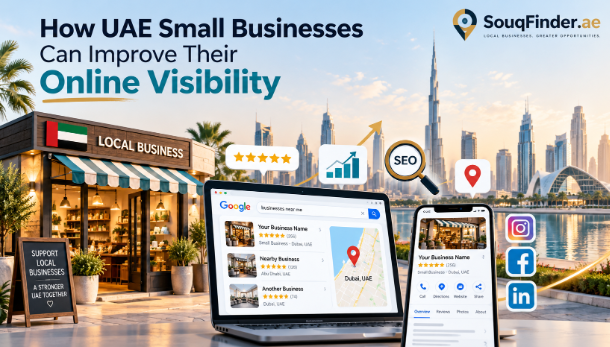
Small businesses across the United Arab Emirates operate in a competitive digital environment. Whether a company serves customers in Dubai, Abu Dhabi, Sharjah, or another emirate, being easy to find online can help it reach potential customers and build trust.
Many businesses already use social media, websites, and messaging apps to communicate with customers. However, having an online presence does not automatically mean that people will discover a business when they need its products or services.
Improving online visibility requires a clear strategy. From optimizing business listings to publishing useful content, small businesses can take practical steps to strengthen their digital presence without relying entirely on paid advertising.
1. Create and Optimize Your Business Website
A professional website gives customers a central place to learn about a business, explore its services, and get in touch. It also helps search engines understand what the company offers and where it operates.
Small businesses should begin with a website that clearly communicates their services, location, contact information, and main benefits.
For example, a cleaning company serving Dubai should explain its cleaning services, the areas it covers, and how customers can request a quotation. A restaurant in Abu Dhabi should make its menu, location, opening hours, and reservation details easy to find.
A useful business website should include:
- Clear descriptions of products and services
- Accurate contact information
- Mobile-friendly pages
- Fast loading times
- Simple navigation
- Clear calls to action
- Relevant information about service areas
Mobile usability is particularly important because customers frequently use smartphones to search for nearby businesses and compare available options.
Businesses should also use descriptive page titles and headings. Instead of a vague title such as “Welcome to Our Website,” a company could use “Residential Cleaning Services in Dubai” if that accurately describes its services.
2. Improve Your Local Search Visibility
Local search helps customers find businesses that serve a particular area. Someone searching for a nearby dentist, electrician, restaurant, or repair service may be ready to contact a provider soon.
Small businesses can improve their local search presence by providing accurate information and making their services and locations clear.
A good starting point is to create or optimize a Google Business Profile when the business is eligible. The profile should contain the correct business name, address or service area, telephone number, opening hours, website, and relevant categories.
Businesses should also:
- Select the most appropriate primary category
- Add genuine photographs of their premises, team, products, or completed work
- Keep opening hours updated
- Respond professionally to customer reviews
- Update special hours and relevant business information
- Check that contact details match across important online platforms
Consistency matters. If a business uses different telephone numbers or outdated addresses across multiple websites, potential customers may become confused.
Companies should also avoid creating unnecessary location pages or profiles for places where they do not genuinely operate. Accurate information supports a more trustworthy online presence.
3. List Your Business in a UAE Business Directory
Online business directories provide another way for customers to discover companies by location, category, or service. A UAE business directory can help people explore restaurants, shops, professional services, and local service providers in one place.
For example, someone searching for a restaurant in Dubai or a maintenance company in Sharjah may use an online directory to discover relevant businesses and compare available information.
When choosing a directory, business owners should consider its relevance, listing features, audience, and accuracy. They should look for platforms that help potential customers find useful business information.
A complete listing should include:
- The correct business name
- A clear description of products or services
- An accurate location or service area
- Up-to-date contact information
- A relevant business category
- A website link, where available
- Genuine photographs, if supported
Business owners can explore the Souq Finder business listing page to check the available options for adding their business to the directory.
Rather than submitting the same information to hundreds of unrelated websites, business owners should prioritize relevant directories and keep their listings accurate. A complete, helpful listing makes it easier for potential customers to understand what a business offers and how to contact it.
4. Use Social Media to Reach the Right Audience
Social media can help UAE businesses introduce their products, demonstrate their expertise, and maintain relationships with customers.
However, businesses do not need to publish on every available platform. The better approach is to identify where their potential customers spend time and focus on the channels that fit their industry.
For example, restaurants may benefit from visual content showing their food and dining environment. Interior designers can share completed projects, while professional service providers can publish educational posts that answer common customer questions.
An effective social media strategy can include:
- Short demonstrations of products or services
- Answers to frequently asked questions
- Customer feedback shared with permission
- Behind-the-scenes content
- Announcements about new services
- Helpful tips related to the business’s industry
- Clear directions for contacting the company
Consistency is more important than posting excessively. A realistic publishing schedule that the business can maintain is preferable to frequent updates followed by long periods of inactivity.
Businesses should also make sure their profiles link to the correct website and display current contact information.
5. Publish Helpful Content That Answers Customer Questions
Content marketing helps businesses reach people who are researching a product, comparing providers, or trying to solve a problem.
Instead of publishing articles only to promote their services, businesses should create content that answers real customer questions.
A home maintenance company in Sharjah, for instance, might publish a guide explaining how to identify common air-conditioning problems before contacting a technician. A restaurant could share information about menu options, dietary preferences, or planning a group meal.
Useful content ideas include:
- Answers to frequently asked questions
- Practical how-to guides
- Comparisons of relevant products or services
- Explanations of common industry terms
- Maintenance and care advice
- Guides to choosing a reliable service provider
- Information about the company’s service areas
Each article should have a clear purpose and provide information that readers can use.
Businesses should also link relevant articles to their service pages. This helps visitors discover related information and gives search engines additional context about the website.
Content should be accurate, original, and updated when important details change. Publishing large volumes of repetitive or unhelpful articles is unlikely to build a strong long-term presence.
6. Encourage Genuine Customer Reviews
Customer reviews can influence how people evaluate businesses before making a decision. They can also help potential customers understand what to expect from a product or service.
Small businesses should make it easy for satisfied customers to leave honest feedback on appropriate platforms.
A simple follow-up message after a completed purchase or service appointment can invite customers to share their experience. Businesses should never pressure customers to leave positive reviews or offer rewards in exchange for favorable ratings where prohibited by platform policies.
Responding to reviews is equally important.
When customers leave positive feedback, a brief and sincere thank-you can strengthen the relationship. When someone raises a concern, businesses should acknowledge the issue and offer an appropriate way to resolve it.
Reviews should reflect genuine customer experiences. Buying reviews, fabricating testimonials, or posting misleading feedback can damage trust and may result in platform penalties.
7. Make the Website Easy to Use on Mobile Devices
An online presence is only useful if visitors can navigate it comfortably.
A potential customer may leave a website if the pages take too long to load, the text is difficult to read, or the contact button is hard to find.
Businesses should test their websites on different screen sizes and ensure that important actions are straightforward.
Useful improvements include:
- Using readable font sizes
- Keeping navigation simple
- Compressing large images
- Reducing unnecessary scripts
- Making telephone numbers clickable
- Placing important contact details prominently
- Ensuring forms work properly on mobile devices
- Using clear buttons such as “Call Now” or “Request a Quote”
The ideal website experience allows visitors to understand the business quickly and take the next step without unnecessary effort.
8. Use Paid Advertising Strategically
Search engine advertising and social media campaigns can help businesses reach specific audiences more quickly than organic methods alone.
However, paid advertising works best when campaigns have clear objectives and a suitable landing page.
Before spending money, businesses should decide what they want to achieve. Their goals might include telephone calls, quotation requests, restaurant reservations, website purchases, or visits to a physical location.
They should then select relevant keywords or audience characteristics, write accurate advertisements, and direct users to pages that match the promise made in the advertisement.
Start with a manageable budget and test a small number of campaigns. Track meaningful results rather than focusing only on impressions or clicks.
For example, a plumbing company should measure qualified enquiries and completed jobs, not merely the number of people who visit its website.
Businesses should also account for the value of each customer and the cost of converting an enquiry into a sale. This helps them decide whether a campaign is producing sustainable results.
9. Track Performance and Improve Over Time
Improving online visibility is an ongoing process. Businesses need to understand which channels attract relevant visitors and which activities lead to enquiries or sales.
Google Search Console provides information about a website’s performance in Google Search, including search queries, impressions, clicks, and indexing issues.
Google Analytics can help businesses understand website traffic and measure important actions when tracking is configured correctly.
Google Business Profile performance data can also provide insights into how customers discover and interact with an eligible business profile.
A simple monthly review should examine:
- Organic search impressions and clicks
- Relevant search queries
- Website visits from different channels
- Telephone calls and enquiry submissions
- Directory referral traffic
- Customer reviews and feedback
- Advertising costs and conversions
Businesses should use this information to identify opportunities. If a service page receives relevant search impressions but few clicks, its title and description may need improvement. If a page attracts visitors but generates few enquiries, its content, usability, or calls to action may need attention.
Results vary by industry, competition, location, and the quality of implementation. Regular measurement helps businesses make better decisions rather than relying on assumptions.
10. Build a Consistent Digital Presence Across Platforms
Customers may encounter a business through a search engine, social media profile, online directory, review platform, or recommendation from another person.
A consistent digital presence makes it easier for people to recognize the business and verify its information.
Business owners should periodically review their major online profiles and correct outdated details. They should also make sure that their business descriptions accurately reflect their current services.
When appropriate, businesses can develop relationships with relevant local organizations, suppliers, community websites, and industry publications. Contributing useful information to these platforms can expand their reach and introduce their expertise to new audiences.
The goal is not simply to appear on as many websites as possible. It is to build a credible presence in places where potential customers are likely to look.
Conclusion
Improving online visibility requires more than creating a website or posting regularly on social media. UAE small businesses benefit from combining a useful website, accurate local listings, relevant directory profiles, helpful content, genuine reviews, and consistent performance tracking.
Business owners can begin with a few manageable steps: update their contact details, improve their main service pages, optimize their eligible local business profiles, and identify relevant platforms where customers can discover their services.
For businesses looking to strengthen their local discovery opportunities, Souq Finder offers a UAE-focused platform for exploring businesses and services. The souqfinder.ae UAE business directory can complement a well-maintained website and a consistent digital marketing strategy by providing another avenue for local business discovery.
With consistent effort and regular evaluation, small businesses can make it easier for potential customers to find them, understand what they offer, and decide whether to get in touch.







Comment