Selling silver should be simple, but most people leave money on the table the first time they try. They walk into the nearest shop, accept the first offer, and never realize they could have gotten 30% or 40% more somewhere else. The difference between a good sale and a poor one rarely comes down to luck. It comes down to knowing what you have, knowing what it’s worth, and knowing which buyer to approach.
This guide walks through the whole process: figuring out your silver’s real value, understanding how buyers price it, choosing the right place to sell, and avoiding the traps that cost sellers money.
First, Know Exactly What You Have
You can’t price silver you haven’t identified. Before anything else, sort your pieces into solid silver and silver plate, because only solid silver carries real value. Look for hallmarks: 925 or STERLING means sterling silver, .999 means fine silver, and .800 or .835 indicates European silver. Marks like EPNS, EP, or “Silver Plate” mean the piece is plated base metal with little to no melt value.
Sort your items into categories too — coins, jewelry, flatware, and bullion each sell to slightly different buyers and may carry value beyond their metal. A pile of mixed silver is hard to price; a sorted, identified collection is easy. This step alone separates confident sellers from those who get taken advantage of.
What Your Silver Is Actually Worth
Before you talk to any buyer, you need a number in your head. Every piece of silver has a “melt value” — the worth of the pure silver inside it at today’s market price. That figure is your floor, the baseline no honest buyer should go below.
The melt value depends on three things: the weight of your silver, its purity, and the current silver spot price. The formula is the same for coins, jewelry, flatware, or bullion:
Silver value = weight (troy ounces) × purity × spot price
So a 100-gram sterling (.925) item works out to 100 ÷ 31.1035 × 0.925 × the spot price. Running those numbers by hand across a mixed lot is tedious, which is why a free scrap silver calculator is the fastest way to get an accurate melt value. You enter the weight and purity, and it applies the live spot price instantly. Walk into any sale knowing this number, and you immediately have the upper hand.
How Buyers Price Your Silver
Understanding the buyer’s side helps you spot a fair offer. No buyer pays full melt value, because they need to cover refining costs and make a profit. What varies is how much they take.
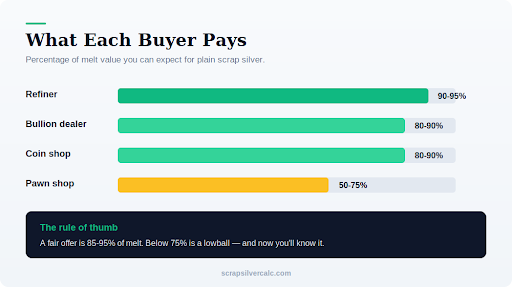
- Refiners pay the most, typically 90 to 95 percent of melt, but they want measurable quantities and may take a week or two.
- Coin and bullion dealers pay around 80 to 90 percent for accepted pieces, with cash often on the spot.
- Pawn shops are fastest but pay the least, frequently 50 to 75 percent of melt.
- “We buy gold” storefronts vary wildly — some are fair, some lowball aggressively.
A fair offer for plain scrap silver sits in the 85 to 95 percent range. Anything below 75 percent is a lowball, and now you’ll recognize it instantly because you already calculated the melt value.
When a Piece Is Worth More Than Its Silver
Melt value is the floor, not the ceiling. Some silver carries value far above its metal content, and selling those pieces for scrap is a costly mistake.
Coins are the classic example: a rare date or mint mark can be worth hundreds or thousands of times its silver value to a collector. Sterling flatware in a sought-after pattern from a maker like Tiffany or Gorham often sells for double its scrap value or more, intact. Antique or designer jewelry can carry artistic and brand value well beyond the metal.
The rule is simple: before melting anything, check whether it has collector or antique value. A few minutes of research on the date, pattern, or maker can turn a scrap sale into a much larger one. When in doubt, get a piece appraised before selling it as scrap — the appraisal often costs nothing and can reveal hundreds of dollars in hidden value.
Choosing the Right Buyer
Match the buyer to what you’re selling.
- Plain scrap silver (broken jewelry, common flatware) — sell to a refiner or reputable bullion dealer for the highest melt percentage.
- Collectible coins — take them to a coin dealer or auction, not a scrap buyer.
- Desirable flatware patterns — antique dealers and pattern-replacement buyers beat melt value.
- Bullion — bullion dealers offer buy-back close to spot.
Whatever you’re selling, get at least two or three quotes. Offers vary more than most people expect, and competition works in your favor. If you’re selling online, choose buyers with strong reviews, clear payout terms, and insured shipping. A reputable online refiner often beats a local pawn shop by a wide margin, even after shipping.
Timing and Market Awareness
Silver prices move daily, sometimes by several percent in a week. While you shouldn’t obsess over catching the exact top, it pays to glance at the current spot price before selling. If silver has just dropped sharply, and you’re not in a hurry, waiting for a recovery can add meaningfully to your payout. Conversely, a strong rally is often a good moment to sell scrap you’ve been meaning to offload. Knowing the live spot price and your pieces’ melt value at that price lets you make that call with real numbers instead of guesswork.
Avoiding the Common Traps
A few mistakes cost sellers repeatedly. Don’t clean antique pieces aggressively before selling — you can strip patina or wear away plating, reducing value. Don’t include knife blades and weighted handles in your silver weight; the blades are steel, and the handles are often filled. Don’t accept the first offer without a comparison. And never sell in a rush, buyers can sense urgency, and it never works in the seller’s favor.
How to Get Multiple Quotes the Smart Way
Gathering quotes is the single most effective way to raise your payout, but there’s a right way to do it. When you contact a buyer, give them the same information each time — the total weight, the purity, and whether the pieces are sorted scrap or potential collectibles. Consistent information produces comparable quotes, so you’re judging buyers fairly rather than comparing apples to oranges.
Be upfront that you’re getting other quotes. Reputable buyers expect it and will often sharpen their offer when they know there’s competition. Keep a simple note of each offer with the buyer’s name, the date, and the percentage of melt they’re paying. Within a few calls you’ll see a clear pattern, and the strongest offer usually stands out quickly. This small amount of legwork frequently adds 10 to 20 percent to the final sale price.
Paperwork, Payment, and Staying Safe
Once you’ve chosen a buyer, protect yourself on the practical details. For larger sales, ask how payment is made and when — cash on the spot, check, or bank transfer — and get a written receipt listing the items, weights, and agreed price. If you’re shipping to an online refiner, use a service with tracking and insurance that covers the full value, and photograph everything before it leaves your hands.
Be aware that significant precious-metals sales may have tax reporting implications depending on where you live, so keep your records. None of this is complicated, but a little documentation turns a nerve-wracking transaction into a clean, confident one, and gives you recourse if anything goes wrong.
The Bottom Line
Selling silver or Scrap silver well comes down to preparation. Identify what you have, calculate the melt value so you know your floor, check whether any piece carries collector value, then match it to the right buyer and gather multiple quotes. Do that, and you’ll consistently walk away with offers near the true value of your silver, not the lowball figure a hurried seller would accept.