
How to Recognize Emotional Distress in a Nonverbal Autistic Child

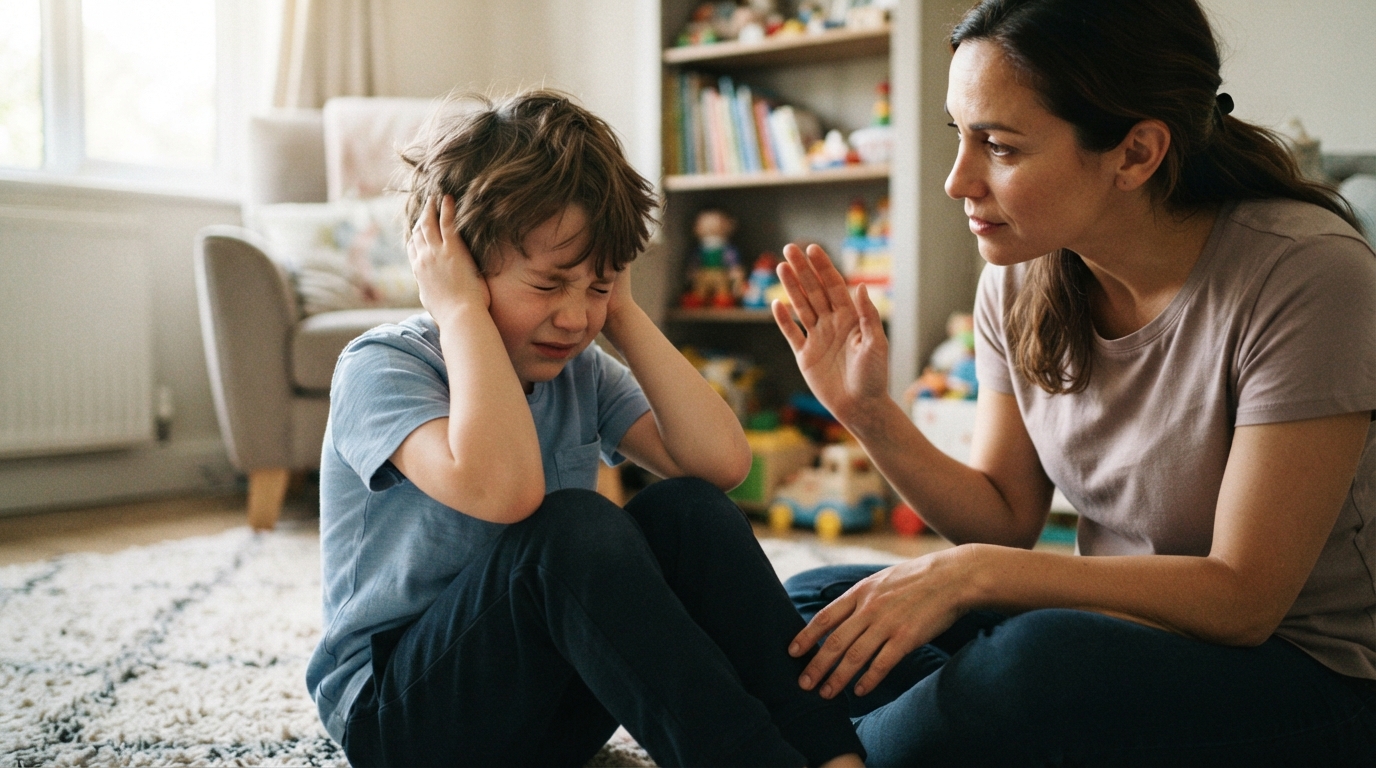
Your child suddenly refuses to enter a room they’ve visited many times before. They push away a favorite toy, become unusually quiet, or start crying during an activity they normally enjoy. You can tell something is bothering them, but figuring out what happened isn’t always easy.
For parents of nonverbal autistic children, these moments can be particularly concerning. When a child doesn’t communicate through spoken words, they may have fewer accessible ways to explain that they’re frightened, frustrated, uncomfortable, or overwhelmed.
That doesn’t mean they experience emotions any less deeply or cannot understand what’s happening around them.
Emotional distress in a nonverbal autistic child may appear through changes in behavior, body language, communication, sleep, eating, or participation in familiar activities. The most useful clues often come from noticing what is different from the child’s usual patterns.
Learning to recognize those changes can help caregivers respond more effectively, identify possible sources of discomfort, and understand when additional support may be needed.
Why Emotional Distress Can Be Difficult to Recognize
Children communicate distress in different ways, regardless of whether they speak.
Some cry or seek comfort. Others become quiet, withdraw from activities, or show physical signs of tension.
For a nonspeaking autistic child, recognizing emotional distress may require paying closer attention to communication that doesn’t involve words.
A child might pull a parent’s hand toward a door to indicate they want to leave. Another may cover their ears, move away from a crowded area, or repeatedly attempt to remove uncomfortable clothing.
These actions can communicate important information about the child’s experience.
However, interpreting them isn’t always straightforward.
The same behavior may have different meanings depending on the situation. A child who walks away from an activity might be overwhelmed, bored, tired, or simply interested in something else.
Similarly, repetitive movements such as rocking or hand-flapping aren’t automatically signs of distress. They may be enjoyable or help a child regulate sensory experiences.
The key is to understand how your child typically communicates and recognize meaningful changes.
It’s also important not to confuse limited spoken language with limited understanding. A child may comprehend far more than they can express verbally.
Notice Changes in Your Child’s Usual Behavior
One of the most useful ways to recognize emotional distress is to compare your child’s current behavior with their usual patterns.
Every child has individual preferences, routines, and ways of responding to their environment.
A behavior that seems unusual to someone unfamiliar with your child may be completely typical for them.
For example, one child may frequently pace while listening to music because they enjoy the movement. Another may pace more intensely when they’re anxious or uncomfortable.
Rather than treating pacing itself as a problem, consider whether its frequency, intensity, or context has changed.
Other changes worth noticing include:
- Becoming unusually withdrawn or less interested in familiar activities
- Crying or showing distress more frequently than usual
- Seeking significantly more or less physical contact
- Avoiding places, people, or routines they previously tolerated
- Experiencing noticeable changes in sleep or appetite
- Showing new difficulty participating in everyday activities
These signs don’t automatically indicate a mental health condition.
They may reflect emotional distress, physical discomfort, sensory overload, illness, or changes in the child’s environment.
Looking at the broader situation helps you avoid making assumptions based on one behavior.
Pay Attention to Body Language and Physical Reactions
When spoken communication is limited, body language may provide valuable clues about how a child is feeling.
Facial expressions, posture, movement, and physical tension can all offer information.
A child experiencing distress might tense their muscles, pull away from contact, cover their face, or repeatedly move toward an exit.
Others may seek closeness with a trusted caregiver.
For instance, a child who usually enjoys playing independently may suddenly want to remain beside a parent throughout the afternoon.
That change could reflect anxiety, discomfort, fatigue, or a desire for reassurance.
Some children may also show physical reactions such as faster breathing, trembling, or becoming noticeably restless.
These signs should be interpreted cautiously because they can have medical or environmental causes as well.
It’s helpful to observe what happened immediately before the reaction.
Did someone turn on a loud appliance? Was the child asked to stop a preferred activity? Did an unfamiliar person enter the room?
Understanding the context can provide more useful information than focusing on the physical reaction alone.
Recognize the Difference Between Sensory Overload and Emotional Distress
Sensory overload and emotional distress can overlap, but they aren’t exactly the same thing.
Sensory overload occurs when sensory input becomes difficult for someone to process or tolerate. Emotional distress is a broader experience that may involve fear, frustration, sadness, anxiety, or other uncomfortable feelings.
For some autistic children, overwhelming sensory experiences can contribute to emotional distress.
Imagine taking your child to a busy shopping center.
The environment includes bright lighting, background music, conversations, moving crowds, and unfamiliar smells.
Your child may initially seem comfortable but gradually begin covering their ears, moving away from people, or trying to leave.
If the environment remains overwhelming, their distress may increase.
In this situation, reducing sensory demands may be more helpful than repeatedly asking the child to calm down.
You might move to a quieter area, offer familiar sensory supports, or leave the environment when possible.
It’s also important to respect individual preferences.
Some children find headphones helpful, while others dislike wearing them. One child may prefer gentle pressure or a familiar object, while another needs more physical space.
Support should reflect what actually helps your child feel comfortable, not what is assumed to work for all autistic children.
Understand What Meltdowns and Shutdowns May Communicate
A meltdown is an intense response that may occur when a child becomes overwhelmed and has difficulty regulating their reactions.
It can involve crying, shouting, intense movement, or other visible signs of distress.
A shutdown may look very different.
A child might become unusually quiet, stop responding as they normally would, withdraw from interaction, or have difficulty participating in an activity.
Not every autistic child experiences meltdowns or shutdowns, and their presentation varies.
These responses shouldn’t automatically be interpreted as deliberate misbehavior.
A child who becomes overwhelmed may have difficulty processing additional instructions or communicating what they need in that moment.
During significant distress, prioritize safety and reduce unnecessary demands.
Use a calm voice, allow physical space when appropriate, and avoid forcing eye contact, conversation, or physical affection.
If the child has a familiar communication system, make it available without requiring an immediate response.
Once they’re comfortable and regulated, you may be better able to understand what contributed to the experience.
For example, a child who becomes distressed during dressing may be reacting to clothing texture, an unexpected schedule change, difficulty understanding the next activity, or something physically uncomfortable.
Identifying the cause can help you make future routines more manageable.
Don’t Overlook Physical Pain or Illness
Emotional distress and physical discomfort can sometimes look similar, particularly when a child has difficulty communicating pain.
A child with an ear infection, constipation, dental discomfort, or another medical concern may become irritable, withdrawn, or resistant to familiar activities.
They might refuse food, wake more frequently during the night, or avoid being touched in certain areas.
Some children communicate pain by pointing, guiding a caregiver’s hand toward the affected area, or changing how they move.
Others may not show obvious signs of where the discomfort is coming from.
If your child’s behavior changes suddenly, consider whether there could be a physical explanation.
For example, a child who begins crying during meals may be experiencing dental pain or another feeding-related difficulty rather than simply refusing to eat.
A child who suddenly resists sitting may have discomfort that isn’t immediately visible.
Persistent, unexplained, or significant changes deserve medical attention.
Seek urgent medical care for severe symptoms, suspected serious injury, breathing difficulties, altered consciousness, or other signs of an emergency.
Recognizing possible emotional distress should never replace checking for physical health concerns.
Watch for Changes in Communication
Nonverbal does not mean noncommunicative.
Many nonspeaking autistic children communicate through gestures, facial expressions, body movements, pictures, signs, or augmentative and alternative communication (AAC) devices.
Changes in these communication patterns may offer important information.
A child who usually selects pictures to request activities might suddenly stop using their communication board.
Another may repeatedly use a symbol for “stop,” “break,” or “help” during a particular routine.
These responses deserve attention.
If a child consistently communicates that they want an activity to end, consider what might be making it uncomfortable.
Perhaps the task is too demanding, the environment is overwhelming, or the child needs more time to process instructions.
Sometimes, a child may also struggle to access their usual communication tools when highly distressed.
That doesn’t mean they have lost the ability to communicate permanently.
However, a new or persistent loss of previously established communication skills should be discussed with a healthcare professional.
The American Speech-Language-Hearing Association explains that augmentative and alternative communication (AAC) can support people who have difficulty communicating through speech, including through gestures, picture systems, and speech-generating devices.
Providing accessible communication options can make it easier for children to express discomfort, preferences, and requests for assistance.
Look for Patterns Across Different Environments
Sometimes, emotional distress becomes noticeable only in particular situations.
A child may seem comfortable at home but experience difficulties at school. Another may participate happily in classroom activities yet become overwhelmed shortly after returning home.
These differences don’t necessarily mean that one environment is causing harm.
Different settings place different demands on communication, attention, sensory processing, and social participation.
A classroom may involve frequent transitions, background noise, and group instructions. Home may offer more familiar routines but include other challenges, such as sibling interactions or changes in household schedules.
When possible, communicate with teachers, caregivers, and other adults who know your child.
Ask about specific observations rather than general impressions.
For example, instead of asking whether your child had a good day, you might ask whether they seemed comfortable during transitions, used their communication tools, or showed signs of distress during particular activities.
Comparing observations can help identify patterns that aren’t obvious in one setting.
It may also reveal which accommodations are already working well.
Keep a Simple Record of Distress Signals
When you’re concerned about recurring emotional distress, brief observations can be more useful than relying on memory alone.
You don’t need an elaborate tracking system.
A notebook or phone note can help you record what happened, what was happening beforehand, and how your child responded to support.
For example:
| What you noticed | Possible context | What helped |
| Covered ears and moved toward the door | Vacuum cleaner was running | Moving to a quieter room |
| Cried and pushed away shoes | Getting ready for school | Offering a different pair |
| Became unusually quiet after school | Long day with several transitions | Quiet time with familiar activities |
| Repeatedly requested a break | Extended learning activity | Shortening the task and allowing rest |
These observations don’t prove why a behavior occurred.
They simply provide clues that can help caregivers and professionals explore possible explanations.
Try to avoid interpreting every behavior as a problem that needs correction.
Instead, look for situations where your child may be communicating discomfort, needing an accommodation, or asking for more control over their environment.
How to Respond When Your Child Seems Emotionally Overwhelmed
When a child becomes distressed, your immediate priority is helping them feel safe and reducing demands that may be contributing to the situation.
You don’t need to identify the exact cause before offering support.
If the environment is noisy or crowded, consider moving somewhere quieter.
If your child appears uncomfortable with physical contact, give them space while remaining available.
If they seek familiar sensory input, such as holding a preferred object or sitting in a particular spot, allow it when safe.
Communication should remain simple and accessible.
A short statement such as “We can take a break” may be easier to process than a lengthy explanation.
You might also offer visual choices, such as pictures representing “quiet room,” “water,” or “rest.”
Avoid demanding that your child explain their feelings while they’re visibly overwhelmed.
Once the immediate distress has passed, consider whether a routine, expectation, or environmental factor could be adjusted.
For example, if transitions regularly cause difficulty, a visual schedule or advance warning may help your child anticipate what comes next.
If an activity consistently causes discomfort, consider whether it can be modified rather than requiring your child to tolerate it unchanged.
The goal is to understand and support your child’s needs, not simply to stop visible expressions of distress.
When to Consider Professional Mental Health Support
Occasional distress is part of childhood, and not every difficult moment requires professional intervention.
However, additional assessment may be helpful when emotional difficulties become persistent, significantly affect daily activities, or represent a noticeable change from your child’s usual functioning.
For example, a child who consistently avoids school, experiences frequent episodes of intense distress, or withdraws from previously enjoyed activities may benefit from further evaluation.
A pediatrician can help assess possible medical or developmental factors and recommend appropriate referrals.
Depending on the concerns, support may involve a psychologist, developmental specialist, speech-language pathologist, occupational therapist, or another qualified professional.
For families in Charlotte, North Carolina, exploring options such as Charlotte mental health service may be a starting point when researching professional support for a child’s emotional and behavioral needs.
When evaluating services, ask whether the provider has experience working with nonspeaking autistic children and how they adapt assessment and communication methods.
It’s also important to understand whether the approach respects sensory differences, accommodates AAC, and involves caregivers appropriately.
Support should focus on the child’s comfort, emotional well-being, communication, and ability to participate in meaningful activities.
A child shouldn’t be expected to communicate distress in a conventional way before their feelings are taken seriously.
Frequently Asked Questions
Can a nonverbal autistic child experience anxiety or depression?
Yes. Nonspeaking autistic children can experience anxiety, depression, and other mental health conditions. However, recognizing symptoms may require individualized assessment because children may communicate emotional experiences differently. Changes in sleep, participation, behavior, or communication can be reasons to consult a qualified professional.
How can I tell if my child is upset or simply needs sensory stimulation?
Consider your child’s usual behavior and the surrounding context. Repetitive movements or sensory-seeking activities may be enjoyable or regulating rather than signs of distress. Look for additional indicators, such as attempts to escape a situation, visible discomfort, or changes from familiar patterns.
Should I stop my child from stimming when they appear distressed?
Not automatically. Stimming can help autistic children regulate sensory input and emotions. If the movement is safe, stopping it may remove a useful coping strategy. If a behavior risks injury, prioritize safety and seek guidance on supportive alternatives rather than relying on punishment or restraint.
What if my child becomes distressed but I can’t figure out why?
Start by checking immediate needs, including comfort, pain, hunger, fatigue, and sensory demands. Offer familiar communication tools and reduce unnecessary pressure. If distress is persistent, severe, or accompanied by unexplained changes in functioning, consult a healthcare professional.
Understanding Your Child Starts With Paying Attention
You won’t always know exactly why your child is upset.
There may be moments when you’ve checked their needs, adjusted the environment, and offered comfort, yet the reason for their distress remains unclear.
That uncertainty can be difficult, especially when you want to help but don’t know what your child is experiencing.
What matters is continuing to observe, listen to the communication they already use, and respond with patience rather than assumptions.
A child who cannot explain their feelings through speech still deserves to have those feelings recognized.
Over time, noticing patterns, respecting preferences, and providing accessible ways to communicate can help you better understand when your child needs comfort, space, an accommodation, or professional support.
The goal isn’t to interpret every movement perfectly. It’s to make sure your child has people who take their communication seriously, even when it doesn’t come in words.







Comment