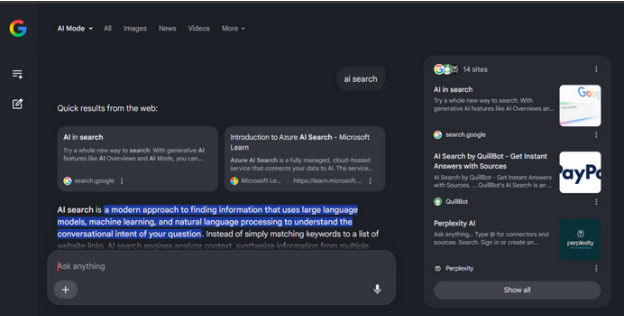
Google has officially ushered in a new era of search, and if you have paid attention to the recent redesigns and updated service icons, the writing is on the wall: Google is now an AI-first search engine. With the widespread rollout of AI Overviews, the search landscape has shifted dramatically. Users can now ask complex questions and get immediate, synthesized answers right at the top of the page. But what does this mean for your website, your traffic, and your SEO strategy?
Here is a breakdown of what is happening and how your business needs to adapt to stay ahead written by Serhii Dovzhenko – founder of North SEO agency Vancouver, BC, Canada.
The Rise of the “Zero-Click” Search
We are seeing a massive increase in zero-click searches. When someone searches for a local service, compares two companies, or looks for pricing, Google’s AI now generates a comprehensive reply instantly. Users can even ask follow-up questions without ever leaving the search results.
Why this is a double-edged sword for businesses:
- The Good: Users get exactly what they want, faster than ever.
- The Bad: It removes the necessity for users to click through to your website. If the AI provides a complete breakdown of your services, prices, and reviews right on the search page, potential customers will simply read the AI’s reply and make their decision without ever visiting your site.
This means traditional click-through rates (CTR) are dropping, and businesses can no longer rely on users exploring hundreds of different websites to make a choice.
The Content Strategy Shift: Going Back to Basics
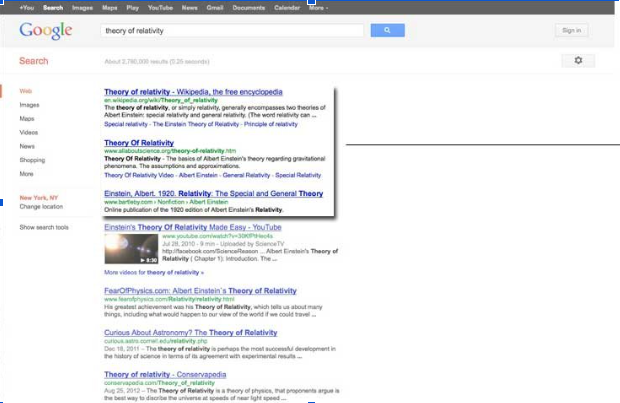
To survive the AI-first rollout, your content strategy needs to evolve by looking backward. You can no longer rely on thin pages; instead, you need to extend your content to anticipate and answer the specific questions AI is trying to solve.
We are essentially returning to the “old days” of SEO, where creating robust, comprehensive pages with deep text was the gold standard.
| Content Strategy | Traditional Search | AI-First Search |
| Format | Keyword-stuffed, fragmented pages. | Long-form, highly structured pages. |
| Goal | Get the user to click the link. | Feed the AI the exact answers it needs to cite you. |
| Focus | Ranking for broad, generic terms. | Answering specific, long-tail user questions upfront. |
If you want the AI to recommend your business, your website needs to explicitly answer all the questions a customer might have about your specific cases, services, and pricing before they even ask.
Is SEO Dead? Absolutely Not.
It is easy to look at AI Overviews and panic, assuming that SEO as a service will disappear. The reality is exactly the opposite.
Google’s own guidelines indicate that optimizing for AI search is fundamentally the same as traditional SEO. Over 90% of the practices remain completely unchanged. AI is not a separate entity with distinct, secret rules; it relies on the exact same signals we have been optimizing for years.
To be featured in an AI Overview, the AI has to pull its data from somewhere-and it almost exclusively pulls from the top-ranking search results. If you want to be competitive in the AI era, you must master the fundamentals:
- Exceptional Content: You still need high-quality content that genuinely helps the user.
- Impeccable Structure: Your site architecture and headings must be crystal clear so the AI can easily parse and retrieve your information.
- Top-Tier Rankings: If you aren’t already ranking well organically, the AI will not pick you up.
- PR and Brand Authority: AI synthesizes answers based on what the broader internet says about you. Getting mentioned on authoritative, top-10 ranking websites is more crucial than ever for brand visibility.
Bonus Update: Social Media Meets Google Business Profiles
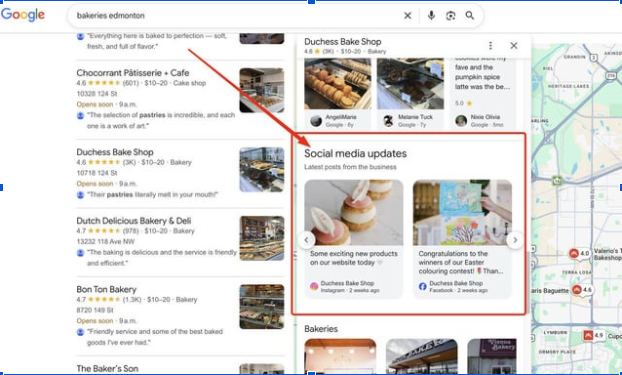
Alongside the AI Overviews, Google recently pushed a massive update to Google Business Profiles (GBP). Google is now pulling social media posts directly into Business Profiles. This means that potential clients searching for you on Google can now see your latest Facebook, Instagram, or X updates in the exact same way they view traditional GBP posts. This bridges the gap between your social media marketing and your local search presence, giving searchers a real-time look into your business culture and updates without leaving Google.
Final Thoughts
We will undoubtedly see more shifts as Google continues to refine its AI tools, but for now, the path forward is clear: build great content, structure it well, and don’t abandon your SEO fundamentals.
Stay tuned as we continue to monitor how these updates influence the digital landscape.
Want to stay ahead of the curve? Subscribe to our SEO blog, follow us on social media, and check out our website for the latest strategies to dominate search.
Read More From Techbullion