
How to Launch a Multi-Service Business Faster With a Gojek Clone Script

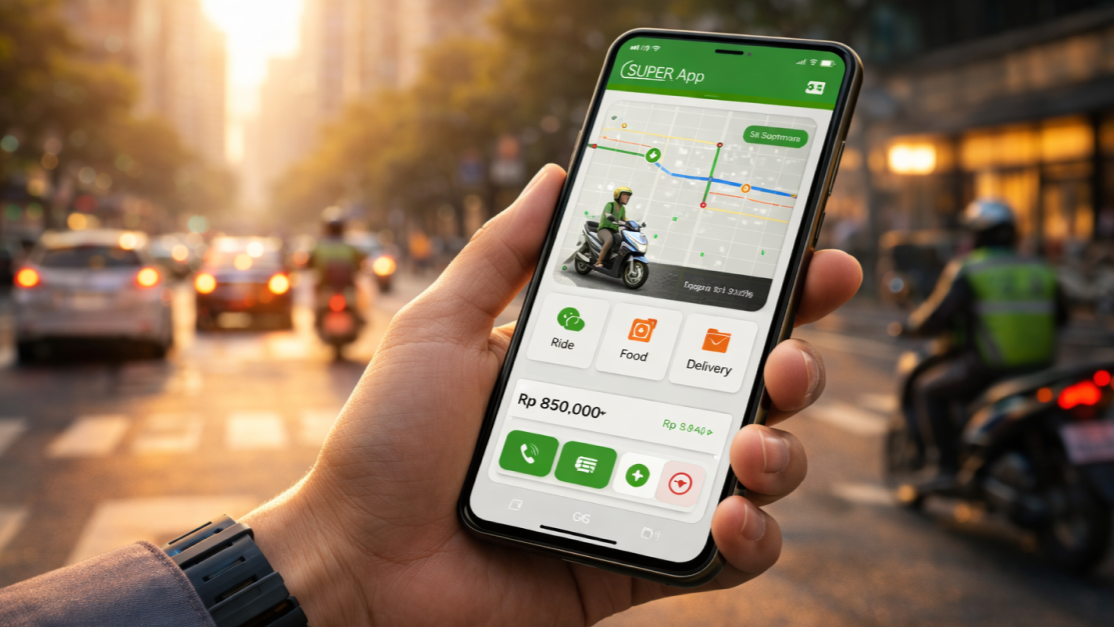
Building a multi-service app from scratch is slow. You need ride hailing, food delivery, courier services, home services, and a payment system all working together, plus separate apps for customers, service providers, and admins. Most startups spend six months to a year just getting an MVP live, and by the time it ships, the market window has often narrowed.
A Gojek Clone Script shortcuts that timeline. Instead of engineering every module from zero, founders start from a pre-built, multi-service platform that already handles the core mechanics of on-demand services, and customize it to match their market and brand.
What a Gojek clone script actually gives you
Gojek’s original model works because it bundles many services into a single super app: rides, deliveries, groceries, payments, and more, all under one login. A clone script replicates that structure rather than copying the brand. That typically includes:
- Customer, provider, and admin apps for each service line
- A shared wallet or payment layer across services
- Real-time tracking, dispatch, and order management
- An admin panel to manage commissions, zones, and service categories
- The ability to add or remove service verticals as the business grows
Because the multi-service architecture is already built, launching a new vertical (say, adding grocery delivery to an existing ride-hailing app) becomes a configuration task instead of a rebuild.
Why speed matters more than perfection at launch
Early-stage on-demand businesses succeed or fail based on how quickly they can test demand in a specific city or niche. A Gojek-like multi-service app lets founders enter a market with a working product in weeks rather than months, gather real usage data, and then invest further development into the features that actually get used.
This matters because assumptions about what customers want rarely survive contact with a live market. A founder might assume grocery delivery will be the top earner, only to find home cleaning services drive more repeat orders in their city. Getting to market fast means that discovery happens with real users instead of in a planning document.
Where to focus customization
Not every part of a clone script needs to be rebuilt, but a few areas are worth prioritizing:
Service mix. Choose the two or three verticals with the clearest local demand rather than launching every possible service at once. A focused launch is easier to market and easier to operate.
Payment and payout logic. Local payment methods, currency, and provider payout schedules vary by region and need to match what your market actually uses.
Onboarding flow for providers. Driver and vendor onboarding is often the biggest operational bottleneck. Streamlining document verification and approval speeds up supply-side growth.
Branding and UI. The underlying architecture can stay standard while the interface, color scheme, and naming reflect your own brand rather than looking like a generic template.
Common pitfalls to avoid
Founders new to on-demand platforms sometimes treat a clone script as a finished product rather than a foundation. A few mistakes come up repeatedly:
- Launching with too many service categories before there’s enough supply to fulfill them
- Ignoring local regulations around delivery, ride-hailing licensing, or payment processing
- Underinvesting in customer support tooling, which becomes critical once order volume grows
- Skipping load testing before a marketing push drives a spike in signups
None of these are reasons to avoid a clone-based approach; they’re simply the same operational basics any on-demand business has to solve, just arriving sooner because the technical build is faster.
Marketing the app once it’s live
A fast technical launch only pays off if people actually find the app. Once the platform is live, content and SEO become the main lever for acquiring both customers and service providers organically, especially in the early months before paid acquisition budgets scale. Founders who are new to this side of the business can lean on resources like this guide on SEO content writing to get a working content strategy in place alongside the app launch, rather than treating marketing as an afterthought once the product is already built.
Getting from script to sustainable business
A clone script solves the technical bottleneck, not the business one. Getting to a sustainable multi-service business still requires the same fundamentals as any marketplace: enough supply to make demand reliable, pricing that covers acquisition costs, and a retention loop that keeps users coming back after the first order.
What the script buys is time. Instead of spending a year on infrastructure before finding out whether the model works in a given city, founders can spend that year iterating on the parts of the business that actually determine whether it survives: pricing, service quality, and provider supply.
For teams that want to move from idea to live product without rebuilding a multi-service architecture from the ground up, starting with an existing, proven codebase is usually the more efficient path.






Comment