
How to Choose the Right Size and Design for Custom Tulip Boxes

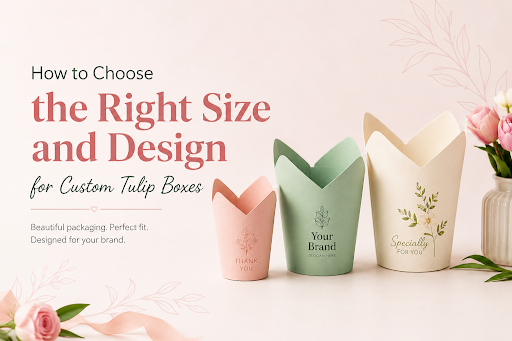
Packaging does two jobs. It protects what’s inside and it tells the customer something about the brand before they’ve even opened it. For tulip boxes specifically, both of those jobs matter more than people expect.
Get the size wrong and the product shifts around in transit. Get the design wrong and a genuinely good product lands flat. The box is the first physical thing a customer touches and that first impression sets the tone for everything that follows.
Art Impact Packaging builds custom tulip boxes around the product going inside, with the right dimensions, the right material and the right finish for how the box will actually be used. Whether it is a jewellery piece, a floral gift or a skincare set, every box starts with what’s going inside it.
Why Custom Packaging Matters for Tulip Products
A standard off-the-shelf box doesn’t account for the specific weight, shape or fragility of your product. Custom packaging does.
Product protection — A box built to the right internal dimensions keeps the product from moving during transit. No shifting, no contact damage, no arriving looking like it had a rough journey.
Better presentation — The way a box looks when it arrives is part of the product experience. Tulip-style packaging is designed to open in a way that feels considered. That only works when the structure and finish are right.
Branding and customer experience — Custom packaging carries your logo, your colours and your brand message. A generic box does not. The unboxing moment is one of the few times a customer is fully focused on your brand and what the packaging says in that moment matters.
Retail and gifting — On a shelf, tulip boxes stand out. As a gift, they feel intentional. Custom sizing and design make both of those things work properly.
What Are Custom Tulip Boxes?
Custom tulip boxes are structured packaging designed to open from the top in a petal-like shape. The lid unfolds outward, revealing the product inside in a way that feels more like an experience than just opening a box.
They’re used most often for jewellery, small gifts, florals, cosmetics and artisan food products. The structure suits anything where presentation matters as much as protection.
Common styles include shoulder-style tulip boxes with a snug-fitting lid, slim tulip boxes built for postage-friendly sizes and anti-tarnish lined versions for delicate metals and jewellery pieces.
Window cutouts can be added to let the product show through before opening. Handles work well for event favours and gifting products that need to travel with the customer. Internal inserts and dividers hold products in place and add a layer of premium presentation when the box opens.
Materials, finishes and print options are all customisable. Custom tulip boxes from Art Impact Packaging are built around the product dimensions and the brand requirements, not the other way around.
How to Measure a Box Correctly
Getting the measurements right before ordering is the most important step. Wrong dimensions mean a box that either doesn’t close properly or leaves the product loose inside.
Understanding Length, Width and Height
These three measurements describe the internal space of the box.
Length is the longest dimension of the base. If you’re looking down at the box from above, length runs along the longer side.
Width is the shorter dimension of the base. It sits perpendicular to the length when you look at the box from above.
Height is measured from the base of the box up to the top opening. It tells you how deep the box is and whether the product will sit below the rim or stick out above it.
For tulip-style packaging, height is especially important. The petal opening at the top needs enough clearance to fold out properly without forcing the product down or creating a structure that won’t hold its shape.
Standard Box Measurement Order
The standard order when specifying box dimensions is Length × Width × Height. This order is used by most packaging manufacturers and printers so it is important to follow it consistently to avoid errors.
Internal dimensions refer to the usable space inside the box where the product sits. External dimensions include the material thickness on all sides. Always specify which one you’re providing when placing an order.
For most product packaging the internal dimension is what matters first. Measure the product itself, add clearance for inserts or tissue paper and that gives you the internal dimensions to work from. Understanding the height width and length of box measurements correctly before placing an order saves time and avoids costly reprints.
How to Select the Right Tulip Box Size
Choosing the right size isn’t just about fitting the product in. it is about how the product sits inside, how it ships and how it feels when it is opened.
Measure the product accurately. Use a ruler or calipers and measure at the widest point. Don’t estimate.
Account for inserts and protective materials. If the box will include tissue paper, foam, a card insert or a ribbon pull, those take up space. Add that clearance to your internal dimensions before specifying size.
Avoid boxes that are too tight. A box that barely closes puts stress on the structure. For tulip-style packaging specifically, a forced close damages the petal opening over time and affects how the box presents.
Avoid boxes that are too loose. A product that moves around inside a box arrives looking like it wasn’t packed properly. Too much empty space also means the box doesn’t hold its shape and the unboxing moment falls flat.
Consider shipping and storage. If the boxes will be shipped flat and assembled on arrival, confirm the folded dimensions work for your storage space. If they ship assembled, factor the external dimensions into your courier sizing.
Best Materials for Tulip Packaging
The material you choose affects how the box feels, how well it holds its shape and how it prints.
Cardboard (C1S and C2S) — C1S is coated on one side for sharp print on the outside. C2S is coated on both sides for consistent print inside and out. Both are widely used for retail and gifting packaging.
Kraft paper — Natural brown kraft is unbleached and recyclable. White kraft comes from recycled stock and is durable and moisture resistant. Both suit eco-conscious brands and give a more natural feel than coated board.
Corrugated material — Better suited to shipping boxes than retail presentation. Adds significant protection for heavier or more fragile products but changes the look and feel of the finished box.
Rigid stock — Thick chipboard that holds its shape permanently. Used when the box needs to feel substantial and premium. Adds weight and a high-end feel that standard folding carton doesn’t have.
Match the material to how the box will be used. A tulip box being handed over at a retail counter has different requirements to one being shipped through a courier network.
Important Design Features to Consider
Die-cut windows — A window cut into the front or top panel lets customers see the product before opening. Works well for florals, jewellery and small food products where the product itself is part of the appeal.
Handles — Ribbon pulls or die cut handles are useful for event favours and gifting products that customers carry away with them.
Inserts and dividers — Cardboard, foam or fabric-lined inserts hold the product in position and add a layer of presentation when the box opens. For jewellery and delicate items they also provide protection during transit.
Brand logo and colours — Every panel of the box is a branding opportunity. The outside carries the brand message before the box is opened. The inside can carry a secondary message, a thank you or a print that only appears at the moment of opening.
Printing and finishing options — Matte lamination gives a flat, modern surface. Gloss brings colour forward. Soft touch feels different the moment it is picked up. Foil stamping adds a metallic finish to logos or text. Embossing raises the design off the surface so it is felt as well as seen.
Common Packaging Mistakes to Avoid
Using incorrect box measurements. The most common and most costly mistake. Measure the product, account for inserts and confirm internal dimensions before ordering.
Choosing weak packaging material. A box that can’t hold its shape through transit or retail handling damages the product and the brand impression at the same time.
Leaving too much empty space inside the box. Products that move around inside the box arrive looking poorly packed. Fill the space with an insert or choose a smaller box size.
Placing text near folds or cutting lines. Anything too close to a fold line will look distorted on the finished box. Keep important text and logos well inside the safe area.
Ignoring shipping protection. A tulip box built for retail counter presentation may not survive a courier network without outer protection. If the box is shipping directly to customers, test it before committing to a full run.
How Custom Tulip Packaging Supports Your Brand
Improves shelf appearance. A tulip box stands differently to a standard carton. The structure is immediately recognisable and draws attention on a shelf without needing extra display hardware.
Creates a better unboxing experience. The petal opening is a moment in itself. When it is built properly with the right dimensions and the right finish, it lands in a way a standard box never does. Customers notice. Some of them film it.
Increases brand recognition. Consistent packaging across a product range builds familiarity. Customers who receive a well-made tulip box once remember where it came from when they’re ready to buy again.
Encourages repeat purchases. Good packaging signals that a brand cares about the full experience. That is not a small thing. It is often the difference between a one-time buyer and a returning customer.
Final Thoughts
Box size, material and design aren’t separate decisions. They affect each other and they all affect how the finished packaging performs.
Measure accurately. Account for everything that goes inside the box. Choose the material that fits how the box will be used and shipped. Design with the brand in mind but also with the fold lines, safe areas and print limitations in mind.
Get those things right and the packaging does its job properly. It protects the product, presents it well and tells the customer something true about the brand before they have even opened it.
Art Impact Packaging handles all of it, from dimensions and dielines through to print, finish and delivery. Request a free quote and get the right box built around your product.







Comment