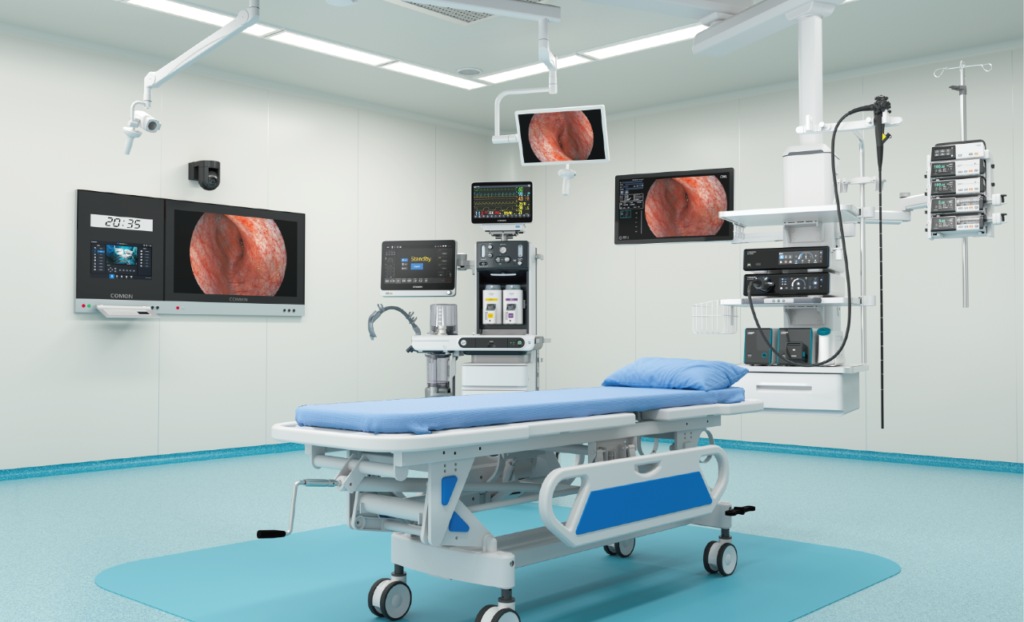
The medical device industry is seeing significant advancements, particularly in endoscopy technology. With this device, doctors can directly observe the inside of the gastrointestinal tract and detect abnormalities that were once difficult to identify early.
Today, a gastrointestinal endoscope directly influences treatment decisions, especially in early cancer detection and endoscopic surgery.
However, due to requirements related to functionality, reliability, and regulatory compliance, selecting the right gastrointestinal endoscope for a hospital is no easy task. Reading on to learn how to evaluate a gastrointestinal endoscope.
How to Choose Gastrointestinal Endoscopes?
1.Image Resolution
Resolution is essential for achieving optimal imaging results. High-resolution gastrointestinal imaging can present the intricate details of human anatomy, improving the detection of small lesions, early-stage tumors, and subtle mucosal changes.
A modern flexible endoscope should provide:
- Clear mucosal surface details
- Accurate color reproduction
- Stable image output during movement
When comparing the best endoscopes, image resolution is a priority factor to consider.
2. Chromoendoscopy/Special Light Imaging
In high-volume hospitals where speed and accuracy must be balanced, standard white-light imaging is no longer sufficient. Modern gastrointestinal endoscopes often include chromoendoscopy or special light imaging modes, which use light at specific wavelengths for illumination.
These technologies enhance tissue contrast and vascular patterns. They help doctors distinguish between healthy and abnormal tissue more clearly.
For example:
- Combined white light imaging highlights superficial mucosal vessels and vascular patterns.
- Spectrum enhanced imaging enhances contrast between superficial and deeper mucosal blood vessels.
- Color differentiation imaging accentuates color differences between the mucosal and blood vessels
In early diagnosis, especially during endoscopic surgery, these imaging technologies reduce the risk of missed lesions.
3. Field of View
The field of view determines how much of the gastrointestinal tract can be visualized at a single glance. A wider viewing angle minimizes blind spots behind tissue folds, which is especially critical during difficult colonoscopies or thorough gastric screenings. For instance, the Comen EIS-2000 gastrointestinal electronic endoscope offers a 145° field of view for the gastroscope and 170° for the colonoscope.
A wider view provides:
- Faster examination time
- Better orientation inside the gastrointestinal tract
- Lower risk of missing peripheral lesions
However, an excessively wide field of view may slightly distort image edges. This is why balance is important when selecting the best endoscope system.
4. Ease of Operation
Ease of operation is often underestimated but directly affects clinician fatigue.
A premium gastrointestinal endoscope should feature a lightweight, responsive control handle and a highly flexible insertion tube. The tube must maintain flexible structural integrity while efficiently transmitting axial force and torque from the physician’s hand to the tip. This optimal force transmission delivers excellent tactile feedback, allowing smooth navigation through sharp anatomical curves.
Additionally, built-in auxiliary water jet functions are necessary to quickly flush away mucus and debris, maintaining a clean visual field without interrupting the workflow.
5. Durability
Given the demanding workflow of hospital endoscopy suites and long-term cost, endoscope durability is paramount. What you need to consider is:
- Resistance to repeated disinfection cycles
- Mechanical strength of the insertion tube
- Reliability of imaging sensors
- Connector stability
If the components of your endoscopy system require frequent maintenance, that will increase the overall cost per procedure.
Cost Considerations
The cost of a gastrointestinal endoscope should not be evaluated only by purchase price. You need to calculate the total cost of ownership (TCO).
This includes:
- Initial purchase cost
- Maintenance and repair costs
- Replacement parts
- Disinfection consumables
Investing in advanced technology can significantly enhance diagnostic capabilities and improve patient outcomes. Lower-priced models may seem to help hospitals save money, but they often come with limited functions or compromises in image quality and durability. This can result in higher expenses down the road.
After-Sales Support
Lastly, choosing a reliable manufacturer is as important as choosing the device itself. Because the gastrointestinal endoscope is a complex system, partnering with an established medical device manufacturer guarantees that your clinical hardware adheres to international safety standards and quality certifications.
What needs to be verified in the contract is:
- After-Sales Support: Rapid technical service to minimize equipment downtime during critical clinical failures.
- Warranty: Transparent warranty policies covering vital optical components and electronic processors.
- Clinical Training Programs: Comprehensive training for clinicians regarding optimal handling, reprocessing, and troubleshooting.
Additionally, asking about previous collaboration cases can also help you evaluate the supplier and secure the right, reliable equipment.
Comen Offers Advanced Gastrointestinal Endoscopes
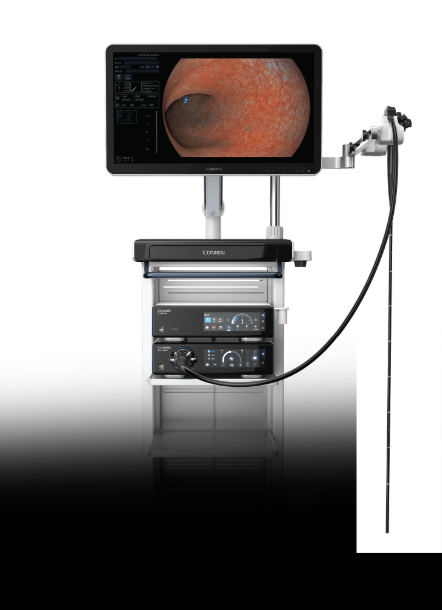
Seeking a suitable gastrointestinal endoscope from various products in the market is challenging. The Comen EIS-2000 Endoscopy System stands out due to several innovative functions.
- It features an innovative 4-channel LED light source with a long lifespan exceeding 20,000 hours and advanced multi-spectral optical chromoendoscopy technologies (CWL, SEI, DCI). These provide clear lesion margins and exceptional contrast for early cancer screening.
- The gastroscopes offer a 145° field of view, while the colonoscopes feature a 170° ultra-wide angle to minimize blind spots. For seamless endoscopic surgery, its highly flexible endoscope insertion tube transmits axial force efficiently, combining with an auxiliary water jet for smooth navigation.
- Engineered for busy hospital workflows, the EIS-2000 can endure hundreds of thousands of bending operations and nearly ten thousand disinfection cycles. This reduces your long-term costs.
Conclusion
Overall, choosing the right gastrointestinal endoscope requires balancing image resolution, advanced chromoendoscopy, field of view, easy operation, and long-term durability. By prioritizing these elements alongside robust manufacturer support, hospitals can optimize clinical care.
If you are seeking gastrointestinal endoscopes, feel free to contact Comen for detailed information!