
How to Choose a Crypto Day Trading App: A Practical Guide for Active Traders

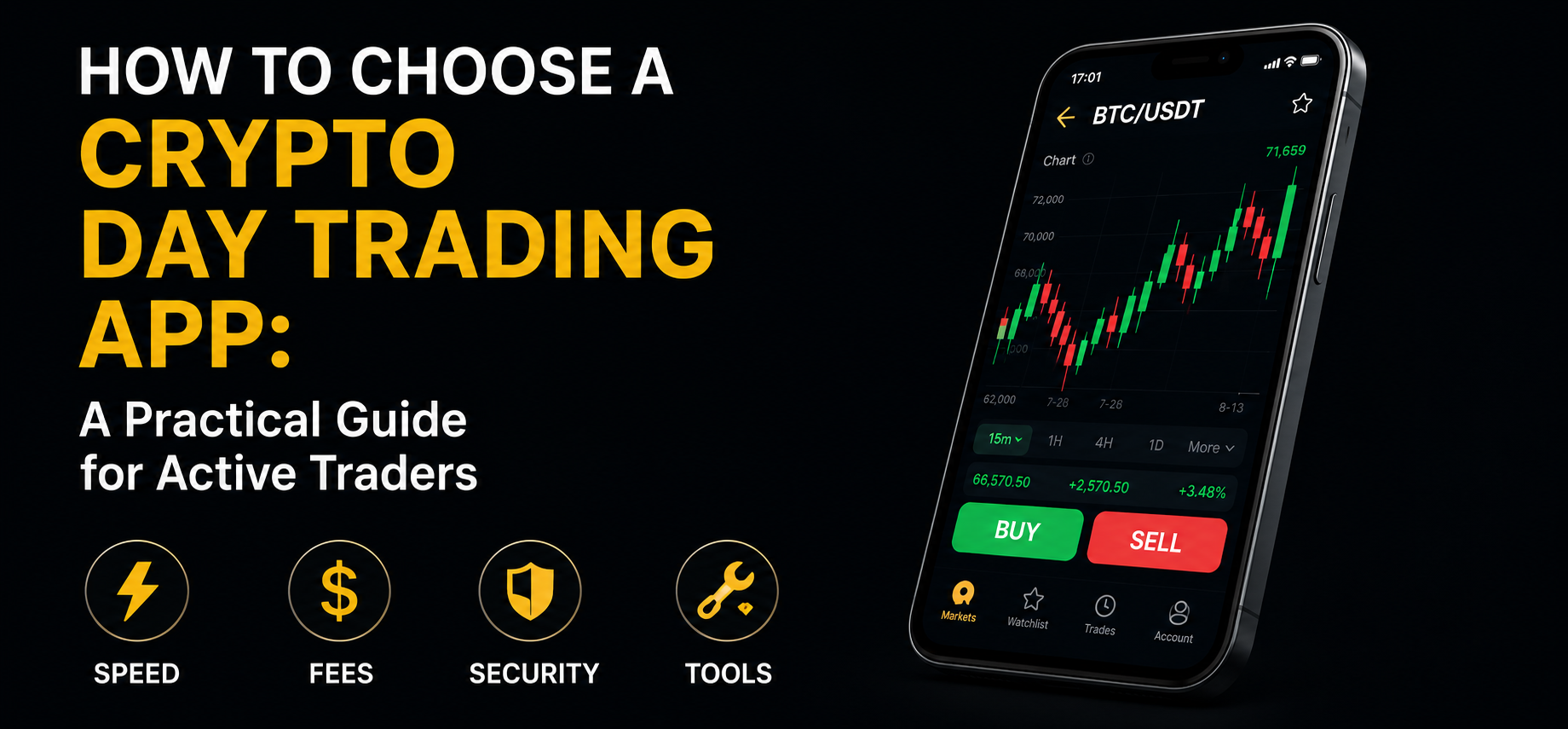
Crypto day trading moves fast. Prices swing 10–20% in hours, liquidity shifts overnight, and opportunities close before you even open your browser. The difference between a profitable session and a missed trade often comes down to one thing: the app you’re using.
This guide walks you through exactly what to look for in a crypto day trading app — from execution speed and supported exchanges to automation features and security — so you can pick the right tool for your trading style.
The best crypto day trading app depends on your needs: if you trade manually, prioritize UI speed and real-time data; if you automate, look for bot support and multi-exchange connectivity. Key factors: exchange integrations, order types, fee structure, mobile reliability, and security (2FA, API key management).
1. What Is a Crypto Day Trading App?
A crypto day trading app is a platform — mobile or desktop — that lets traders open and close positions within a single trading day to capitalize on short-term price movements. Unlike long-term investment apps, day trading tools are built around:
- Real-time market data and live order books
- Fast order execution (limit, market, stop-loss)
- Multiple exchange connections via API
- Charting tools and technical indicators
- Optional: automated bots and signal alerts
Most serious day traders don’t use a single exchange’s native app. Instead, they use a third-party trading terminal that aggregates multiple exchanges into one interface — giving them more control, speed, and flexibility.
2. Key Features to Look For
Exchange & Market Coverage
The app should support the exchanges where you actually trade. Top platforms integrate with Binance, Bybit, OKX, Kraken, Coinbase Advanced, and others via API. More exchange connections = more trading pairs and liquidity options without switching between apps.
Check: Does it support spot trading? Futures and perpetuals? Margin trading? Not all apps cover all asset classes.
Order Types
Basic apps offer market and limit orders. But active day traders need more:
- Stop-loss and take-profit orders (essential for risk management)
- Trailing stop orders (lock in gains as price moves)
- Conditional orders (trigger buy/sell based on price levels)
- OCO (one-cancels-the-other) orders
If your app doesn’t support these, you’re leaving money — and protection — on the table.
Execution Speed
In crypto, seconds matter. A slow app during a volatility spike can turn a profitable entry into a bad fill. Look for platforms that route orders directly through exchange APIs without unnecessary middleware. Check user reviews specifically around performance during high-volume events (e.g., major news or listing announcements).
Automated Trading & Bots
Many experienced traders complement manual strategies with automation. A good crypto day trading app will offer:
- Grid bots (buy/sell automatically within a set price range)
- DCA bots (dollar-cost average into positions at set intervals)
- Signal-based automation (trigger bots via TradingView alerts or custom signals)
- Smart orders (pre-configured entry/exit rules)
Automation doesn’t replace your strategy — it executes it faster and without emotional interference.
Charting & Analytics
You need to read the market while you trade. Built-in TradingView charts (or equivalent) with indicators like RSI, MACD, Bollinger Bands, and volume profiles are the minimum standard for a serious day trading app. Bonus points for customizable dashboards and portfolio P&L tracking.
Fees & Cost Structure
Day traders execute many trades per day, so fees compound quickly. Understand the full cost picture:
- Platform subscription fee (monthly or annual)
- Exchange trading fees (maker/taker — the app doesn’t control these, but good apps help you minimize them)
- Withdrawal or API fees (rare, but check)
A “free” app that runs on an exchange with high maker/taker fees may be more expensive overall than a paid platform connected to low-fee exchanges.
Security
You’re connecting your exchange accounts via API keys — which means security is non-negotiable. The app should:
- Never require withdrawal permissions on your API key (read + trade only)
- Offer 2FA (two-factor authentication) for account access
- Use encrypted storage for API credentials
- Have a clear security track record (check for past incidents)
Your funds stay on the exchange — a trading app should never hold your assets directly.
3. Mobile vs. Desktop: Which Matters More for Day Trading?
Honest answer: Desktop wins for active day trading. A larger screen means more visible data — order book, chart, positions, and trade history — without switching between views. Desktop apps also tend to have faster performance and more feature depth.
That said, a reliable mobile app matters for:
- Monitoring open positions while away from your desk
- Setting quick alerts or closing a position in an emergency
- Managing bots that run 24/7
The best crypto day trading apps offer both a full-featured desktop experience plus a capable mobile companion app.
4. Common Mistakes When Choosing a Day Trading App
1) Picking based on UI alone — a pretty interface means nothing if execution is slow or exchange coverage is limited.
2) Ignoring the fee structure, small percentage differences per trade multiply fast across hundreds of daily trades.
3) Not testing during high volatility — always stress-test a new app during a volatile market session before committing real capital.
4) Over-trusting automation without understanding it — bots execute your parameters blindly; bad settings = real losses.
5) Using the exchange’s own app for complex strategies — native exchange apps rarely offer the order types, multi-exchange support, or automation tools that third-party platforms do.
5. Questions to Ask Before You Commit
- Which exchanges does it support, and is my primary exchange on the list?
- Does it offer the order types my strategy requires?
- Is there a free trial or demo mode to test before paying?
- What do real users say about performance during market spikes?
- How are API keys stored and secured?
- Does it support both manual trading and automation?
Ready to Upgrade Your Day Trading Setup?
If you’re looking for a platform that combines multi-exchange connectivity, smart order types, automated bots, and a clean mobile experience, it’s worth exploring what modern crypto day trading apps offer beyond basic exchange interfaces.
One platform worth checking out is the crypto day trading app from GoodCrypto — it brings together bot automation, smart orders, and real-time tracking across major exchanges in a single interface.
FAQ
What is the best crypto day trading app for beginners?
Beginners should look for apps with a clean interface, built-in tutorials, paper trading (practice without real money), and strong customer support. Avoid platforms with steep learning curves until you understand order types and risk management basics.
Can I automate crypto day trading?
Yes. Many platforms offer trading bots that execute pre-set strategies automatically — grid bots, DCA bots, and signal-based bots are the most common. Automation works best for defined, rule-based strategies; it doesn’t replace market knowledge.
Is crypto day trading profitable?
It can be, but it’s high-risk. Studies suggest most retail day traders underperform buy-and-hold strategies, especially after fees. Success depends on strategy discipline, risk management (always use stop-losses), and choosing the right tools — including a fast, reliable trading app.
Do I need a special app for crypto futures day trading?
Yes — not all apps support derivatives. If you trade futures or perpetuals, confirm that your chosen platform explicitly supports futures trading on your preferred exchange (e.g., Binance Futures, Bybit Perpetuals).
Is it safe to connect my Exchange API to a third-party app?
It’s safe if done correctly. Always create a trading-only API key (no withdrawal permissions), use a platform with a strong security reputation, and revoke API access immediately if you stop using a service.
Bottom Line
Choosing a crypto day trading app isn’t about finding the most popular platform — it’s about matching the tool to your strategy. Prioritize exchange coverage, order type flexibility, execution speed, and security above everything else. Test before you commit, keep fees in mind, and don’t underestimate the value of solid automation features as your trading scales.
The right app won’t make you a better trader by itself — but the wrong one can absolutely make you a worse one.
Further reading: Cardtonic Trading App Plays An Ace For Gifters.




Comment