The legal industry has undergone a remarkable technological transformation over the past decade, and few practice areas have felt the impact more significantly than personal injury law. From digital evidence collection and artificial intelligence-assisted analysis to advanced accident reconstruction technology, modern attorneys now have access to investigative tools that were unimaginable just a generation ago. As a result, the way personal injury claims are evaluated, litigated, and resolved continues to evolve rapidly.
Today’s motor vehicle accidents generate far more information than most drivers realize. Modern vehicles often contain sophisticated onboard systems capable of recording speed, braking patterns, steering inputs, seatbelt usage, and other operational data immediately before and during a collision. In addition, dashboard cameras, traffic cameras, surveillance systems, smartphone data, GPS records, social media activity, and electronic communications can all become important sources of evidence.
For attorneys representing injured clients, these digital records can provide valuable insight into how an accident occurred and who may be responsible. In many cases, electronic evidence can help clarify disputed facts, corroborate witness statements, or reveal details that might otherwise remain unknown. However, managing and preserving this information requires legal professionals to possess a growing understanding of technology and digital evidence protocols.
Insurance companies have also embraced technological advancements. Many carriers now utilize sophisticated data analytics, predictive modeling, and automated claim evaluation systems to assess accident claims. These tools allow insurers to process large volumes of cases efficiently, identify patterns, and estimate potential settlement values.
While such technologies may streamline certain aspects of the claims process, they can also create challenges for injured individuals. Automated systems may not always fully account for the unique circumstances of a particular injury, the long-term effects of trauma, or the personal impact an accident can have on a victim’s life. As a result, experienced attorneys often work closely with medical professionals, vocational experts, economists, and accident reconstruction specialists to ensure that all damages are properly documented and presented.
Medical evidence has likewise become increasingly complex in modern personal injury litigation. Serious accidents frequently involve injuries affecting the spine, neck, brain, joints, and soft tissues. In many situations, symptoms may not fully manifest until days or even weeks after a collision. Establishing the connection between an accident and ongoing medical treatment often requires extensive records, diagnostic imaging, specialist evaluations, and expert testimony.
Advancements in medical technology have improved the ability of healthcare providers to diagnose and treat injuries, but they have also increased the volume of documentation that attorneys must analyze and present. Detailed medical records, imaging studies, treatment plans, and long-term prognoses frequently play a critical role in determining the value of a claim.
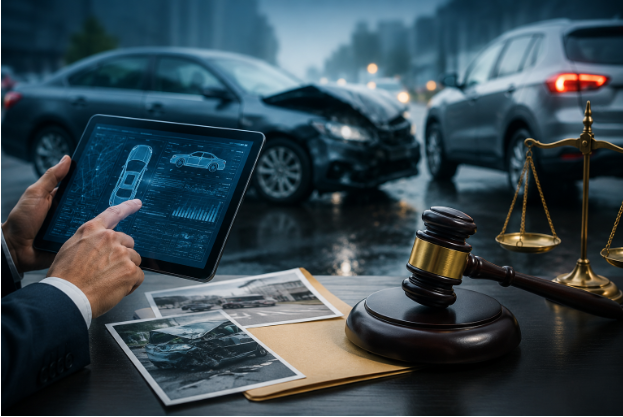
Another important trend is the growing role of accident reconstruction technology. Engineers and forensic experts can now use sophisticated software to recreate collisions using vehicle data, roadway measurements, photographs, and physical evidence. These visual reconstructions can help explain complex accidents to insurance adjusters, mediators, judges, and juries by providing a clearer understanding of how an incident unfolded.
Legal professionals familiar with motor vehicle accident litigation consistently emphasize the importance of early evidence preservation. In today’s digital environment, critical information can disappear quickly. Surveillance footage may be automatically overwritten, electronic records can be lost, and witness recollections naturally fade over time. Prompt investigation often allows attorneys to secure valuable evidence before it becomes unavailable.
Individuals seeking information about Connecticut motor vehicle accident claims can learn more from experienced Connecticut car accident attorneys who regularly handle complex injury litigation and insurance disputes.
As technology continues to advance, its influence on personal injury law will likely expand even further. Artificial intelligence, digital forensics, telematics, and data-driven investigations are expected to play an increasingly prominent role in determining liability and assessing damages. The intersection of law, healthcare, and technology is rapidly reshaping how personal injury claims are handled, making technological proficiency an essential component of effective legal advocacy in the modern era.
Read More From Techbullion