The paperwork supplied with a luxury watch has traditionally carried almost as much importance as the watch itself. A stamped guarantee card, matching serial number and documented service history can all help establish where a watch came from and how it has been maintained.
Those physical records still matter, but manufacturers are increasingly adding a digital layer. Blockchain-backed passports, NFC-enabled cards and international databases are making it easier to access official information, record ownership and flag watches that have been reported lost or stolen.
Breitling, TUDOR and Cartier provide three useful examples. Their systems work differently and solve different problems, but collectively they show how the luxury-watch industry is building a more traceable market.
They also expose an important limitation. Technology can strengthen the evidence surrounding a watch, but it cannot replace a knowledgeable physical inspection.
Why Luxury Watches Need Better Digital Records
Modern counterfeits are no longer always easy to identify from a poor-quality dial or an obviously incorrect case. Some imitate external details closely, while genuine serial numbers and documentation can also be copied or paired with a different watch.
The pre-owned market introduces further questions. Has ownership been transferred legitimately? Does the serial number correspond with the correct reference? Is the remaining warranty genuine? Has the watch previously been reported stolen? Has a service card actually been issued by an authorised service centre?
No single database can answer every one of those questions. However, direct access to manufacturer records gives buyers and professional dealers more information to compare with the physical watch and its documentation.
The strongest systems do not simply display a model name. They connect several pieces of information: the watch, its unique identity, its warranty or service history and, in some cases, its current owner.
Breitling: A Transferable Digital Passport
Breitling was one of the earliest major Swiss manufacturers to make blockchain technology part of the ownership experience. In 2020, it began providing new watches with a blockchain-based digital passport.
The passport acts as a digital record linked to an individual watch. Depending on the model and available records, it can provide product details, warranty information, ownership history and supporting documents such as chronometer certification. Crucially for the pre-owned market, the passport can also be transferred securely when the watch changes hands.
That transferability matters. Traditional warranty cards remain with the watch, but they do not record each subsequent owner. A digital transfer creates a clearer chain between seller and buyer without requiring the manufacturer to publish personal details openly.
For someone considering pre-owned Breitling watches, a successfully transferred passport can therefore be useful supporting evidence. It may confirm that the seller controls the digital record associated with that serial number and gives the new owner continued access to the available documents.
Breitling describes the system in terms of transparency, traceability and tradability. That language captures its wider purpose. The passport is not merely an online copy of a warranty card; it is designed to stay with the watch throughout its life.
It is still important not to overstate what the technology proves. A digital passport does not inspect the movement, identify every non-original component or reveal undocumented repairs. The serial number and digital record must still be checked against the actual watch. The passport adds another credible layer of evidence, rather than replacing authentication.
TUDOR: Official Watch Data Through NFC
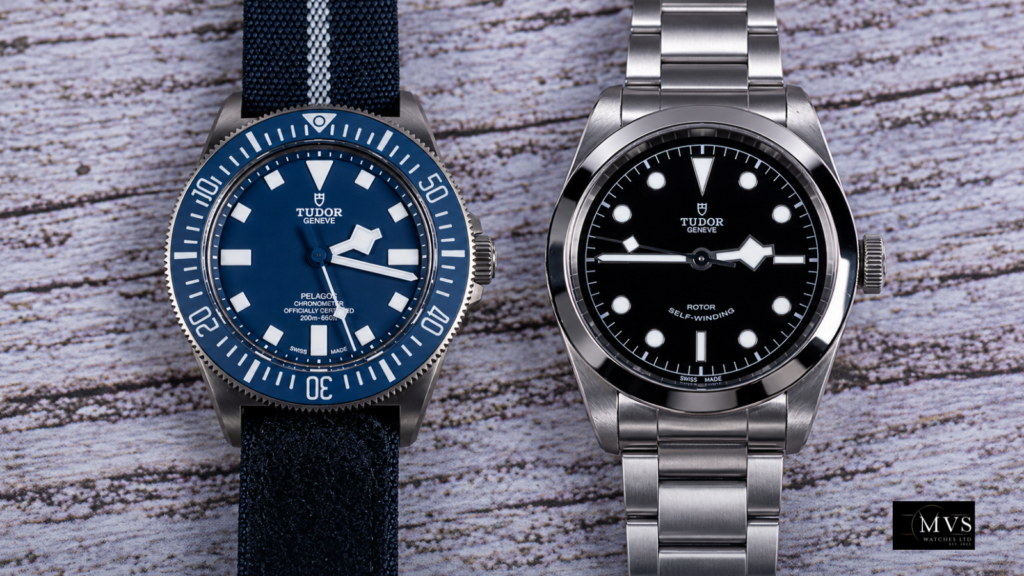
TUDOR has taken a more direct approach. Since 2020, its guarantee cards have incorporated an NFC chip that can be read by a compatible smartphone. Placing the card near the phone opens TUDOR Watch ID, a web-based service that provides access to information associated with the watch.
No separate application or prior registration is required. For METAS-certified models, the system can also display the individual performance data recorded during Master Chronometer testing.
The technology makes the card more useful than a purely printed document. Rather than relying only on information visible on its surface, an owner can use the NFC connection to reach data provided through TUDOR’s own system. TUDOR also uses NFC-enabled service cards following a full service performed by an official retailer or service centre. Those cards confirm the work was completed according to the manufacturer’s procedures and carries the associated two-year service guarantee.
When assessing TUDOR watches, the NFC card can help connect the supplied documentation with the manufacturer’s records. It is particularly valuable when checking newer watches, remaining warranty information and official service documentation.
However, an NFC response should not be treated as automatic proof that every part of the accompanying watch is genuine. A real card could theoretically be presented with the wrong watch, just as conventional paperwork can become separated from its original timepiece. The reference and serial information must still correspond, and the watch itself still needs to be examined.
TUDOR’s system is best understood as accessible manufacturer data, not a remote substitute for inspection.
Cartier Care and Enquirus: Registration Meets Theft Prevention
Cartier’s digital ecosystem tackles another major issue in the luxury market: the movement of lost and stolen watches.
Cartier owners can register eligible watches through Cartier Care and manage them within a MyCartier account. Registration can provide access to services including an extension of the original international warranty, subject to Cartier’s terms and eligibility requirements. This gives the owner a direct relationship with the manufacturer and a digital record of the watch within their collection.
Owners can also use Enquirus, a global database for luxury watches and jewellery. A watch can be registered before any problem occurs and subsequently reported if it is lost or stolen. The status can then be made available to relevant parties searching the database, including law-enforcement agencies, insurers, manufacturers and retailers.
For the market in used Cartier watches, this addresses a risk that authentication alone cannot solve. A watch may be completely genuine and still have an unlawful history. Establishing authenticity and establishing legitimate ownership are related, but they are not the same process.
Enquirus helps close that gap. It gives owners somewhere to preserve identifying information and provides market participants with another source to consult before a transaction. Cartier’s own warranty terms also recognise lost-and-stolen databases, allowing warranty coverage to be refused where the company suspects that a watch has been lost or stolen.
The system is not limited to proving whether a Cartier watch is authentic, nor should it be described as an authentication certificate. Its main value is registration, reporting and the circulation of lost-or-stolen status. Used alongside serial-number checks and physical authentication, it makes stolen watches harder to move through legitimate channels unnoticed.
Digital Evidence Is Not the Same as Authentication
The distinction between digital evidence and full authentication is essential.
A manufacturer’s digital record can establish that a particular reference and serial number exist within its system. It may also show warranty status, ownership control, service information or whether the item has been reported stolen. What it cannot necessarily establish is the present physical condition and composition of the watch being offered for sale.
A proper assessment may still require examination of:
- the case, dial, hands, bezel and bracelet;
- the movement and its identifying marks;
- reference and serial-number placement;
- signs of alteration, polishing or component replacement;
- the relationship between the watch and its supplied documents;
- service records, provenance and database status.
This matters because genuine and counterfeit are not the only two possibilities. A watch can be genuine but contain later replacement parts. It can be authentic but poorly repaired. It can have legitimate paperwork that no longer belongs to it. It can also be entirely genuine yet recorded as stolen.
Digital tools are most effective when they are treated as part of a wider chain of evidence.
What Buyers Should Check
Buyers do not need to understand the underlying blockchain or NFC technology in detail. They do need to know what information the system is supposed to provide and whether it corresponds with the watch in front of them.
When a digital passport or connected card is available, check that the reference, serial number and model details agree with the physical watch and its conventional paperwork. If ownership can be transferred, ensure that the transfer is completed rather than accepting screenshots from a seller’s account. Screenshots can be outdated or copied; control of the live record is more meaningful.
Where a lost-and-stolen database is available, it should be checked as an additional precaution. A clear result is useful, although it cannot guarantee that a recent theft has already been reported or that every historical record is present.
Buyers should also ask what the digital record does not show. It may not include work performed outside the authorised network, changes to components or damage that occurred after the data was issued.
Finally, the seller remains important. Technology is most reassuring when the watch is also being offered by a business that physically holds and examines its stock, provides clear photography and stands behind the sale with a meaningful warranty and returns process.
A More Traceable Pre-Owned Market
Breitling’s transferable digital passports, TUDOR’s NFC-enabled watch information and Cartier’s connection with Enquirus represent different stages of the same development. Luxury watches are gaining digital identities that can remain useful long after the original purchase.
These systems should make certain forms of fraud more difficult. They can improve access to manufacturer information, make ownership transfers clearer and help identify watches reported lost or stolen. As adoption grows, buyers will increasingly expect a watch’s digital history to accompany its box, papers and service records.
The physical watch must still tell the same story. A convincing digital record paired with an incorrect serial number, altered components or questionable provenance should create more questions, not fewer.
Technology is therefore not replacing traditional watch authentication. It is giving careful buyers and reputable dealers better information with which to perform it.