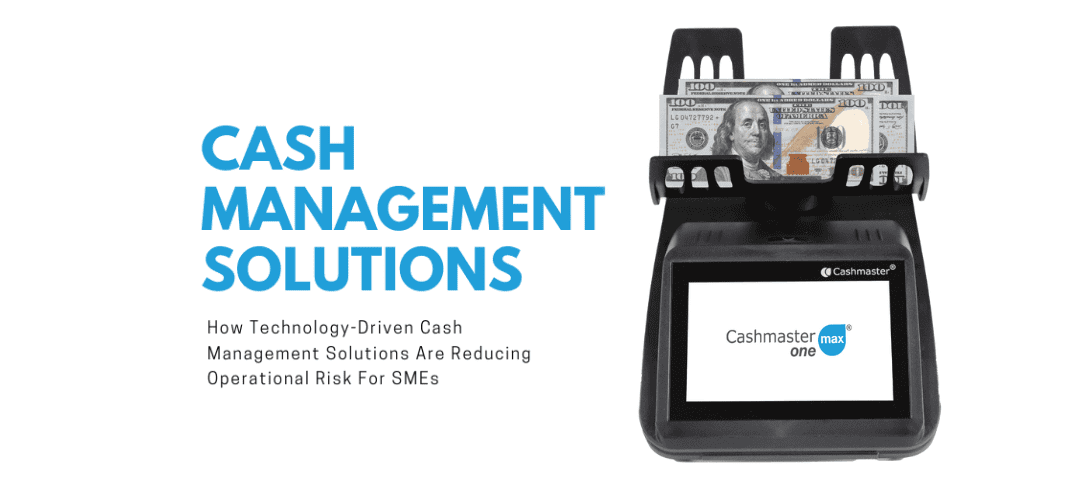
Small and medium-sized enterprises (SMEs) are operating in an increasingly complex financial environment. While digital payments and online banking tools have transformed many aspects of business finance, cash handling remains a critical — and often underestimated — source of operational risk.
For many SMEs, particularly those operating in retail, hospitality, logistics, or local services, physical cash still plays an important role. Without the right systems in place, managing that cash can expose businesses to errors, inefficiencies, and security vulnerabilities. As a result, technology-driven cash management solutions are becoming an essential part of modern operational risk reduction.
The hidden risks of traditional cash handling
Manual cash handling processes have long been a weak point in SME operations. Counting cash by hand, reconciling figures at the end of the day, and relying on spreadsheets or paper records can introduce multiple points of failure.
Common risks include:
- Human error during counting or reconciliation
- Inconsistent record-keeping across locations or staff
- Limited visibility into daily cash positions
- Increased exposure to theft or internal fraud
While these risks may appear small in isolation, they can accumulate over time, leading to financial discrepancies, compliance challenges, and reduced trust in reporting data.
Technology’s role in improving financial accuracy
Advancements in financial technology have significantly improved how businesses manage payments, invoicing, and forecasting. Cash handling, however, has often lagged behind. This is now changing as SMEs adopt tools designed to improve accuracy and reduce manual intervention.
Technology-driven cash systems help standardise processes, ensuring that cash is counted, recorded, and monitored consistently. By reducing reliance on manual input, businesses can minimise discrepancies and gain greater confidence in their financial data.
Improved accuracy also supports better decision-making. When leaders can trust the numbers in front of them, they are better positioned to manage costs, plan investments, and respond quickly to financial challenges.
Reducing operational risk through automation
Automation plays a central role in lowering operational risk. In cash-heavy environments, repetitive tasks such as counting, recording, and reconciling cash can consume valuable staff time and increase the likelihood of mistakes.
Automated tools help streamline these processes, allowing employees to focus on higher-value activities while ensuring financial controls remain consistent. For SMEs with limited resources, this efficiency can make a meaningful difference to daily operations.
Many businesses now view Cash management solutions as part of a broader operational strategy rather than a standalone function, integrating them alongside accounting software, reporting platforms, and security measures.
Strengthening fraud prevention and internal controls
Fraud prevention is a growing concern for SMEs. Internal fraud, in particular, can be difficult to detect without proper systems in place. Manual cash handling processes often rely on trust and informal checks, which can leave gaps in accountability.
Technology-driven cash systems introduce greater transparency. Clear audit trails, consistent reporting, and controlled access help reduce opportunities for misuse while making irregularities easier to identify. This not only protects revenue but also reinforces internal governance standards.
Stronger controls can also improve relationships with external stakeholders, including auditors, investors, and financial partners, who increasingly expect robust risk management practices.
Supporting scalability and business growth
As SMEs grow, financial complexity increases. What works for a single location or small team may not scale effectively across multiple sites or higher transaction volumes.
Technology enables scalability by creating repeatable, standardised processes that can grow alongside the business. Whether expanding into new locations or increasing daily transaction volumes, having reliable cash systems in place reduces friction and operational strain.
Scalable cash processes also support more accurate forecasting, allowing businesses to plan growth with greater confidence and reduced financial uncertainty.
Improving visibility and financial insight
One of the most significant benefits of technology-driven financial tools is improved visibility. When cash handling is digitised and standardised, businesses gain clearer insight into daily performance and cash flow patterns.
Enhanced visibility allows SME leaders to:
- Identify trends and anomalies more quickly
- Make informed decisions based on real data
- Respond faster to potential issues
This level of insight is particularly valuable in volatile economic conditions, where agility and accurate information are essential.
Integrating cash handling into wider digital ecosystems
Modern SMEs rarely operate with isolated systems. Accounting platforms, payroll software, inventory management tools, and reporting dashboards are increasingly interconnected.
Cash handling technology is now being integrated into these wider digital ecosystems, creating a more cohesive financial infrastructure. This integration reduces duplication, improves data consistency, and supports more comprehensive financial oversight.
By aligning cash processes with digital reporting and analytics, SMEs can create a more resilient and transparent operational framework.
Looking ahead: cash management in a digital-first economy
Despite the growth of digital payments, cash is unlikely to disappear entirely in the near future. Instead, the focus is shifting towards managing it more intelligently and securely.
For SMEs, the future of cash handling lies in combining traditional practices with modern technology. By adopting tools that prioritise accuracy, transparency, and automation, businesses can significantly reduce operational risk while supporting long-term growth.
Final thoughts
Operational risk often hides in routine processes. Cash handling, when managed manually, can expose SMEs to unnecessary financial and security challenges. Technology-driven cash management solutions offer a way to modernise these processes, improve accuracy, and strengthen internal controls.
By embracing digital tools and integrating cash handling into broader financial systems, SMEs can reduce risk, gain better visibility, and build more resilient operations in an increasingly complex business landscape.