
How Srinivasa Immadi Is Connecting AI, Oracle HCM and Workforce Transformation

Artificial intelligence is moving quickly into the systems organizations use to recruit, pay, develop and support their people. Yet the hardest part of AI-enabled human capital management is rarely activating a feature. It is redesigning the workforce operating model around new capabilities while preserving trust, compliance and operational continuity.
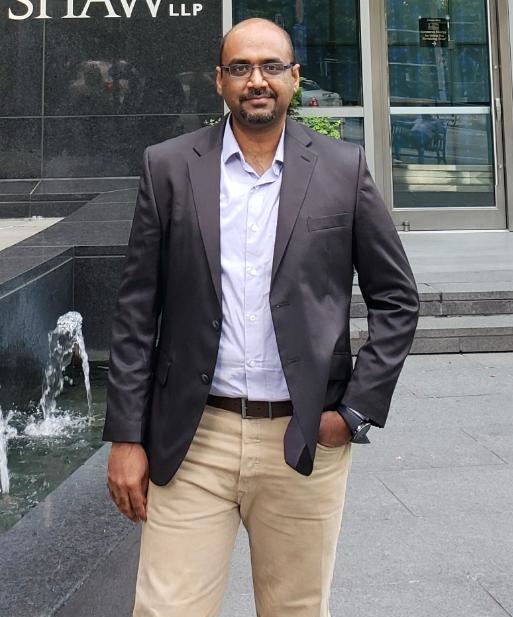
That challenge has shaped the work of Srinivasa K. Immadi, a Director in PwC’s Oracle Cloud and Human Capital Management transformation practice. Across healthcare, hospitality, consumer products, sports and entertainment, and other complex sectors, Immadi has focused on connecting enterprise architecture, workforce strategy, organizational change and large-scale program delivery. His work across enterprise cloud programs reflects a broader shift in human capital management—from implementing software to building governed, intelligent workforce operating models.
Beyond software implementation
Immadi’s approach begins with the view that an HCM transformation should not be managed as a collection of separate modules. Recruiting, onboarding, core employee data, compensation, benefits, payroll, employee service and analytics form one connected workforce ecosystem. A design decision in one area can affect reporting, compliance, employee experience and AI readiness elsewhere.
PwC leaders who have worked directly with him describe responsibilities that extend from solution architecture and technical integration to executive governance, risk management and long-term value realization. They also credit him with developing governance-driven modernization approaches that connect the employee lifecycle to a unified operating model and align embedded AI and predictive workforce insights with regulatory and executive oversight.
Designing for acquisitions and complexity
The value of that model becomes especially visible during acquisitions. A newly acquired company can bring different employee records, job structures, security practices, applications and operating cultures. Integrating those elements into a common cloud environment requires more than data conversion. It demands sequencing, controls, cutover planning and a design flexible enough to preserve continuity while creating a shared digital core.
For a major hospitality and resorts client, Immadi held leadership and solution-architecture responsibilities in workforce and technology integrations associated with multiple acquisitions. His work included future-state Oracle HCM architecture, employee-data migration, configuration and deployment across modules, critical cutover activities and post-go-live stabilization. He later supported the consolidation of processes and information from multiple legacy systems and the modernization of employee-service capabilities.
The methods supporting this work include repeatable implementation templates, data-migration sequencing, embedded controls, governance checkpoints and scalable model-system designs. The goal is to avoid rebuilding an HCM environment for every acquired entity while still accommodating legitimate brand, regional or business differences.
Research connected to practice
Immadi’s published research examines the same transformation challenge from three angles. “Optimizing ERP for Human Capital Management” considers how enterprise platforms can support broader HCM objectives. “Harnessing Artificial Intelligence in Oracle HCM” explores automation and predictive analytics in workforce management. “Navigating Organizational Change and Overcoming Resistance to AI Integration in Oracle HCM Systems” focuses on the human barriers that can limit adoption.
Together, the publications advance a consistent argument: intelligent workforce transformation needs a strong digital foundation, but technology must be paired with process redesign, leadership alignment and deliberate change management. Predictive tools depend on reliable workforce data. Automation creates lasting value only when employees understand how it affects their work. AI governance must be designed into the operating model, not added after deployment.
Enterprise scale and industry context
Immadi’s work has also taken place in enterprise environments whose broader relationships are publicly visible. PwC’s work with Fanatics has appeared in public professional communications, while its relationship with the Madison Square Garden family of companies expanded into a multi-year partnership announced in December 2025. These references illustrate the scale and visibility of the organizations involved, although public announcements alone do not establish any individual professional’s contribution.
PwC’s Oracle practice also received seven Oracle Partner Awards in 2025, including global recognition for AI innovation and customer success. Those awards belong to PwC as an organization, but they provide context for the delivery environment in which enterprise leaders are expected to combine technical execution, business transformation and long-term value realization.
Why the operating model matters
As generative AI and intelligent agents become embedded in HCM platforms, organizations will need to decide which activities can be automated, where human judgment must remain central, how recommendations will be explained and who is accountable when data or models produce unexpected outcomes.
Immadi’s work points toward a practical sequence: begin with the workforce problem, create a reliable data and process foundation, establish governance early and design adoption as part of the solution. The future of HCM will not be shaped by technology alone. It will be shaped by leaders who can translate technology into operating models that employees trust and enterprises can sustain.






Comment