
How Restaurant Billing Software Can Save Time and Improve Operational Efficiency

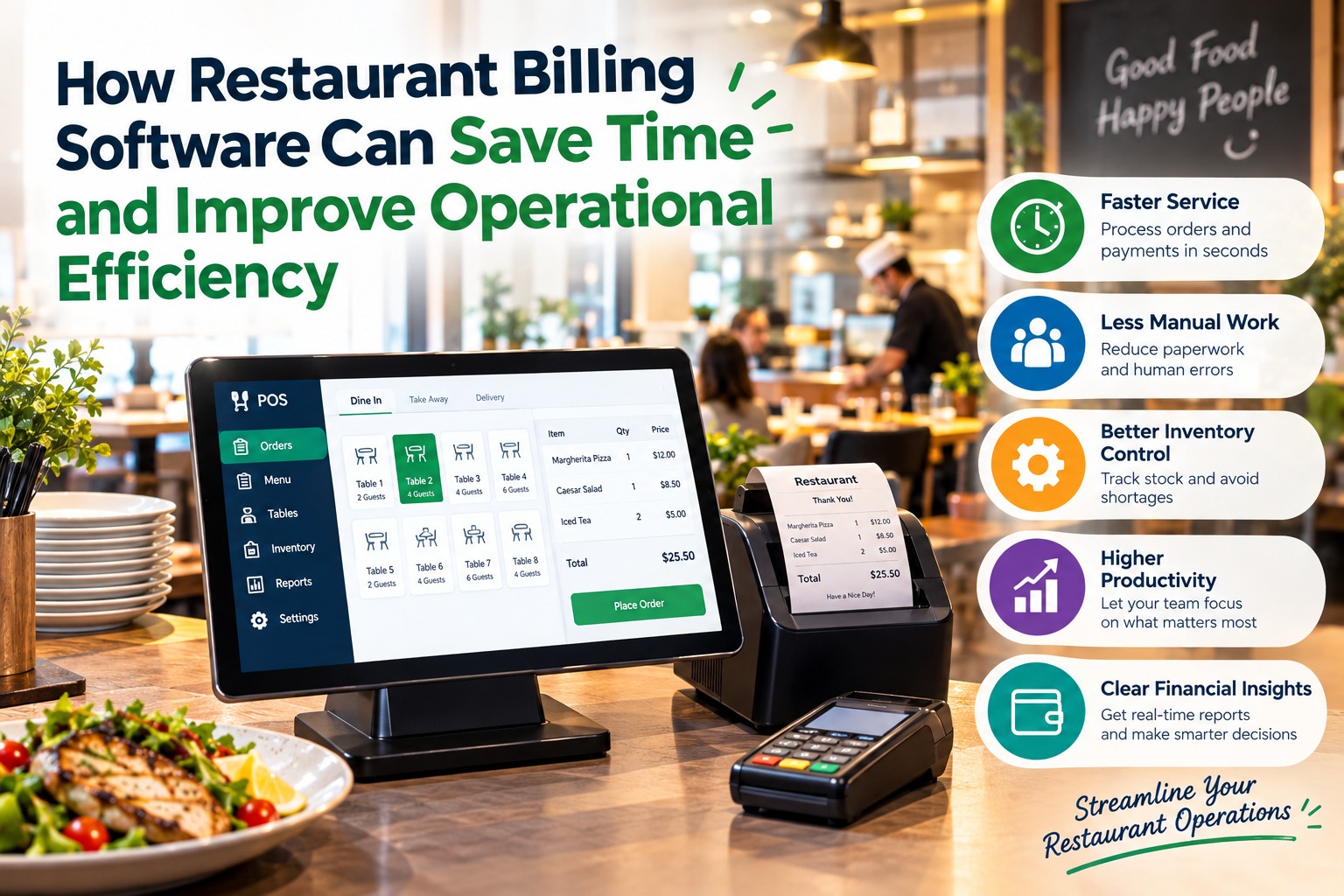
Running a restaurant requires careful coordination between orders, billing, payments, inventory, staff, and customers. During busy hours, even a small delay in one part of the process can affect the entire operation. Manual calculations, repeated data entry, and disconnected systems can consume valuable time that restaurant teams could otherwise spend serving customers.
Technology has changed the way modern restaurants handle these everyday challenges. Restaurant billing software can automate several routine tasks, improve accuracy, and bring important operational information together in one place. Solutions such as Petpooja are designed to help restaurants manage their daily operations through connected digital tools.
Faster and More Accurate Billing
Billing is one of the most important steps in the customer journey. When bills are prepared manually, employees may need to calculate item prices, taxes, discounts, and totals themselves. This can take additional time and increase the possibility of errors.
With digital billing software, these calculations can be handled automatically based on the information entered into the system. Staff can generate bills more quickly, which can help reduce waiting times during busy periods.
For restaurants looking for a broader technology solution, restaurant POS software can connect billing with other operational processes. This allows businesses to manage transactions through a more structured workflow instead of relying on separate manual systems.
Simplifying Order Management
Billing and order management are closely connected. When order information has to be entered multiple times, employees spend unnecessary time repeating the same work.
A digital restaurant system can keep order details organized from the time an order is entered until the final bill is generated. This reduces duplicate data entry and makes it easier for staff to access accurate information.
For busy restaurants, a smoother order-to-billing process can help employees handle more transactions without adding unnecessary administrative work.
Reducing Manual Errors
Manual billing can create several opportunities for mistakes. Incorrect quantities, calculation errors, missed discounts, or inaccurate tax entries can lead to billing discrepancies and customer complaints.
Automated billing systems reduce the need for repetitive calculations. Once menu prices and relevant settings are configured, the software can calculate totals consistently.
This does not remove the need for staff oversight, but it can reduce the amount of repetitive work employees have to perform and make everyday transactions more consistent.
Improving Restaurant Reporting
Restaurant managers need accurate information to understand how their business is performing. Creating sales reports manually can take considerable time, especially for restaurants processing hundreds of transactions each day.
Digital systems can automatically record transaction information and organize it into reports. Managers can then review sales activity and other operational information without manually compiling data from individual bills.
These reports can help restaurant owners understand sales patterns, identify popular menu items, and review business activity over different periods.
Making Payments More Convenient
Customers may use different payment methods depending on their preferences. Managing cash, cards, and digital payments manually can make the checkout process more complicated.
A modern billing system can help organize payment transactions within the same workflow. This makes it easier for staff to complete orders and maintain proper transaction records.
Faster payment processing is particularly useful during lunch and dinner rushes, when several customers may need to complete their payments within a short period.
Connecting Billing With Inventory Management
Restaurant efficiency is not limited to billing. Inventory is another area where manual processes can consume significant time.
Sales information can provide useful insight into the movement of menu items and ingredients. When billing and inventory processes are connected, restaurants can maintain better visibility into what is being sold and what may need to be replenished.
Petpooja provides restaurant technology that covers multiple operational areas, allowing businesses to move beyond basic billing and manage different aspects of their operations through digital tools.
Streamlining Purchasing
Purchasing is another repetitive task that can become difficult to manage as a restaurant grows. Restaurant teams may need to compare supplier prices, prepare purchase orders, receive goods, and update inventory records.
A dedicated Purchase Manager can help organize this part of the workflow. By bringing purchasing information into a structured system, restaurants can reduce manual recordkeeping and make procurement easier to manage.
Connecting purchasing with other restaurant operations can also give managers better visibility into costs and stock-related activities.
Saving Staff Time During Busy Hours
Restaurant staff often work under considerable time pressure. During peak hours, employees need to serve customers quickly while maintaining accuracy.
Automating routine administrative tasks allows staff to spend less time on calculations and paperwork. Instead, they can focus more attention on taking orders, assisting customers, coordinating with the kitchen, and maintaining service quality.
Even small time savings on individual transactions can become significant when a restaurant processes a large number of orders every day.
Helping Managers Make Better Operational Decisions
Managers need more than fast billing to run an efficient restaurant. They also need access to reliable information about sales, transactions, purchasing, and inventory.
A centralized restaurant management system can make this information easier to access. Instead of collecting data from multiple sources, managers can review digital records and reports from a more organized platform.
This can make routine decision-making more efficient and help businesses identify areas where processes can be improved.
Choosing the Right Restaurant Billing Software
Every restaurant has different requirements. A small café may need basic billing capabilities, while a large restaurant or multi-outlet business may require additional tools for inventory, purchasing, reporting, online orders, and customer management.
Before choosing a solution, restaurant owners should consider factors such as ease of use, billing speed, reporting features, inventory capabilities, integrations, payment options, and scalability.
The right system should not simply replace a cash register. It should help simplify everyday processes and support the restaurant’s broader operational needs.
Conclusion
Restaurant operations involve many repetitive tasks, and inefficient processes can quickly consume valuable time. Restaurant billing software can help businesses simplify billing, reduce manual calculations, organize transaction data, and improve the overall flow of daily operations.
Solutions such as Petpooja demonstrate how restaurant technology can extend beyond billing by connecting different operational functions within a digital ecosystem. When billing, purchasing, inventory, and reporting become more organized, restaurant teams can spend less time on administrative work and more time focusing on customers.
For restaurants seeking greater operational efficiency, adopting the right digital tools can be an important step toward building a faster, more organized, and scalable business.






Comment