
How Remote Patient Monitoring Is Changing Care Beyond the Hospital

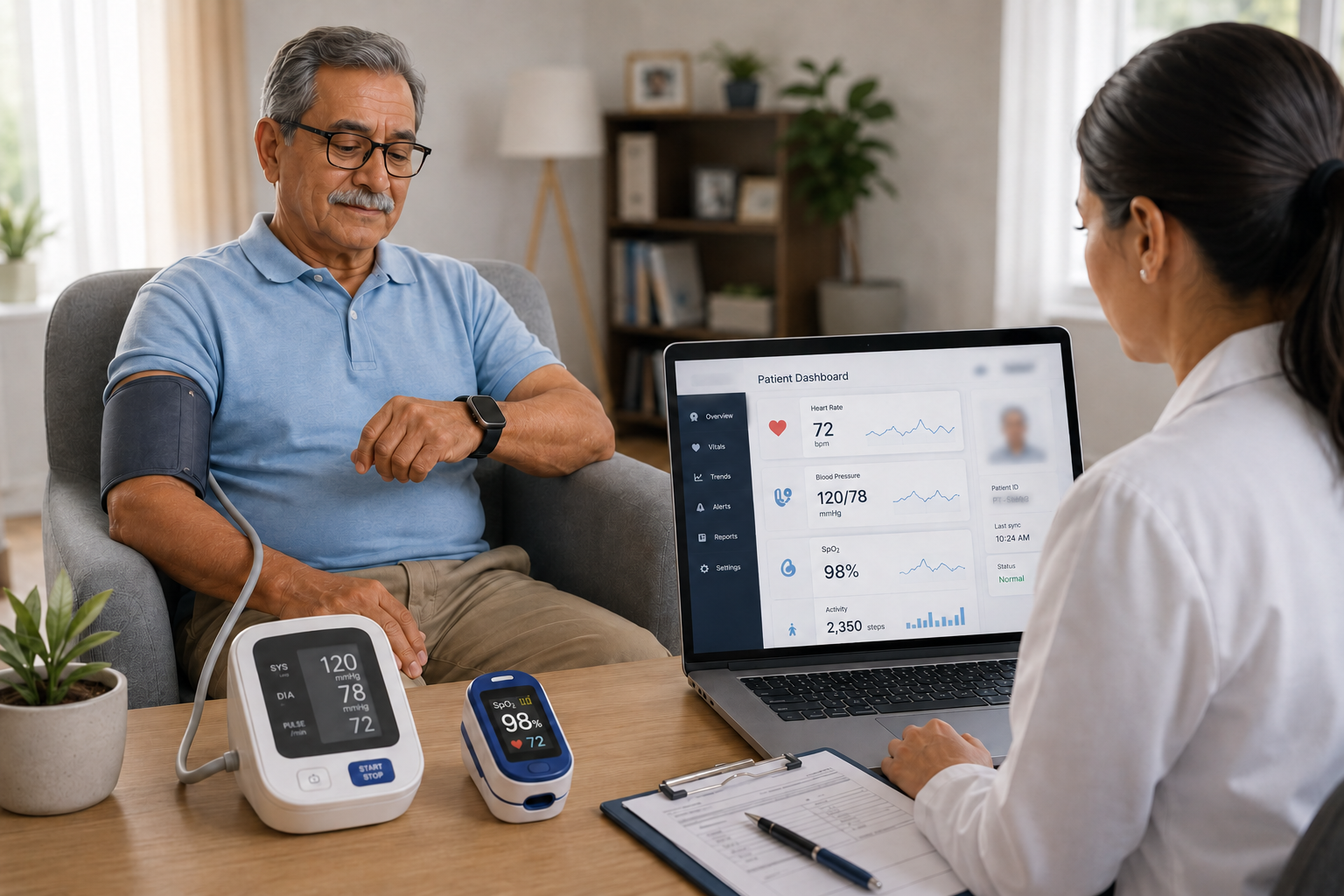
Healthcare is no longer confined to hospitals, clinics, and traditional medical offices. Advances in connected devices, cloud technology, and artificial intelligence are making it possible for patients to receive continuous care from the comfort of their homes. One of the most significant developments driving this transformation is Remote Patient Monitoring (RPM).
Remote Patient Monitoring allows healthcare providers to collect and review patient health data outside traditional care settings. Devices such as blood pressure monitors, glucose meters, pulse oximeters, smart scales, and wearable fitness trackers can transmit information to care teams, helping clinicians identify changes in a patient’s condition before they become serious.
As healthcare organizations continue adopting digital technologies, RPM is increasingly working alongside solutions such as AI EHR, AI Medical Coding Software, and AI Medical Billing to create a more connected and efficient healthcare ecosystem.
What Is Remote Patient Monitoring?
Remote Patient Monitoring is a healthcare delivery model that uses digital devices and communication technologies to collect patient health information outside a clinical setting.
Depending on the patient’s condition, RPM programs may monitor:
- Blood pressure
- Blood glucose levels
- Heart rate
- Oxygen saturation
- Body weight
- Temperature
- Respiratory rate
- Activity and mobility
- Sleep patterns
The information can be transmitted electronically to healthcare professionals, allowing them to monitor patients between appointments and intervene when necessary.
For patients with chronic conditions, this can reduce the need for frequent in-person visits while giving physicians greater visibility into their health.
Moving Healthcare Beyond the Hospital
Traditional healthcare often follows a reactive model. A patient experiences symptoms, schedules an appointment, receives an evaluation, and then returns home.
RPM introduces a more continuous approach.
Instead of relying exclusively on occasional office visits, providers can monitor relevant health data over time. This creates a larger picture of the patient’s condition and can help clinicians recognize trends that might otherwise go unnoticed.
For example, a patient with hypertension may measure their blood pressure at home every day. If readings consistently begin moving outside the patient’s normal range, the care team can review the data and determine whether additional intervention is necessary.
This approach can be particularly valuable for chronic disease management, post-discharge monitoring, and patients who have difficulty regularly traveling to healthcare facilities.
How AI EHR Technology Supports Remote Monitoring
The growing volume of data generated by RPM creates a major challenge: healthcare professionals cannot manually review every data point indefinitely.
This is where artificial intelligence can become increasingly valuable.
An AI EHR can help healthcare organizations organize and interpret information within electronic health records while making relevant patient information easier for clinicians to access. When RPM data is integrated into clinical workflows, providers can potentially gain a more comprehensive view of a patient’s health.
AI-powered systems may help identify patterns, prioritize information, summarize patient data, and support clinical decision-making.
The goal is not to replace physicians. Instead, AI can reduce the burden of reviewing large amounts of information so clinicians can spend more time focusing on patients and making informed decisions.
Early Detection Can Lead to Earlier Intervention
One of the biggest advantages of RPM is its potential to identify changes in health before they become emergencies.
Consider a patient recovering from heart-related complications. A sudden increase in weight could potentially indicate fluid retention. When combined with other symptoms and clinical information, that change may prompt the care team to contact the patient or adjust the treatment plan.
Similarly, continuous glucose monitoring can provide patients and providers with more detailed information about blood glucose patterns than occasional measurements alone.
Early identification does not guarantee that a serious event will be prevented, but it can give healthcare professionals an opportunity to respond sooner.
Improving Chronic Disease Management
RPM has particular potential in the management of chronic conditions.
Millions of people live with conditions that require ongoing monitoring, including:
- Diabetes
- Hypertension
- Cardiovascular disease
- Chronic respiratory conditions
- Obesity
- Kidney disease
- Certain post-surgical conditions
Managing these conditions often requires more than a few appointments each year. RPM can help extend monitoring into the patient’s everyday environment.
Instead of relying solely on what happens during an office visit, providers can use remotely collected information to understand how patients are doing between appointments.
This can also encourage patients to become more involved in their own care. Seeing health measurements over time may help patients understand how medication, diet, exercise, sleep, and other behaviors affect their health.
Reducing Unnecessary Hospital Visits
Hospital care can be expensive, stressful, and inconvenient for patients. RPM may help healthcare organizations manage certain patients outside the hospital when clinically appropriate.
For example, patients who have recently been discharged may continue sharing vital health information with their care teams from home. Providers can monitor their progress and identify concerning changes that may require attention.
In some situations, this can help reduce unnecessary emergency department visits or readmissions.
However, RPM is not a replacement for emergency or in-person care. Patients experiencing serious symptoms still require appropriate medical evaluation.
The Role of AI Medical Coding Software
RPM also generates new administrative and documentation requirements for healthcare organizations.
Every remote interaction, clinical observation, and billable service may need to be documented and coded appropriately. As healthcare organizations expand RPM programs, managing this administrative workload can become increasingly complex.
AI Medical Coding Software can help automate parts of the coding workflow by analyzing clinical documentation and identifying relevant codes for review.
Automation can potentially reduce repetitive manual work, improve coding consistency, and allow coding professionals to focus on more complex cases.
Human oversight remains important because coding accuracy depends on clinical documentation, payer requirements, coding guidelines, and the specific circumstances of each encounter.
Streamlining Revenue Cycle Operations With AI Medical Billing
RPM can also affect the financial side of healthcare delivery.
Healthcare organizations need efficient processes for submitting claims, tracking reimbursements, identifying denials, and managing patient billing. As remote services become a larger part of healthcare delivery, organizations must ensure that their revenue cycle processes can accommodate these services.
AI Medical Billing technologies can help automate repetitive administrative processes and analyze billing data to identify potential errors, missing information, or patterns associated with claim denials.
When combined with effective revenue cycle management, AI can help healthcare organizations manage the administrative complexity associated with expanding digital care models.
Making Healthcare More Patient-Centered
Perhaps the most important change brought by RPM is that it shifts healthcare closer to the patient’s everyday life.
Patients do not experience their health only during appointments. They experience it while working, sleeping, exercising, eating, traveling, and living at home.
RPM allows certain aspects of healthcare to follow the patient into those environments.
This can make care more convenient, particularly for older adults, people with mobility limitations, individuals living far from healthcare facilities, and patients managing chronic diseases.
It can also support a more personalized approach because providers can work with information collected from the patient’s real-world environment rather than relying entirely on measurements taken during occasional office visits.
Challenges Healthcare Organizations Must Address
Despite its benefits, RPM comes with challenges.
Data Privacy and Security
Healthcare organizations must protect sensitive patient information. Connected medical devices, mobile applications, cloud platforms, and electronic health records all introduce potential security considerations.
Strong cybersecurity practices, access controls, encryption, and appropriate compliance measures are essential.
Data Overload
More data does not automatically mean better care. Providers can become overwhelmed if RPM systems generate excessive alerts or irrelevant information.
Effective systems need intelligent prioritization so clinicians can focus on meaningful changes.
Patient Adoption
Patients need to understand how to use monitoring devices correctly. Poor device usage, inconsistent measurements, or lack of engagement can reduce the value of an RPM program.
Healthcare organizations should provide appropriate education and support.
Integration With Existing Systems
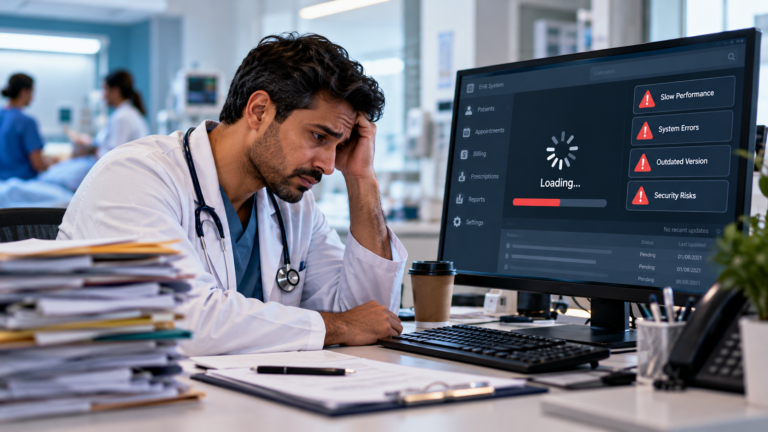
RPM works best when information can integrate smoothly with existing clinical workflows. If clinicians must constantly switch between disconnected systems, the technology can create additional administrative burden instead of reducing it.
The Future of Remote Patient Monitoring
The future of RPM will likely involve deeper integration between connected devices, artificial intelligence, electronic health records, and healthcare workflows.
Wearable devices are becoming more sophisticated, while AI systems are becoming better at identifying patterns in large datasets. Healthcare organizations can increasingly combine these technologies to create more proactive models of care.
Instead of simply collecting information, future systems may help identify clinically relevant trends, prioritize patients who need attention, and provide clinicians with concise summaries of important changes.
This could move healthcare toward a model where care is increasingly continuous rather than episodic.
Conclusion
Remote Patient Monitoring is changing the way healthcare can be delivered by extending clinical monitoring beyond hospitals and traditional medical offices. By allowing providers to receive health information from patients at home, RPM can support chronic disease management, earlier intervention, improved patient engagement, and more convenient care.
At the same time, technologies such as AI EHR, AI Medical Coding Software, and AI Medical Billing can help healthcare organizations manage the clinical and administrative complexity created by increasingly digital care models.
The future of healthcare will not simply be about treating patients when they enter a hospital. It will increasingly involve monitoring, supporting, and engaging patients wherever they live. Remote Patient Monitoring is an important step toward making that vision a practical part of modern healthcare.






Comment