
How Moisture Monitoring Technology Helps Protect Modern Homes


Water damage is one of the most expensive and preventable problems in residential real estate. In the United States alone, water damage claims account for nearly 24% of all homeowner insurance losses annually — and the majority of those losses involve situations where the water had been present, undetected, for days, weeks, or months before anyone noticed.
The traditional model of basement and foundation moisture management has always been reactive: wait for visible damage, then repair it. A growing category of IoT-enabled moisture monitoring technology is changing that model fundamentally — giving homeowners, property managers, and waterproofing professionals real-time visibility into the conditions that precede water damage, rather than the damage itself.
The Limitations of Visual Inspection
For most of the history of residential construction, moisture detection meant a human looking at walls, floors, and ceilings for visible signs of a problem. This approach has a fundamental flaw: by the time water damage is visible to the naked eye, the underlying moisture event has typically been occurring for a significant period.
Efflorescence — the white mineral deposits that appear on basement walls — only becomes visible after repeated water migration through masonry. Mold reaches visible colony size only after sustained moisture above 60% relative humidity for an extended period. Wall staining, peeling paint, and deteriorating finishes all represent the downstream consequences of moisture conditions that existed long before the symptom appeared.
The professionals at Direct Waterproofing in Scarborough regularly work with homeowners who have unknowingly been living with active moisture intrusion for months or years before calling for an assessment. The gap between when a problem begins and when it becomes visible is precisely where moisture monitoring technology creates value.
How Modern Moisture Monitoring Systems Work
Contemporary residential moisture monitoring technology operates across several distinct layers, each targeting a different aspect of the water intrusion problem.
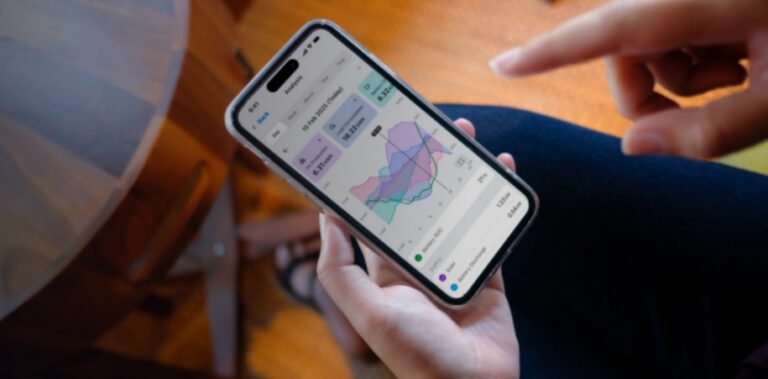
Wireless sensor networks form the foundation of most residential systems. Low-power sensors placed at strategic points — foundation wall joints, sump pit edges, floor drains, crawl space floors — measure relative humidity and detect the presence of liquid water continuously. Data is transmitted via WiFi, Z-Wave, or Zigbee protocols to a central hub and from there to cloud-based monitoring platforms accessible via smartphone applications.
Capacitive soil moisture sensors deployed around the exterior perimeter of a foundation measure soil saturation levels in real time. This data is particularly valuable because soil saturation — not rainfall — is the direct precursor to hydrostatic pressure events. A system that can detect when surrounding soil reaches saturation threshold provides homeowners with advance warning before pressure builds to the point of wall seepage or floor crack intrusion.
Acoustic leak detection devices use sound wave analysis to identify the distinctive acoustic signature of water movement through pipes and foundation materials. These systems can detect pinhole leaks and micro-fracture seepage that produce no visible moisture at the point of detection, triangulating the source location with significant precision.
Smart sump pump monitoring represents one of the most practical and widely adopted applications in this category. Connected sump pump controllers track pump cycle frequency, run duration, water level in the pit, and battery backup status. A pump that begins cycling more frequently than its baseline pattern — without a corresponding precipitation event — signals a change in groundwater conditions that warrants investigation. A pump failure alert delivered to a homeowner’s phone at 2am during a storm has an obvious and immediate value proposition.
Integration With Building Management Systems
As residential smart home ecosystems mature, moisture monitoring is increasingly integrated with broader building management platforms. Integration with weather data APIs allows systems to correlate incoming storm events with foundation moisture readings, generating predictive alerts when forecast precipitation combined with current soil saturation levels creates elevated flood risk.
Integration with HVAC systems enables automated dehumidification responses when basement relative humidity crosses defined thresholds — addressing condensation-driven moisture accumulation without manual intervention. Some systems now incorporate machine learning models trained on historical moisture data for a specific property, enabling them to distinguish between normal seasonal variation and anomalous readings that signal an emerging problem.
The data infrastructure underlying these systems also creates substantial value for property transactions. A home equipped with continuous moisture monitoring that has generated two or three years of clean baseline data represents a meaningfully different risk profile than an identical home with no monitoring history — a distinction that sophisticated buyers and their insurance underwriters are beginning to recognize and price accordingly.
The Role of Professional Waterproofing in a Technology-Enhanced Framework
Moisture monitoring technology is a detection and alerting system, not a remediation system. The sensors can tell a homeowner when and where a problem is developing with a precision previously unavailable — but the physical work of stopping water intrusion still requires professional intervention.
What monitoring technology changes is the nature of that intervention. Problems identified at the early-signal stage — elevated humidity trending upward over several weeks, soil saturation spiking against the north foundation wall after heavy rain — are addressed through targeted crack injection, drainage correction, or sump pump capacity upgrades. Problems identified only after they become visible often require far more extensive intervention: full interior drainage system installation, exterior excavation and membrane application, or structural foundation repair.
The economic case is straightforward. The cost of installing a comprehensive residential moisture monitoring system ranges from a few hundred dollars for a basic sensor network to several thousand for a fully integrated system with exterior soil monitoring and professional remote monitoring services. That investment produces its return not by eliminating the need for professional waterproofing, but by ensuring that when waterproofing is needed, it is addressed at the earliest and least expensive stage of the problem’s development.
Looking Ahead: Where the Technology Is Going
The next generation of residential moisture monitoring is moving toward fully autonomous response systems — platforms that not only detect and alert but initiate pre-programmed responses. Integration with smart valve systems that can automatically redirect drainage flow, combined with predictive analytics that anticipate weather-driven risk windows, points toward a future where moisture management in residential foundations operates with minimal human intervention during routine conditions, flagging for human decision-making only when conditions exceed system parameters.
For an industry that has historically operated on a break-fix model, the shift toward continuous monitoring and predictive intervention represents a fundamental change in how water damage is managed — and prevented — at the residential level. The technology is already sufficiently mature and affordable for widespread residential adoption. What remains is homeowner awareness that such tools exist and the recognition that the most expensive version of a foundation moisture problem is almost always the one you didn’t see coming.






Comment