
How Long Does It Take to Walk 5 Miles on a Treadmill?

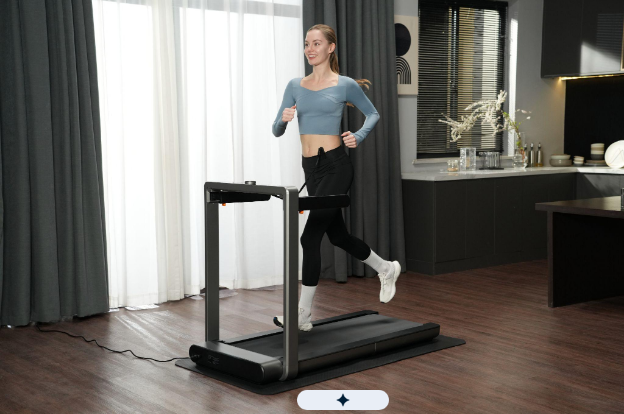
Walking 5 miles on a treadmill typically takes between 75 and 100 minutes for most adults, depending on your pace. At a moderate 3 mph, expect just under 1 hour 40 minutes. Pick up the pace to a brisk 4 mph and you can finish in about 1 hour 15 minutes. Speed, age, fitness level, and incline all shape exactly where you land in that range.
Time by Walking Speed
Walking speed is the single biggest factor in how long your 5-mile treadmill session will take. According to the CDC, brisk walking qualifies as moderate-intensity activity, which is the pace most adults naturally fall into when walking with purpose.
| Speed | Pace (min/mile) | Time for 5 Miles5 |
| 2.5 mph (leisurely) | 24:00 | 2 hours 0 min |
| 3.0 mph (moderate) | 20:00 | 1 hour 40 min |
| 3.5 mph (brisk) | 17:08 | 1 hour 25 min |
| 4.0 mph (power walk) | 15:00 | 1 hour 15 min |
| 5.0 mph (fast) | 12:00 | 1 hour 0 min |
A moderate 3 mph pace is what most health organizations consider standard walking speed, and it produces a meaningful cardiovascular workout without requiring advanced fitness.
How Age Affects Your Walking Time
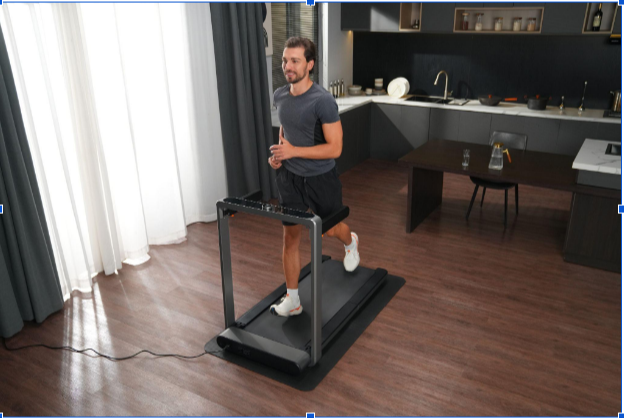
Walking pace naturally slows with age. A meta-analysis by Bohannon compiled decades of normative gait-speed data and found average walking speed drops from approximately 3.0 mph in adults in their 20s to roughly 2.2 mph by the 80s, with a similar decline pattern across both sexes. In practical terms, a 25-year-old walking at a comfortable pace might cover 5 miles in just over an hour, while someone in their 70s at the same relative effort could need closer to 2 hours 20 minutes.
This is not a fitness failure, it reflects normal physiological change in stride length, muscle power, and gait economy over time. The encouraging part is that regular walking helps preserve gait speed at any age, and most adults can meaningfully improve their pace within a few weeks of consistent training
.
How Incline Changes the Time
Adding incline increases workout intensity and naturally slows your pace, since your body needs to work harder against gravity with each step.
Flat surface: Standard pace maintained, no time penalty.
Moderate incline (3–5%): Pace typically slows by 10 to 15%, adding roughly 10 to 15 minutes to your total time. A 100-minute flat walk becomes approximately 110 to 115 minutes.
Steep incline (6–10% or more): Pace slows significantly, adding 25 to 50 minutes depending on fitness level. A flat 100-minute walk could stretch to 125 to 150 minutes at a steep grade.
While incline adds time, it also substantially increases calorie burn and muscle engagement, particularly in the glutes, hamstrings, and calves. For most people, a slight incline of 1 to 2% on a treadmill also better simulates the natural resistance of outdoor walking, since there’s no wind resistance indoors.
Calories Burned Walking 5 Miles
Walking 5 miles burns approximately 350 to 600 calories depending on body weight and pace.
| Body Weight | Calories Burned (5 Miles) |
| 130 lb | ~350 cal |
| 155 lb | ~420 cal |
| 180 lb | ~490 cal |
| 205 lb | ~560 cal |
Walking faster burns slightly more calories per mile since your body works harder to sustain the pace, but even a relaxed 2.5 mph walk delivers a substantial calorie burn over 5 miles.
Tips to Walk 5 Miles Faster
Improve Your Form
Stand tall with your core engaged, swing your arms naturally, and push off from your toes with each step. Proper posture alone can add 0.2 to 0.3 mph to your natural pace without any extra cardiovascular effort.
Add Interval Bursts
Alternate between your normal pace and a faster effort every few minutes. Walking briskly for 2 minutes, then returning to your regular pace for 3 minutes, can shave 10 to 15 minutes off your total 5-mile time while also building cardiovascular fitness more efficiently than steady-state walking alone.
Build Consistency
The most reliable way to increase your walking pace is simply walking more often. Aim for 4 to 5 sessions per week, and your comfortable pace will naturally trend faster within a few weeks as your cardiovascular fitness and leg strength improve. The biggest obstacle is usually access, not motivation. A compact walking pad that folds away and stores under a desk or bed, like the options from WalkingPad, removes the excuse of bad weather or a busy schedule, since the machine is ready whenever a few minutes open up.
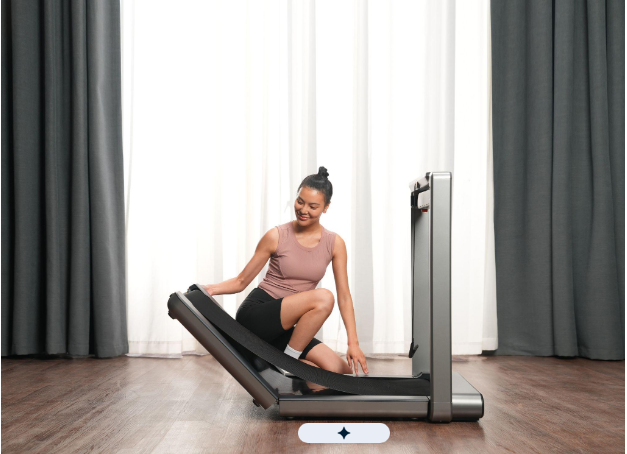
For working toward a full 5-mile session at home, the WalkingPad X214 Foldable Treadmill covers the full range from a casual desk walk to a brisk 8.5 mph pace. SpeedDial™ lets you adjust speed instantly as you build endurance, and the Vertical Fold design stores the machine upright when the session is done
Final Thoughts
Most adults complete 5 miles on a treadmill somewhere between 75 minutes at a brisk 4 mph and 100 minutes at a moderate 3 mph pace. Age, incline, and consistency all shift that number, but the distance is achievable for nearly everyone willing to put in the time. Start at a pace that feels sustainable, add incline gradually as your fitness improves, and focus on showing up consistently rather than chasing a specific time on any single session.
Frequently Asked Questions
Can you walk 5 miles in an hour?
Only at a fast pace of 5 mph or faster, which is closer to a power walk than a casual stroll for most people. The average adult walking 3 to 3.5 mph needs 1 hour 25 minutes to 1 hour 40 minutes to cover the same distance.
What is the 3-3-3 rule for walking?
The 3-3-3 rule suggests walking for 3 minutes at a brisk pace, followed by 3 minutes at a moderate pace, repeated for at least 3 rounds. It is a simple interval structure that builds cardiovascular fitness without requiring a complex workout plan.
Is it better to do two 15-minute walks or one 30-minute walk?
Both produce similar cardiovascular and calorie-burning benefits. Splitting your walk into shorter sessions can make daily consistency easier to maintain, especially around a busy schedule, and a foldable WalkingPad makes those short sessions easy to fit in between tasks. A single longer session still offers more sustained aerobic benefit in one sitting.
What muscles are worked when walking 5 miles?
Walking primarily engages the quads, hamstrings, glutes, and calves, with your core and lower back providing stability throughout. Adding incline increases activation in the glutes and calves significantly compared to flat walking at the same pace.
Is a treadmill good for blood circulation?
Yes. Regular walking improves circulation by strengthening the heart and promoting healthy blood flow throughout the legs and lower body. Consistent sessions of 30 minutes or more, several times per week, support long-term cardiovascular health, and a foldable WalkingPad removes the space excuse that often gets in the way.
Take







Comment