Real-time table games look immediate because the interface hides the work. A player sees a table, a timer, a result, and the next round forming on screen. Behind that simple flow is a live video system, a game state system, and a response layer that must stay close enough together for the moment to feel connected.
That is why latency matters more here than it does in ordinary video viewing. Research on adaptive low-latency live streaming explains the trade-off between fast delivery, stable quality, buffer size, and user experience. In a real-time table format, that trade-off becomes visible. A stream can look sharp yet still feel delayed if the interface and the action do not move in step.
Where The Table Makes the Stream Visible
The easiest place to understand live technology is a real table-game setting, because the timing cannot hide. On the Sportaza online casino page, the live area presents table-led categories and examples including roulette, blackjack, game shows, baccarat, dice, poker, and international tables.
Those formats are useful reference points because each one depends on a shared rhythm between the video feed and the player-facing interface. Roulette needs the camera, countdown, and result display to feel aligned. Blackjack needs card movement, decision timing, and confirmation to sit in the same flow. Game-show formats often add more visual motion, which makes synchronization even more noticeable.
The Sportaza online page also shows why live table games differ from standard browser titles: the session is not only loaded; it is continuously presented. The player is watching an event unfold while the interface keeps the next action understandable, readable, and timed to the feed.
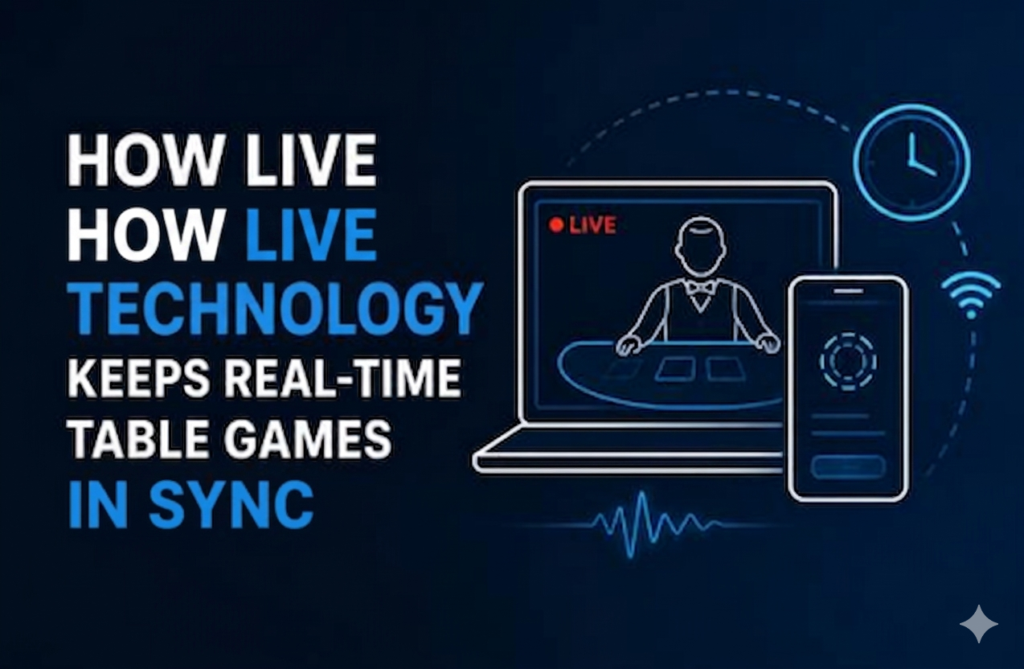
This visual model makes that easier to understand:
None of those layers needs to be dramatic on its own. The quality comes from how little the player has to think about them. When the stream, controls, and visual cues feel coordinated, the table keeps its pace.
Low Latency Is Felt as Timing
Low latency is often explained as a measurement, but players experience it as timing. It is the gap between seeing the table and feeling that the interface is still part of the same moment. If a countdown is visible, the button state has to match it. If a card is dealt, the result area should not feel detached from the action. If a roulette wheel is shown live, the surrounding interface should support its movement.
This is why live dealer game streaming technology is more demanding than a normal video stream. A film or recorded clip can tolerate a larger delay because the viewer is not making timed decisions inside it. A real-time table game asks the stream to support attention and action together. The video layer gives the session its presence. The interface layer gives it clarity. The timing layer keeps both from drifting apart.
There is also a difference between speed and steadiness. A fast stream that frequently shifts quality can feel unsettled. A very stable stream that arrives late can feel disconnected. Strong real-time design sits between those extremes, keeping the picture consistent while reducing the delay that separates action from response. That balance is the heart of low-latency live gaming.
Why Device Responsiveness Matters
The table feed is only one part of the experience. The player’s device also has to decode the stream, render the interface, and handle input without creating extra friction. A desktop monitor, a tablet, and a phone can all display the same table, but the experience changes with screen size, connection quality, processor load, and touch response.
Good real-time design respects those differences. The most important information has to remain legible. Buttons need enough spacing to feel intentional. Timers should be easy to read without forcing the player to scan the whole screen. The stream must keep the table visible without crowding the parts of the interface that carry decisions.
This is where table games reveal the practical side of interactive video. The stream is not only entertainment content. It is the visual basis for decisions made in short windows of time. If the device adds hesitation, the session feels less natural. If the layout stays clear and responsive, the technology fades into the background, and the table becomes easier to follow.
The Next Step Is Better Synchronization
Real-time table games will keep improving as streaming systems become better at handling multiple feeds, adaptive quality, and interaction at the same time. The most important gains may not always be flashy. Shorter delays, smoother transitions, clearer input confirmation, and steadier video quality all make the session feel more coherent.
The wider streaming field is already moving in that direction. A 2025 open-access study on HAS and low-latency streaming algorithms examines how newer approaches can maintain quality of experience while reducing playback delay across changing network conditions.