
The Backbone of Modern Manufacturing: Why Industrial Fasteners Matter More Than You Think

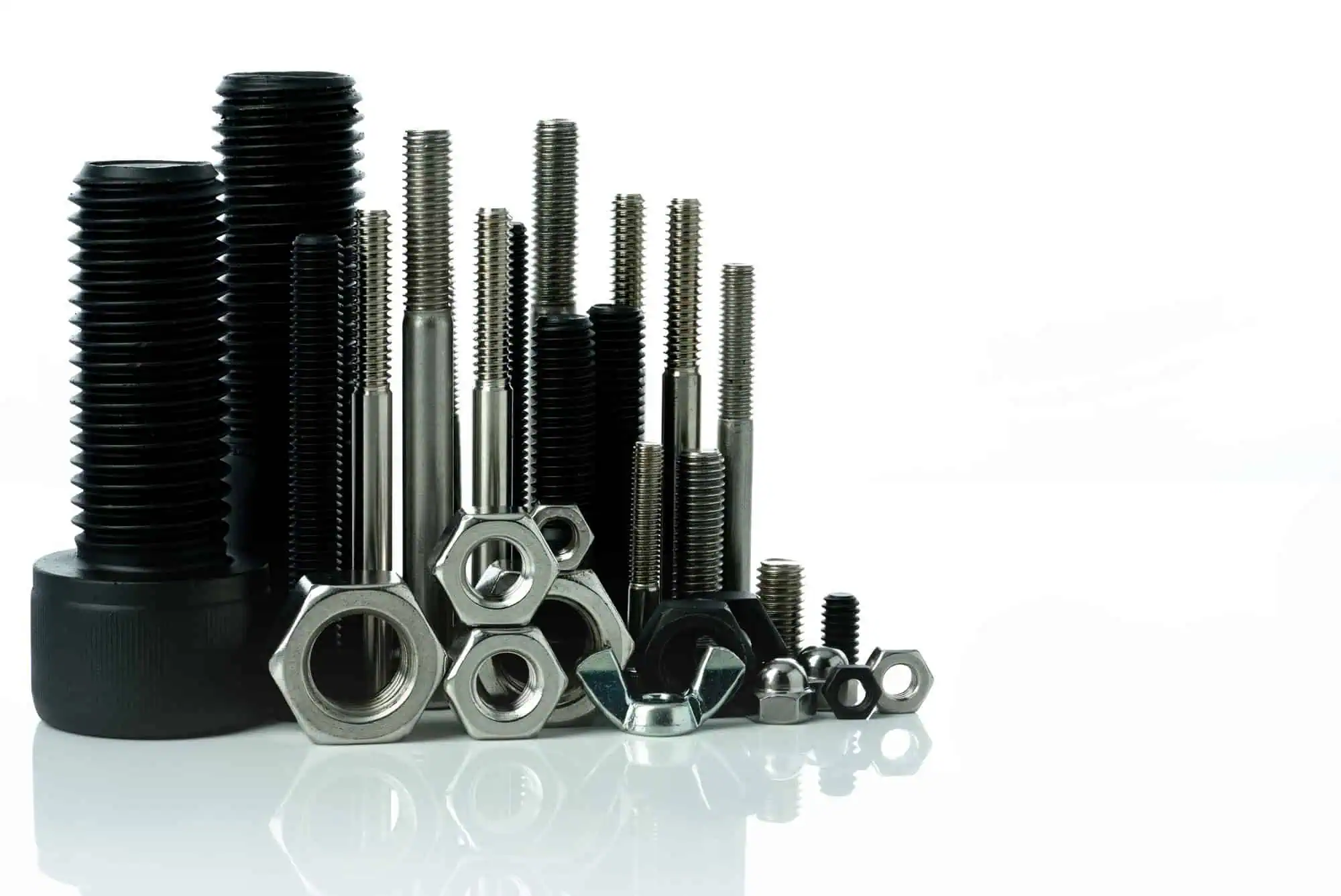
Walk through any factory floor, construction site, or engineering workshop and you will find thousands of fasteners holding everything together — literally. Bolts, screws, studs, and set screws are the silent workhorses of global industry, yet they are consistently underestimated until something goes wrong. A stud bolt that fails under pressure, a set screw that loosens under vibration, or a socket cap screw that strips during assembly — any of these can halt a production line, void a warranty, or worse, compromise structural safety. This is why the choice of an industrial fasteners manufacturer is never just a procurement decision. It is a quality decision, and one that shapes everything downstream. One product that illustrates the precision required in this space is the DIN6921 Hex Flange Bolt — a standard fastener on paper, but one whose flange geometry, thread accuracy, and surface finish directly determine how it performs under load in automotive, structural, and industrial applications.
The global fastener market is worth over $90 billion and growing, driven by expanding manufacturing in automotive, aerospace, energy, and infrastructure. As production tolerances tighten and assembly processes become increasingly automated, the demand for precision screws manufacturers and reliable fasteners suppliers who can deliver dimensional consistency at scale has never been higher. Yet a large portion of what gets sold online is sourced from traders and distributors with no manufacturing capability — no control over raw material, no batch traceability, and no accountability when quality varies between orders.
What Separates a Manufacturer from a Middleman
A genuine screw manufacturer with in-house production capability offers something fundamentally different from a reseller. When you source production screws direct from a manufacturer, you get material certificates you can audit, inspection records tied to specific batches, and the ability to request modifications when a standard specification does not fit your application perfectly.
This matters most in precision-critical environments. Stainless steel fasteners used in food processing or pharmaceutical equipment must meet strict corrosion resistance standards. Industrial bolts used in flanged pressure vessels or structural connections carry load calculations behind every specification. Sourcing these from an unverified supply chain introduces risk that no cost saving justifies.
A custom fasteners manufacturer goes a step further — engineering solutions for non-standard applications where off-the-shelf DIN or ISO specifications fall short. Modified thread forms, non-standard head heights, special coatings, and proprietary geometries are all in scope when you are working directly with a manufacturer rather than a catalogue trader.
The Standards Behind the Parts
Understanding DIN and ISO fastener standards is the first step to sourcing with confidence. These designations define exact geometries, mechanical properties, and tolerances — not arbitrary catalogue numbers.
Double end stud bolts (DIN 938 and DIN 939) are threaded on both ends with a plain shank in the middle, used extensively in flanged joints, pipe connections, and pressure vessels. DIN 938 suits standard thread engagement depths, while DIN 939’s longer engagement end delivers superior pull-out resistance in harder base materials.
Low head socket cap screws (DIN 6912 and DIN 7984) solve a common design challenge: full socket cap performance in a confined space. DIN 6912 adds a centre hole for tommy bar access when hex key torque is insufficient. DIN 7984 delivers a clean, low-profile head without the centre feature — widely used in electronics enclosures, optical equipment, and precision machinery.
Set screws come in four key point styles, each serving a different mechanical purpose. The DIN 913 flat point is the standard position-locking choice. The DIN 914 cone point bites permanently into shaft material for high-torque connections. The DIN 915 dog point locates into a drilled shaft hole for axial positioning with rotational freedom. The ISO 4766 slotted flat point serves legacy machinery where a screwdriver drive is more practical than a hex key.
Button head socket cap screws (ISO 7380) round off the essentials — a low-profile dome head with an internal hex drive, used wherever appearance and function must coexist: consumer products, medical devices, architectural fixtures, and equipment guards.
Sourcing Precision Fasteners for Your Application
Whether you are a mechanical engineer specifying fasteners for a new design, a procurement manager managing ongoing supply for a production line, or a distributor looking for a reliable upstream manufacturing partner, the foundation is the same: work with an industrial components supplier that controls its own production process.
Production Screws is a dedicated industrial fasteners manufacturer built around precision, consistency, and the full range of DIN and ISO standard fasteners that modern industry depends on. From double end stud bolts and hex flange bolts to socket cap screws, set screws, and button head variants, their catalogue covers the core fastener families — backed by the manufacturing capability to deliver them to specification, every time.
For procurement teams and engineers who understand that the quality of a fastener is never separate from the quality of what it holds together, it is the kind of supplier relationship worth building.







Comment