
How Iranian Traders Choose Forex Brokers

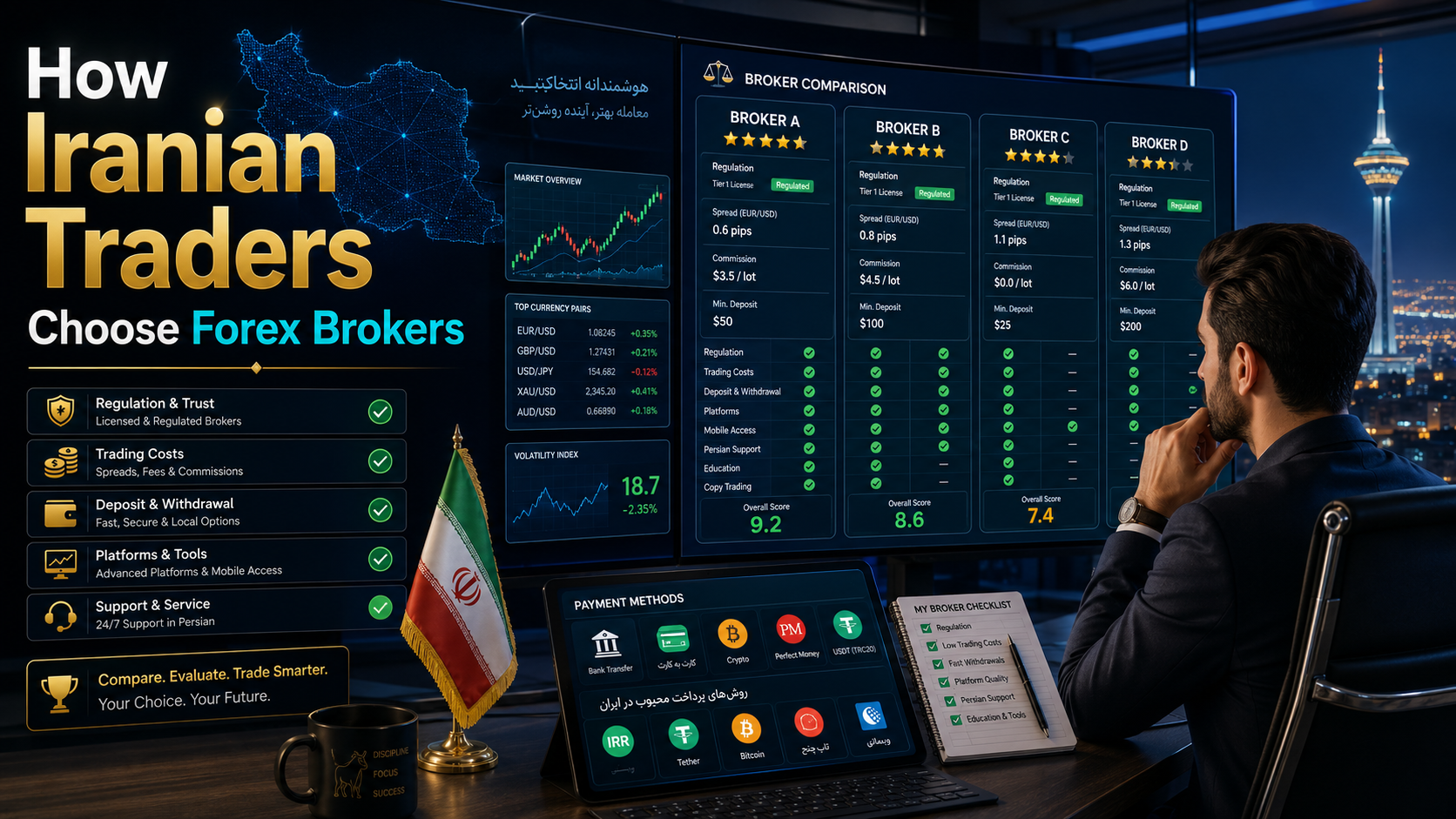
Choosing a forex broker is more complicated for Iranian traders because they need to consider more than just spreads, commissions, and trading platforms. Due to international sanctions, payment limitations, KYC challenges, and restricted access to global financial services, Iranian traders should carefully compare brokers before opening an account. This article explains the main factors they should review, including broker regulation, reputation, trading costs, deposit and withdrawal methods, platform access, Persian-language support, and real user experience. It also highlights how broker comparison platforms such as Sanjesh Broker can help traders evaluate different brokers more easily and make a more informed decision.
It’s obvious that choosing the right broker is important, but for Iranian forex traders, the process can be much more complicated. For example, trading costs matter to everyone, but Iranian traders also need to consider payment methods, the KYC process, platform access, Persian-language support, and the broker’s reputation.
This is why comparing several brokers before opening an account can help Iranian traders find an option that better fits their needs. In this article, we’ll look at the key factors Iranian traders should compare before opening a forex account, from regulation and trading costs to payment methods, platform access, support quality, and real user experience.
Why Broker Comparison Matters for Iranian Traders
So, why does broker comparison matter so much for Iranian traders? There are two main reasons:
1. International Sanctions
Many well-known brokers can’t provide services to Iranian residents because of international sanctions and financial restrictions. This means that Iranian traders cannot simply choose any broker they want. They need to find brokers that actually accept Iranian clients and provide services to them.
2. Deposit and Withdrawal Challenges
There’s another major issue as well. Even if a broker accepts Iranian traders, many of them still don’t support deposits and withdrawals through Iranian bank accounts. (If you don’t know, Iranians can’t open accounts with international banks or get Visa or Master cards because of the sanctions.)
Because of this, Iranian traders need to look for brokers that offer alternative payment methods, such as cryptocurrencies or services like Top Change. (We’ll explain these options later.)
In the next sections, we’ll take a closer look at the main things Iranian traders should check before choosing a forex broker.
Regulation and Broker Reputation
When comparing brokers, forex broker regulation is one of the first things you should check. However, not all regulators offer the same level of oversight and trader protection.
Some brokers are regulated by well-known financial authorities, such as the UK’s FCA or Australia’s ASIC. These regulators are known for having strict rules and requirements for financial companies.
Other brokers may be regulated in countries with less strict financial rules. These brokers are often called offshore brokers. Being an offshore broker does not mean that the broker is a scam or completely unregulated, but the level of protection may be less. In fact, many brokers that accept Iranian clients are offshore brokers.
User Reviews and Real Trading Experience
Regulation is important, but it is not everything. Traders should also check the broker’s reputation. A broker can operate under the most recognized and valid regulations, but its users may still have complaints about it. Many things can cause a bad reputation for a broker, such as poor customer support, hidden fees, delays in withdrawal approvals, and more.
This is why it’s a good idea to check what real users are saying about the broker before opening an account. You can find user reviews on different platforms and forums, and these reviews can give you a better idea of what trading with that broker is actually like.
Trading Costs: Spreads, Commissions and Hidden Fees
Brokers need to earn money somehow, right?
Spread:
It’s the difference between the bid and ask prices offered by a broker. It may not seem like much on a single trade, but even a small spread can become significant for active traders, especially when they trade frequently or use short-term strategies. Now imagine collecting that spread from thousands of trades every day.
Commissions:
Some brokers charge a separate commission on each trade. The amount can depend on the account type, asset, and trading volume.
Hidden fees:
Other costs may include withdrawal fees, inactivity fees, currency conversion fees, and overnight swap charges.
So, before choosing a broker, you should check all the potential trading costs. While some of this information is available on a broker’s website, the actual costs can sometimes vary depending on your account type, trading conditions, and the way you trade. For this reason, it’s a good idea to start with a small amount of money in a real account—not a demo account—and check the actual costs yourself.
Deposit and Withdrawal Methods
As I mentioned earlier, forex broker deposit and withdrawal methods are especially important for Iranian traders. Before opening an account, make sure the broker supports payment options that you can actually use. Here are some of the main deposit and withdrawal methods available to Iranian traders:
Method
How it works
Direct deposit and withdrawal
Some brokers allow Iranian traders to deposit and withdraw directly through Iranian Rial payment gateways.
*This is kind of rare!
Payment services like Top Change
Services like Top Change can help Iranian traders deposit and withdraw money without relying on international bank accounts or cards.
Cryptocurrencies
Many brokers accept cryptocurrencies such as USDT for deposits and withdrawals.
Other common methods include bank transfers, cards, e-wallets, and P2P payment services. However, not all of these options are available to Iranian traders.
Platform Access and Trading Tools
If you have trading experience, even for just one day, you’ll realize how important the trading platform and the tools it offers are. The most common and widely used platforms are MT4 and MT5 (MetaTrader), as well as cTrader. Some brokers, like Trendo, also offer their own proprietary trading apps.
*For those looking for MetaTrader brokers for Iranian traders, it is important to check whether the broker offers the MetaTrader platform and version they need.
But there are other options too. For example, some brokers use their own proprietary platforms, while others offer platforms specifically designed for mobile users.
When comparing brokers, check platform availability, stability, execution speed, and whether the tools you need are available on desktop, web, or mobile.
Persian Support and User Experience
Many traders don’t take a broker’s support system seriously. When you start trading with a broker, you may face bugs or other issues while trading, so the broker needs to be responsive and ready to help.
Some Persian support forex brokers offer support in Persian (and hopefully, they are not robots), so obviously, they are more convenient for Iranian traders. Having Persian support can also make things easier during registration, account verification, or when dealing with deposit and withdrawal issues.
Using a Broker Comparison Platform
In addition to all these factors, you should also check other important things, such as maximum leverage, order execution type, overnight swaps, whether the broker supports Expert Advisors (EAs), social trading, and more.
Checking all these details manually can take a lot of time. You may need to visit several broker websites, compare their regulations, check their fees, and search for user reviews separately. For traders who want to compare forex brokers in Iran, using a comparison platform can make this process much easier.
For example, Sanjesh Broker is a Persian-language forex broker review and comparison platform that helps traders evaluate brokers based on trading conditions, regulations, available platforms, payment methods, user reviews, and other practical factors.
Instead of checking each broker’s website separately, users can compare important factors such as trading conditions, regulations, available platforms, payment methods, and other features, as shown in the screenshot below:
Checklist Before Opening a Forex Account
Before opening a forex account, make sure you have checked:
Regulation and broker reputation
Spreads, commissions, swaps, and other fees
Deposit and withdrawal options
Trading platforms and execution
Customer support and Persian-language services
Real user reviews
Whether the broker fits your trading needs
Conclusion
There is no single list of the best forex brokers for Iranian traders that works for everyone. The right choice depends on your trading style, budget, preferred payment methods, platform needs, and risk tolerance. Instead of relying on generic broker rankings, Iranian traders should compare multiple factors and choose a broker that fits their own situation.







Comment