The FIFA World Cup arrives in North America this summer, and the conversation among football fans across Europe is not only about which team will lift the trophy. It is about how they are going to watch it. For millions of viewers in Sweden, Norway, Denmark, and Finland, the answer has become increasingly clear over the past two years. IPTV technology has moved from a niche curiosity to a mainstream choice, and the World Cup 2026 represents perhaps the single biggest moment yet in that transition. Understanding why requires looking at what IPTV actually delivers, how Nordic IPTV services have evolved to meet the specific demands of Scandinavian viewers, and why traditional cable television is struggling to keep pace with what modern streaming infrastructure can provide.
What IPTV Technology Actually Is — and Why It Matters in 2026
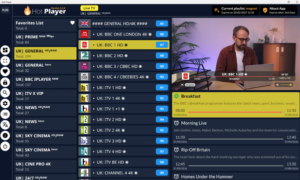
Internet Protocol Television, universally referred to as IPTV, is the delivery of television content through internet connections rather than through traditional broadcast infrastructure. The concept has existed in various forms for over two decades, but the version that viewers are choosing today bears little resemblance to the unstable, low-resolution experiences that early adopters encountered in the mid-2000s. Modern IPTV technology operates on dedicated server infrastructure, content delivery networks optimised for specific geographic regions, and client applications that have been refined through millions of hours of real-world usage.
The distinction that matters most for the World Cup 2026 is between IPTV delivered through general-purpose internet infrastructure and IPTV delivered through purpose-built streaming architecture. Services like IPTV Nordic have invested significantly in the latter, establishing server nodes that are geographically proximate to their primary user bases in Scandinavia. The practical outcome of this investment is that a viewer in Stockholm, Gothenburg, or Malmö watching a World Cup match through a quality IPTV service experiences latency and buffering rates that are genuinely competitive with broadcast cable, and in many cases superior when the match being watched is hosted on an international channel rather than a domestic broadcaster.
The Rise of Nordic IPTV and What It Means for Scandinavian Football Fans
The Nordic IPTV market has developed some specific characteristics that distinguish it from IPTV adoption patterns in other parts of Europe. Scandinavian consumers are among the most digitally sophisticated in the world, with high household broadband penetration rates, strong smartphone and Smart TV adoption, and a cultural comfort with technology-driven solutions that other markets are still building toward. These characteristics have created a viewer base that evaluates IPTV services with considerable technical literacy and demands a level of reliability that providers operating in less demanding markets often do not achieve.
IPTV Nordic services that have succeeded in the Swedish, Norwegian, Danish, and Finnish markets have done so by meeting this high standard consistently. The uptime expectations of Nordic viewers are not casual — they want 99.9 percent availability as a baseline, not an aspiration. They want 4K Ultra HD quality on channels that offer it, smooth HD fallback on channels that do not, and they want the electronic programme guide to be accurate and current. For the World Cup 2026, they also want every group stage match, every knockout round game, and the final to be accessible without the additional subscriptions, channel package upgrades, or hardware purchases that cable providers typically require when a major tournament arrives.
IPTV World Cup 2026 — The Technical Infrastructure Behind the Experience
Streaming a live football match at the World Cup level involves a specific set of technical requirements that distinguish it from on-demand content delivery. Live sports have zero tolerance for buffering at critical moments. A viewer can accept a two-second delay in loading a drama series. The same viewer will not accept a two-second freeze during a penalty shootout. This reality has pushed the best IPTV providers to engineer their infrastructure specifically around live sports delivery, which requires different architectural choices than the content delivery networks optimised for on-demand streaming.
IPTV Nordic infrastructure for the World Cup 2026 is built on dedicated server capacity that can handle simultaneous peak loads across all markets without degradation. This is a materially different approach from services that provision for average load and hope that peak demand during marquee matches does not exceed capacity. The engineering challenge is significant — a Swedish provider needs to account for the scenario where every subscriber in their network is watching the same match simultaneously, which for a Sweden versus Germany knockout game or a high-profile final represents a genuine stress test.
Why Viewers Are Choosing IPTV Over Cable for Major Tournaments
The practical calculus that Swedish, Norwegian, and Finnish viewers are making as the World Cup 2026 approaches involves several factors that consistently resolve in IPTV’s favour. The first is price. A comprehensive IPTV subscription that includes every World Cup channel and feed costs a fraction of what a cable package with equivalent coverage requires. When cable providers add tournament-specific packages on top of existing subscription costs, the gap between cable expenditure and IPTV expenditure for the same viewing experience typically runs to hundreds of kronor per month during the tournament period.
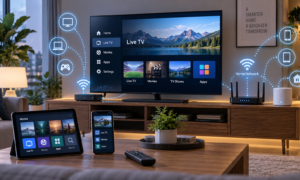
The second factor is flexibility. IPTV works on the devices that viewers already own. A Swedish family watching the World Cup on their Samsung Smart TV can simultaneously have a family member watching a different match on a tablet in another room, and a third member checking the other group stage game on their phone. Multi-screen IPTV subscriptions, which allow two or three simultaneous connections, cover this scenario at a price that remains well below the cost of adding even a single additional cable decoder. Nordic IPTV services have recognised this viewing pattern and priced their family packages to make multi-screen access a standard feature rather than a premium addition.
The third factor, which is less often discussed but increasingly important, is the international dimension of the World Cup audience in Scandinavia. Sweden has significant diaspora communities from across the world — viewers with roots in Africa, the Middle East, South America, and Asia who want to watch World Cup matches on the broadcast channels of their home nations rather than the Scandinavian feeds. IPTV technology is the only realistic way to deliver this kind of multicultural sports viewing experience. A cable package is built around a national channel lineup; a comprehensive IPTV service carries the global broadcast library that these viewers need.
IPTV and the Future of Sports Broadcasting Technology
The World Cup 2026 is arriving at a moment of genuine inflection in how sports broadcasting technology is evolving. Traditional broadcast rights models, in which a small number of national broadcasters pay enormous sums for exclusive rights to air matches in specific territories, are under increasing pressure from streaming technology that makes geographic exclusivity difficult to enforce and even more difficult to justify from a viewer experience perspective. IPTV sits at an interesting intersection in this landscape — it delivers the existing broadcast infrastructure through a more flexible and consumer-friendly distribution method, rather than attempting to replace the underlying rights framework.
For technology investors and observers, the IPTV Nordic market offers a particularly clean case study in how consumer technology adoption accelerates around high-profile events. Major tournaments function as conversion moments — viewers who have been curious about IPTV but have not yet made the switch encounter the contrast between cable’s limitations and IPTV’s capabilities at the moment when their engagement with the product is highest. The conversion rates that Nordic IPTV services see in the weeks before and during major football tournaments consistently outperform their rates during normal viewing periods by substantial margins.
Getting Started with IPTV Nordic for the World Cup 2026
For viewers in Sweden and across the Nordic region who have decided that the World Cup 2026 represents the moment to make the switch from cable to IPTV, the practical starting point is straightforward. A subscription to a quality Nordic IPTV service, available at realstreamiptv.se, can be activated within minutes and delivers the full channel library to any Smart TV, Android device, iOS device, Amazon Fire Stick, or Windows computer in the household.
The activation process for IPTV technology has been deliberately engineered to be accessible rather than technical. Subscribers receive login credentials immediately upon payment confirmation, enter those credentials into the IPTV application of their choice — IPTV Smarters Pro and TiviMate are the two most popular options for Nordic viewers — and the complete channel library is available for viewing within minutes. There is no engineer visit, no hardware rental, and no binding contract. For the World Cup 2026, this means that a viewer who decides on the morning of an important match that they want access to the international coverage can have that access before the match begins.
The pricing that makes IPTV Nordic competitive extends to the subscription duration options. Monthly subscriptions provide maximum flexibility, while longer subscriptions — particularly the twelve-month options that come with significant bonus periods — reduce the per-month cost to a figure that makes the value comparison with cable genuinely uncomfortable for traditional broadcasters to discuss. The technology, the infrastructure, the content library, the price, and the activation simplicity have all arrived at the same point simultaneously, and the World Cup 2026 is the event that is making the contrast impossible to ignore.
Conclusion
The World Cup 2026 is not simply a football tournament for Nordic viewers — it is a technology moment. The combination of mature IPTV infrastructure, comprehensive international channel coverage, genuinely competitive pricing, and the specific high-engagement context of a World Cup creates conditions in which the limitations of traditional cable television become impossible to overlook. IPTV Nordic services have been building toward this moment for several years, investing in server infrastructure, improving application quality, and expanding channel coverage to the point where the service they deliver is objectively superior to cable for viewers who care about international sports broadcasting. The viewers who make the switch during the World Cup 2026 are unlikely to go back, and the technology trajectory suggests that the gap between IPTV and traditional broadcasting will only continue to widen in the years that follow.
Frequently Asked Questions About IPTV Nordic and the World Cup 2026
What is IPTV Nordic and how does it work?
IPTV Nordic is a streaming television service that delivers live channels, on-demand content, and sports coverage through internet connections to Smart TVs, mobile devices, and streaming sticks. The service operates on dedicated server infrastructure optimised for Nordic viewers and provides access to over 150,000 live channels including the complete international World Cup 2026 broadcast library. Subscribers receive login credentials after payment and can begin watching within minutes on any compatible device.
Will IPTV handle the load during World Cup 2026 peak viewing?
Quality IPTV Nordic services have invested specifically in server infrastructure capable of handling simultaneous peak loads during major tournaments. The best providers maintain 99.9 percent uptime commitments backed by dedicated capacity rather than shared cloud infrastructure that degrades under load. Viewers on established Nordic IPTV services report consistently smooth streaming during previous major tournaments including the European Championship and the 2022 World Cup.
What devices can I use to watch the World Cup 2026 on IPTV?
IPTV technology is compatible with virtually every modern screen. Samsung and LG Smart TVs can run IPTV applications directly from their app stores. Amazon Fire Stick and Android TV boxes support the leading IPTV applications. iPhone and iPad users have dedicated iOS-compatible IPTV clients available. Windows and Mac computers can stream through web-based interfaces or desktop applications. A single IPTV Nordic subscription covers all of these devices, with multi-screen packages allowing two or three simultaneous streams.
How does the cost of IPTV compare to cable during a major tournament?
A comprehensive IPTV Nordic subscription covering all World Cup 2026 channels typically costs a fraction of the equivalent cable package with tournament sports add-ons. Cable providers in Scandinavia regularly add premium sports packages on top of existing subscription costs during major tournaments, pushing total monthly bills significantly higher for viewers who want complete coverage. IPTV pricing does not change for tournaments — the same subscription that covers normal viewing covers the complete World Cup broadcast library without additional charges.
Is IPTV Nordic available outside Sweden?
Yes. IPTV technology works anywhere in the world with a stable internet connection, which makes it particularly valuable for Nordic viewers travelling during the World Cup 2026 or Swedish expatriates living abroad who want to watch matches on Nordic broadcast channels. The service available at realstreamiptv.se is accessible from any country, allowing subscribers to maintain access to their preferred channels regardless of location.