The audiobook market is growing fast. Global audiobook revenue is on track to surpass $10 billion, driven in large part by independent authorship and digital publishing platforms. For authors who want to self-publish, however, the traditional route — hiring a professional narrator, booking studio time, and managing post-production — remains expensive and time-consuming. That’s where AI text-to-speech tools are changing the equation.
What Modern AI Voice Tools Make Possible
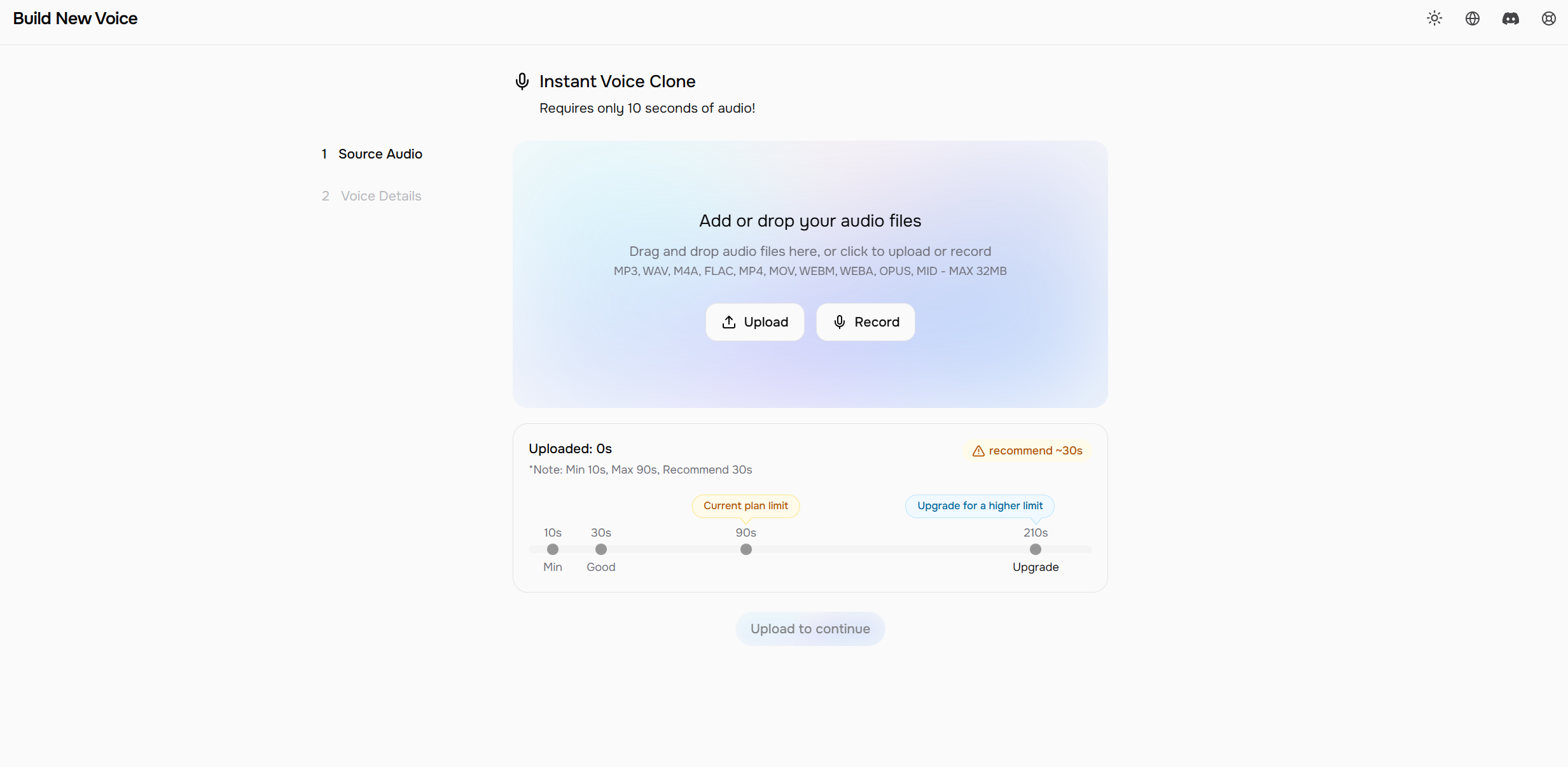
Today’s most capable AI voice tools go well beyond robotic recitation. Platforms built on recent language models can handle the core demands of long-form audio: consistent voice identity across thousands of words, expressive narration that adjusts to different scenes, and the ability to clone a specific voice from a short audio sample. The emergence of voice cloning technology that works from clips as short as 15 seconds has been a turning point — authors can now narrate an entire book in their own voice without spending months in a studio.
The result is that audiobook production, once a $3,000–$5,000+ investment, can now be accomplished for a fraction of that cost with the right tool.
What Authors Are Actually Using
Among the platforms gaining traction with independent authors in 2026, Fish Audio stands out for its combination of voice naturalness, emotional range, and practical tooling for long-form work.
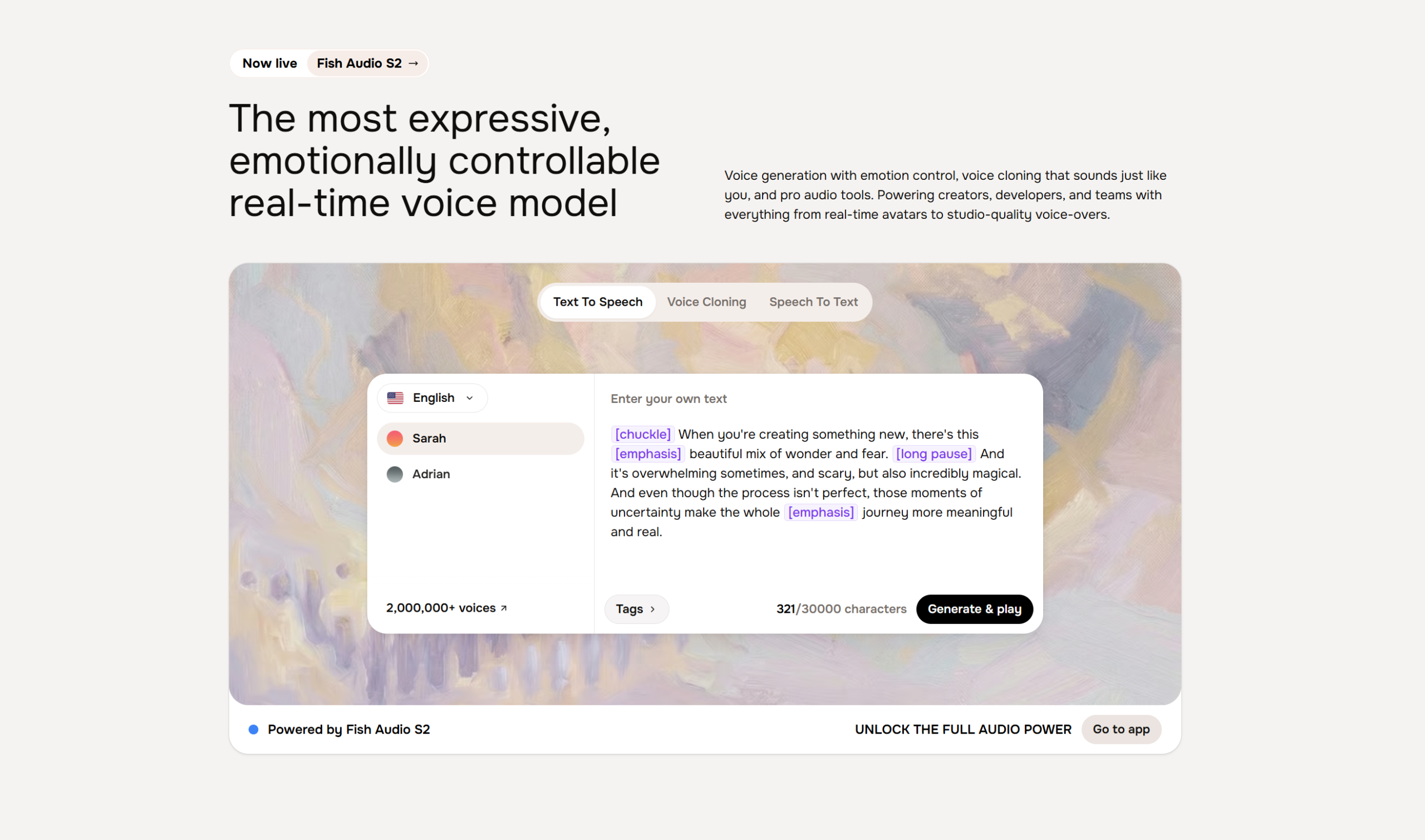
Fish Audio’s S2 model supports 80+ languages, includes 48 emotion tags that let authors add tension, warmth, or humor to specific passages, and allows voice cloning from a 15-second sample. Authors working on a series can maintain a consistent narrator voice across multiple titles without any additional recording. For those who want a detailed breakdown of how the tool stacks up for TTS for audiobooks, Fish Audio’s documentation covers production-specific considerations in depth.
To manage projects at scale, Fish Audio also offers Story Studio, a long-form production workspace that organizes content by chapter, allows sentence-level regeneration, and supports multi-character audio with distinct voices.
How the S2 Model Compares
Authors evaluating multiple tools often ask whether voice quality holds up across hundreds of thousands of words, or degrades between chapters. The results from an independent blind comparison involving over 5,000 real user preference pairs are encouraging: Fish Audio S2 Pro ranked first across all language categories with a Bradley-Terry score of 3.07 — nearly 1.7x the next best model (ElevenLabs V3 at 1.80). The test was run on production traffic with real-world text, including long-form passages, making the results directly relevant for audiobook use cases.
Pricing and Getting Started
For most independent authors, the economics of AI audiobook production compare favorably to traditional methods. Fish Audio’s free tier includes 7 minutes of audio per month. Paid plans start at $11/month (Plus) or $75/month (Pro), with an API option available at roughly $15 per million characters — approximately 10x less than ElevenLabs’ API rate.
Authors can test voice quality before committing to a full project using Fish Audio’s Story Studio, which supports chapter-by-chapter testing and real-time previews. The workflow is designed to make manuscript-to-audio conversion straightforward without requiring technical expertise or additional software.
Final Thoughts
AI voice tools have lowered the barrier to audiobook production significantly, giving independent authors options that were previously out of reach. For authors weighing their choices in 2026, Fish Audio offers a credible combination of voice quality, language breadth, and practical production tools — without the cost overhead of traditional studio workflows.