
How Gel Foam Became a Practical Piece of Modern Sleep Technology

Technology does not always arrive in the form of screens, sensors, or connected devices. Sometimes, it appears in the materials people use every day. Mattress design is a good example. What was once a fairly simple choice between a soft or firm sleeping surface has developed into a wider discussion about pressure distribution, temperature, motion, and the way different materials respond to the body.
Gel-infused foam reflects this change. It builds on the contouring qualities of memory foam while introducing materials intended to address concerns about heat and comfort. The result is not a completely different kind of mattress, but an evolution of an established design. Understanding how gel foam works, what it can realistically offer, and where its limitations remain helps consumers make better decisions about modern sleep products.
A gel memory foam mattress may appeal to someone who wants the contouring feel of foam but is also concerned about sleeping warm. However, gel infusion is only one part of the construction. A breathable cover, the density of the foam, and the design of the support layers can all influence the final experience.
From Basic Cushioning to Responsive Foam Materials
Traditional mattress materials were largely judged by how they felt when someone lay down. Springs provided a familiar responsive surface, while foam offered a different kind of cushioning. Memory foam became notable for its ability to respond to body heat and pressure, allowing it to adapt to the shape of the sleeper rather than pushing back uniformly.
That contouring quality introduced a new comfort experience, but it also raised questions. Some sleepers liked the close-fitting feel, while others felt that certain foam mattresses retained too much warmth or made it harder to change positions. These concerns encouraged manufacturers to explore different foam formulations, layer combinations, and surface fabrics.
Gel-infused foam emerged as one approach to refining the material. Instead of abandoning memory foam, manufacturers incorporate gel into particular layers to influence the way the mattress manages heat. The broader development illustrates how product innovation often works: a familiar material is adjusted to address a specific weakness while preserving the qualities customers already value.
What Gel Infusion Actually Changes
Memory foam responds to pressure by compressing and gradually conforming around the body. Depending on its formulation and density, it can create a cushioned, closely contoured sensation. Gel-infused versions introduce gel-based material into the foam, with the aim of modifying thermal behavior and improving the overall comfort experience.
The presence of gel does not mean the mattress actively refrigerates the sleeper. Its performance depends on the type and amount of gel, the foam structure, the cover, and the other layers beneath it. Some products may feel cooler when first touched, while others focus on how the complete design handles heat during use. These are related but different outcomes, so buyers should pay attention to how the manufacturer describes the technology.
Why Heat Management Requires More Than One Material
A mattress is a layered system, and temperature comfort depends on how those layers work together. The cover is the first surface the sleeper touches, so its fabric can influence the initial sensation. The comfort foam sits beneath it and responds to body pressure, while the deeper layers help determine how the mattress supports the sleeper.
A cooling fabric may feel refreshing at first contact, but that sensation alone does not tell the whole story. Over several hours, body heat, bedding, humidity, and room ventilation also influence comfort. Likewise, adding gel to one layer cannot guarantee that every sleeper will experience the same temperature throughout the night.
This is why mattress development increasingly involves considering the entire structure rather than promoting a single material as the complete answer. Manufacturers may combine gel-infused foam with breathable fabrics, open-cell structures, or airflow-oriented side panels. Each element has a different role, and the value comes from how the design performs as a whole.
The role of covers and airflow
The fabric covering a mattress can affect how heat and moisture feel near the skin. Some covers are designed to provide a cool-to-the-touch sensation, while others emphasize breathability or moisture management. These properties should not be treated as interchangeable, because a surface that feels cool immediately may not necessarily deliver the same sensation throughout the night.
Airflow also depends on the surrounding environment. Heavy bedding can reduce the benefit of a breathable surface, and a poorly ventilated bedroom may remain uncomfortable even with a cooling-focused mattress. For consumers, the practical lesson is to consider the mattress alongside sheets, protectors, blankets, and room conditions rather than expecting one product feature to solve every problem.
Comfort Technology Must Still Provide Appropriate Support
Cooling is only useful if the mattress also feels right for the sleeper. A person may appreciate a cooler surface but still find the bed too soft, too firm, or uncomfortable around the shoulders and hips. This is why pressure relief and support remain central to mattress design.
Memory foam can distribute pressure by adapting to the body’s shape, but the result varies according to the sleeper’s body weight, position, and the mattress’s construction. Side sleepers often look for enough cushioning around the shoulders and hips, while back sleepers may prefer a more balanced surface. Stomach sleepers may need to pay particular attention to excessive sinking around the torso.
Firmness labels can help narrow the options, but they are not universal standards. One manufacturer’s medium-firm model may feel different from another’s. Consumers should therefore compare the materials and layer design while considering their own comfort preferences, rather than assuming that gel foam automatically provides the ideal balance of cushioning and support.
The Importance of Motion Isolation in Shared Beds

Modern mattress design also considers what happens when two people use the same surface. When one sleeper turns over or gets out of bed, the resulting movement can disturb the other person. Some foam constructions absorb more of this movement than traditional spring systems, although performance depends on the complete design.
Gel infusion itself does not automatically determine motion isolation. The underlying foam layers and their responsiveness have a larger role in how movement travels across the surface. A mattress should therefore be evaluated for its construction and stated motion-control features, rather than relying on the word “gel” as a sign that movement will be minimized.
For couples, mattress size matters too. A larger bed provides more distance between sleepers, which may help create a greater sense of personal space. But a king mattress requires a suitable bedroom layout and a compatible frame. The most useful choice balances sleeping space, comfort, and the practical limits of the room.
The Novilla ErgoChill Combines Cooling-Focused Materials With Foam Support
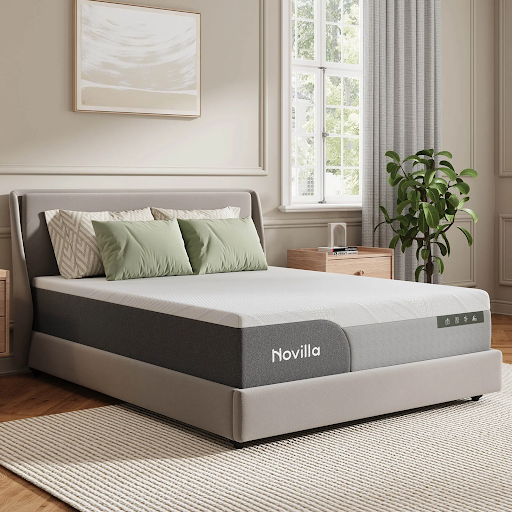
The Novilla ErgoChill Memory Foam Mattress illustrates how gel-related technology fits into a contemporary foam design. Its product information highlights NanoGEL™ foam, breathable fabrics, pressure-relieving comfort, and motion isolation. Rather than relying on a single feature, the mattress is designed to combine a cooling-focused surface with adaptive support and a foam construction intended to limit the transfer of movement.
The model is offered in 10-, 12-, and 14-inch thicknesses, as well as several sizes, including king. This gives shoppers a choice of mattress profile and sleeping area. The appropriate version depends on the room dimensions, the frame, the sleeper’s preferred bed height, and the amount of space needed. A thicker mattress is not automatically more comfortable, just as a larger mattress is not always the best fit for every bedroom.
For anyone considering the ErgoChill, the useful approach is to review the exact product specifications before ordering. Look at the selected size and thickness, confirm the frame’s support requirements, and consider how existing bedding may influence temperature comfort. The listed cooling features describe the product’s intended design, but personal experiences can still vary according to body type, climate, and sleep habits.
Why Mattress Technology Needs Clearer Product Information
As sleep products become more specialized, consumers face a growing number of technical terms. Gel-infused foam, cooling fabric, pressure relief, adaptive support, and airflow design can all sound similar in advertising, even though they refer to different aspects of a mattress.
Clear product information helps shoppers understand those differences. Specifications should explain the materials used, available dimensions, thickness options, care requirements, and purchase conditions. When claims involve measurable performance, evidence and testing details are more useful than broad statements about superior comfort. Consumers should also distinguish a product’s design goals from a guaranteed result.
Reviews can offer additional context, particularly when several customers mention similar experiences with firmness, setup, or surface feel. Still, individual reviews cannot establish that a mattress will work the same way for everyone. Body weight, sleeping position, room temperature, and personal preference all affect the experience. Product specifications and customer feedback are most useful when considered together.
What Buyers Should Consider Before Choosing Gel Foam
Gel-infused foam can be a sensible option for people who like the feel of memory foam but want to consider temperature management as part of their purchase. The best choice depends on more than the material name. Shoppers should examine the cover, foam layers, support system, firmness, mattress dimensions, and the conditions under which the product can be returned. For couples or households that need more room to move comfortably, a king size memory foam mattress may offer the extra sleeping space they need, provided the bedroom can accommodate its larger dimensions.
It is also worth considering the sleeping environment. Breathable sheets and a suitable comforter may help manage surface warmth, while good room ventilation can make a difference during hot or humid weather. These practical factors do not replace mattress construction, but they help create a more complete approach to nighttime comfort.
Finally, buyers should focus on their main concern instead of paying for every advertised feature. Someone who sleeps hot may prioritize cooling-related materials, while a couple may place greater emphasis on motion isolation and mattress width. Matching the product to the actual need is more useful than choosing based on a long list of technical terms.
Frequently Asked Questions
Is gel memory foam different from regular memory foam?
Gel memory foam includes gel-based material within the foam, intended to influence heat management while retaining the contouring qualities of memory foam. The actual feel depends on the formulation and the mattress’s complete construction.
Does gel foam keep a mattress cool all night?
Not necessarily. Gel-infused materials may help manage the surface’s temperature experience, but results vary according to the foam design, cover, bedding, room conditions, and individual preferences. No single material guarantees that every sleeper will remain cool.
Is a gel memory foam mattress suitable for couples?
It can be, especially when the mattress combines suitable support with motion-isolating foam. Couples should also consider the size of the bed and whether the firmness works for both sleepers. The word “gel” alone does not establish how well a mattress will limit movement.
A Practical Evolution in Everyday Sleep
Gel foam shows how mattress technology can develop through relatively focused changes to familiar materials. By adjusting foam formulations and combining them with different covers and support layers, manufacturers can design products that address specific comfort concerns without abandoning the cushioning qualities that made memory foam popular.
The real value of this technology depends on how well the complete mattress suits the person using it. Cooling-focused materials, appropriate support, motion isolation, and the right size all contribute to the decision. Understanding what each feature does—and what it cannot guarantee—allows buyers to evaluate modern mattresses with clearer expectations and make choices based on their actual sleeping needs.







Comment