
How E-Bike Performance Shapes Modern Traveling

Not long ago, riding an e-bike to work felt like something only early adopters did. A fun experiment. Maybe a little eccentric. Fast-forward to today, and that same choice is starting to look like the most practical decision millions of commuters ever made. E-bike performance has evolved so significantly and so quickly that commuting, city exploration, and leisure travel all feel fundamentally different from how they did half a decade ago.
Here’s a number worth sitting with: cyclists are nearly twice as likely to actually enjoy their commute (40%) compared to the average worker (23%). That’s not a coincidence. Something real is driving that satisfaction gap, and performance is at the heart of it.
E-Bike Performance as the True Engine Behind Modern Travel Shifts
Modern travel trends don’t move in straight lines, but e-bikes are unmistakably part of the current direction. What “performance” means has also expanded well beyond motor wattage. Today, it encompasses battery range, torque output, frame ergonomics, smart connectivity, and the kind of ride quality that doesn’t leave you sore after forty minutes.
Canada’s cycling needs can change quickly from city commutes in Toronto and Vancouver to longer weekend rides on rougher suburban or rural roads. With different weather, terrain, and travel distances across provinces, choosing the right e-bike should start with how and where you actually ride.
Matching a bike to your actual riding needs, rather than guessing from a spec sheet, is where a lot of buyers stumble. That’s exactly why many shoppers turn to the StreetRides online e-bike store Canada to filter options by real use cases rather than technical numbers alone.
The Performance Metrics That Actually Change How You Ride
Let’s start with battery range, because it’s the first thing that should matter to you. A well-built commuter e-bike delivers 60–90 km of realistic range, not manufacturer-optimistic numbers, but real range that accounts for stops, short detours, and errands folded into a day of electric bike travel.
Motor torque is next, and it’s underrated. A mid-drive motor producing 70–90 Nm handles loaded panniers, punishing headwinds, and steep grades in ways a basic hub motor simply can’t match. You feel that difference on the third hill, not the first.
Ride comfort, shaped by suspension setup, tire width, and frame geometry, determines how you feel after an hour in the saddle. Add a quality torque sensor into the mix, and power delivery starts feeling intuitive rather than mechanical. That smooth, confidence-building responsiveness matters a lot when you’re navigating real traffic.
How Performance Has Changed Our Relationship With Distance
A 20–25 km one-way commute used to be a non-starter for most people without a car. Capable e-bike commuting setups have slowly, quietly dismantled that assumption. Multi-stop day off, office, school run, grocery pickup, back home now fit within a single charge on most mid-range bikes.
What’s genuinely interesting is the psychological shift that follows. Riders stop obsessing over traffic apps and start thinking in terms of battery percentage and elevation profiles. That’s a different kind of relationship with your city. A better one, honestly.
What Performance-Driven Commuting Actually Looks Like in Cities
Understanding the distance equation leads naturally to the bigger picture: daily urban commuting. No two commutes are the same, and the difference between arriving at work energized versus exhausted often comes down to how well the bike’s setup matches the route.
Matching the Right Setup to Your Route
Flat, short city routes pair naturally with lightweight hub-motor city bikes. Hilly terrain and stop-and-go conditions? You want a higher-torque mid-drive system with multiple assist levels that respond fluidly. Families replacing school-run car trips need cargo or longtail bikes with robust braking and serious torque. Cargo load changes everything.
A practical rule: take your round-trip distance, then add a 25–30% buffer for elevation changes, cold temperatures, and unexpected stops. That buffer is your safety margin.
The Performance Details That Actually Reduce Stress
Torque-sensing systems feel calm near intersections. Cadence-only systems can feel abrupt and abrupt isn’t something you want at a busy crossroad. Hydraulic disc brakes scale well with higher assisted speeds. Wider tires absorb the curbs and potholes that narrower setups transmit directly to your spine.
Integrated lights, fenders, and racks aren’t premium add-ons. They’re what turn a capable motor into a genuinely usable daily tool. Without them, you have a fast bike. With them, you have a commuter.
Riding Through Winter Because It’s Actually Possible
Canadian winters are brutal. Cold temperatures can reduce lithium battery range by 20–30%, so conservative planning matters more here than almost anywhere else. Store the battery indoors overnight. Pre-warm it before a cold start. You’ll recover a surprising amount of that lost capacity.
Studded tires, high-output lights, and waterproof panniers extend your usable riding season well beyond what most people expect. Year-round e-bike commuting across Canada is realistic; it just requires a more deliberate setup than fair-weather riding does.
E-Bike Performance in the Context of Tourism
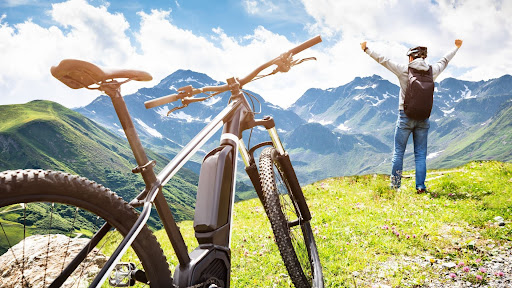
Electric bike tourism might be the most exciting frontier in modern e-bike performance. Coastal trails, vineyard circuits, rail-to-trail routes, urban sightseeing, all of it becomes more accessible when a motor manages the climbs, and the battery holds steady for six to eight hours.
What Touring Actually Demands From Your Bike
In 2024, e-bikes reached approximately 30% of the overall market share in the USA, generating $1.2 billion in direct-to-consumer sales. That growth reflects something beyond commuting; it reflects riders investing in performance-driven travel experiences.
For touring, what matters most is real-world range at relaxed cruising speeds, multi-hour saddle comfort, and cargo capacity that accommodates panniers, rain gear, and a camera bag.
Sustainable Exploration at Its Most Practical
High-performance e-bikes make car-free access to viewpoints, small rural villages, and protected natural areas genuinely achievable. Lower noise, zero direct emissions, no congestion, electric bike tourism stands out as one of the most responsible travel formats available, particularly in ecologically sensitive destinations.
Quick Takeaways for Smart Buyers
– Range, torque, and comfort matter more than motor wattage alone.
– Commuting, touring, and adventure riding each require different performance profiles.
– Use lower assist on flat terrain; save higher levels for climbs. Small habit, meaningful range gains.
– A thoughtful performance investment today pays off across years of reliable, enjoyable travel.
Common Questions Worth Addressing
How does e-bike commuting compare to driving on short city trips?
Door-to-door, e-bikes frequently beat cars on trips under 8 km once parking time is factored in. Cost per kilometer drops substantially. No fuel costs, no parking fees, no traffic delays, sitting quietly eroding your morning.
Is 52V actually faster than 48V?
Choosing between a 48V vs 52V e-bike battery comes down to power and compatibility. A 52V pack delivers higher top speed and more stable energy delivery as the battery drains. Before upgrading, confirm your motor and controllers, such as Bafang or CYC, can handle the increased voltage without issue.
Is Yamaha leaving the e-bike market?
Yamaha is officially withdrawing from the e-bike and performance eMTB market in the USA from the end of this year, at least from the retail side.
Final Thoughts
E-bike performance is a practical conversation before it’s ever a technical one. It shapes how far you go, how consistently you ride, and perhaps most importantly, how much you actually enjoy the journey itself.
Whether you’re chasing a smoother weekday commute, eliminating car trips for family errands, or planning a scenic multi-day coastal route, the right performance profile makes each of those things feel genuinely within reach. Choose thoughtfully today, and the bike you buy keeps delivering for years ahead.







Comment