
How Dr. Shruti Rajendra Kshirsagar’s Research Is Expanding AI’s Role in Healthcare and Public

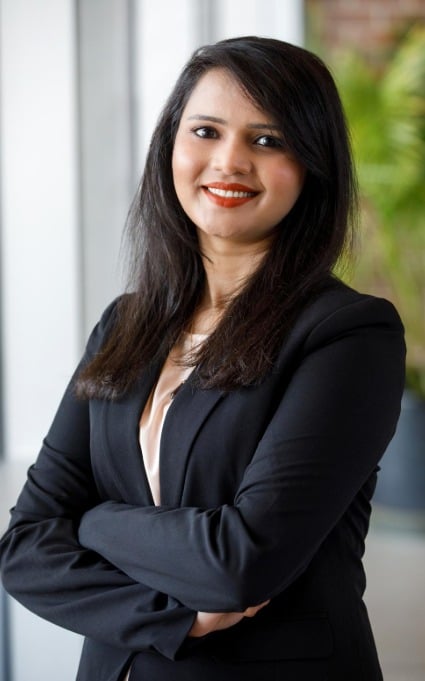
Dr. Shruti Rajendra Kshirsagar is an Assistant Professor in the School of Computing at Wichita State University, where she also serves as Graduate Coordinator for the MS in Data Science program. She directs the SoundMind NeuroVision Innovation Lab, leading interdisciplinary research in trustworthy artificial intelligence, speech technologies, healthcare AI, cybersecurity, and disaster resilience. Through externally funded research and collaborations, her work focuses on developing AI systems that are not only accurate, but also explainable, robust, and reliable for real-world applications.
Artificial intelligence has entered a new phase. The conversation is no longer centered on whether AI can outperform humans on specific tasks, but whether it can be trusted when the consequences of getting it wrong are significant.
From hospitals relying on machine learning for clinical decision support to governments confronting AI-generated misinformation and emergency agencies using predictive models during natural disasters, trust has become one of the defining challenges of modern artificial intelligence. Increasingly, organizations are discovering that accuracy alone is not enough. AI systems must also be explainable, resilient, transparent, and reliable.
This shift has created growing demand for researchers working at the intersection of advanced machine learning and responsible AI development. Among them is Dr. Kshirsagar, whose research spans healthcare, cybersecurity, speech technologies, and disaster resilience—all connected by a common objective: building AI systems that people can trust in high-stakes environments.
Beyond Smarter AI: Building AI That Can Be Trusted
The rapid rise of generative AI has transformed industries ranging from healthcare and finance to education and media. Yet it has also introduced new challenges.
Healthcare providers increasingly seek AI systems that can justify clinical recommendations rather than functioning as opaque “black boxes.” Businesses face escalating risks from synthetic media capable of impersonating executives or manipulating public opinion. Governments and infrastructure agencies are exploring AI to improve disaster response while demanding systems that remain reliable under unpredictable real-world conditions.
These challenges have elevated trustworthy AI from an academic research topic to a strategic priority.
Rather than focusing solely on maximizing predictive performance, Dr. Kshirsagar’s research emphasizes interpretable machine learning, robust model design, fairness, and AI systems capable of supporting informed human decision-making in critical environments.
Building Explainable Artificial Intelligence for Healthcare
Healthcare remains one of artificial intelligence’s most promising—and most demanding—applications.
Medical AI systems are increasingly expected to analyze physiological signals, assist physicians with diagnosis, and identify disease patterns that may be difficult for humans to detect. However, clinical adoption depends heavily on transparency. Physicians must understand why an algorithm reaches a particular conclusion before incorporating it into patient care.
Dr. Kshirsagar’s research on sleep analysis and physiological signal interpretation addresses this challenge by developing explainable AI methods for analyzing complex biomedical data. Her work seeks to improve automated sleep analysis while preserving interpretability, enabling clinicians to better understand the reasoning behind AI-generated insights.
As healthcare systems worldwide continue to invest in digital health technologies, explainability is becoming just as important as predictive accuracy, particularly in applications involving children and vulnerable patient populations.
Fighting the Growing Threat of AI-Generated Audio
The explosive growth of generative AI has also introduced a rapidly evolving cybersecurity challenge: synthetic speech.
Advances in voice cloning now enable artificial intelligence to generate highly realistic audio with relatively little training data. While these technologies have valuable applications in accessibility, entertainment, and customer service, they also create opportunities for fraud, identity impersonation, misinformation, and social engineering attacks.
Audio deepfake detection has therefore become one of the fastest-growing research areas in AI security.
Dr. Kshirsagar has contributed to this field through research on detecting manipulated speech under realistic operating conditions rather than controlled laboratory environments. Her work investigates how environmental noise, recording conditions, speech enhancement algorithms, and demographic fairness influence the reliability of modern deepfake detection systems.
As synthetic media becomes increasingly sophisticated, robust detection technologies will play a critical role in maintaining digital trust across both public and private sectors.
Artificial Intelligence Meets Disaster Resilience
Artificial intelligence is also reshaping how communities prepare for and respond to natural disasters.
Governments and emergency management agencies increasingly rely on machine learning to process satellite imagery, sensor networks, and environmental data that would otherwise require extensive manual analysis.
Dr. Kshirsagar’s research extends into this domain through National Science Foundation-supported projects focused on resilient infrastructure and disaster response. Her work develops AI methods for automated building damage assessment following natural disasters, helping emergency responders prioritize inspections and allocate resources more efficiently.
These projects illustrate how artificial intelligence is expanding beyond traditional enterprise applications into areas with direct implications for public safety and national resilience.
Leadership Beyond the Laboratory
Scientific influence increasingly extends beyond published research.
Today’s AI leaders also help shape research priorities, establish technical standards, and cultivate collaborative communities across institutions.
Dr. Kshirsagar serves as Senior Personnel for the National Science Foundation’s Institute for Foundations of Machine Learning (IFML), a multi-institutional initiative advancing the theoretical and practical foundations of machine learning. She also contributes as an NSF reviewer and panelist, evaluating emerging research proposals across the broader AI ecosystem.
Beyond research, she mentors graduate students while fostering interdisciplinary collaborations that connect computer science, speech processing, biomedical engineering, and public safety.
Her professional service includes organizing the IEEE International Conference on Systems, Man, and Cybernetics Workshop on Trustworthy Artificial Intelligence and serving in editorial roles for leading IEEE conferences, helping shape discussions around explainable, human-centered, and responsible AI.
The Next Frontier for Artificial Intelligence
The future of artificial intelligence will likely be defined not simply by larger models or greater computational power, but by systems that earn confidence in real-world deployment.
Whether supporting physicians in hospitals, protecting organizations from AI-enabled fraud, or assisting emergency responders after natural disasters, tomorrow’s AI will be judged by its reliability as much as its intelligence.
As Dr. Kshirsagar explains:
“The future of artificial intelligence isn’t simply about building more powerful models. It’s about developing systems that clinicians, emergency responders, and the public can understand and trust.”
Researchers focused on trustworthy AI are helping establish the technical foundations for that future. Their work demonstrates that explainability, robustness, fairness, and resilience are no longer secondary considerations—they are becoming essential design principles for artificial intelligence operating in critical environments.
Through interdisciplinary research, externally funded projects, editorial leadership, and collaborations spanning healthcare, cybersecurity, speech technologies, and disaster resilience, Dr. Shruti Rajendra Kshirsagar is contributing to the next generation of trustworthy artificial intelligence—helping ensure that AI is measured not only by what it can do, but by how responsibly and reliably it serves society.







Comment