
Dr. Vedat Akman: The Banking Risk Scholar Teaching Finance in Dubai

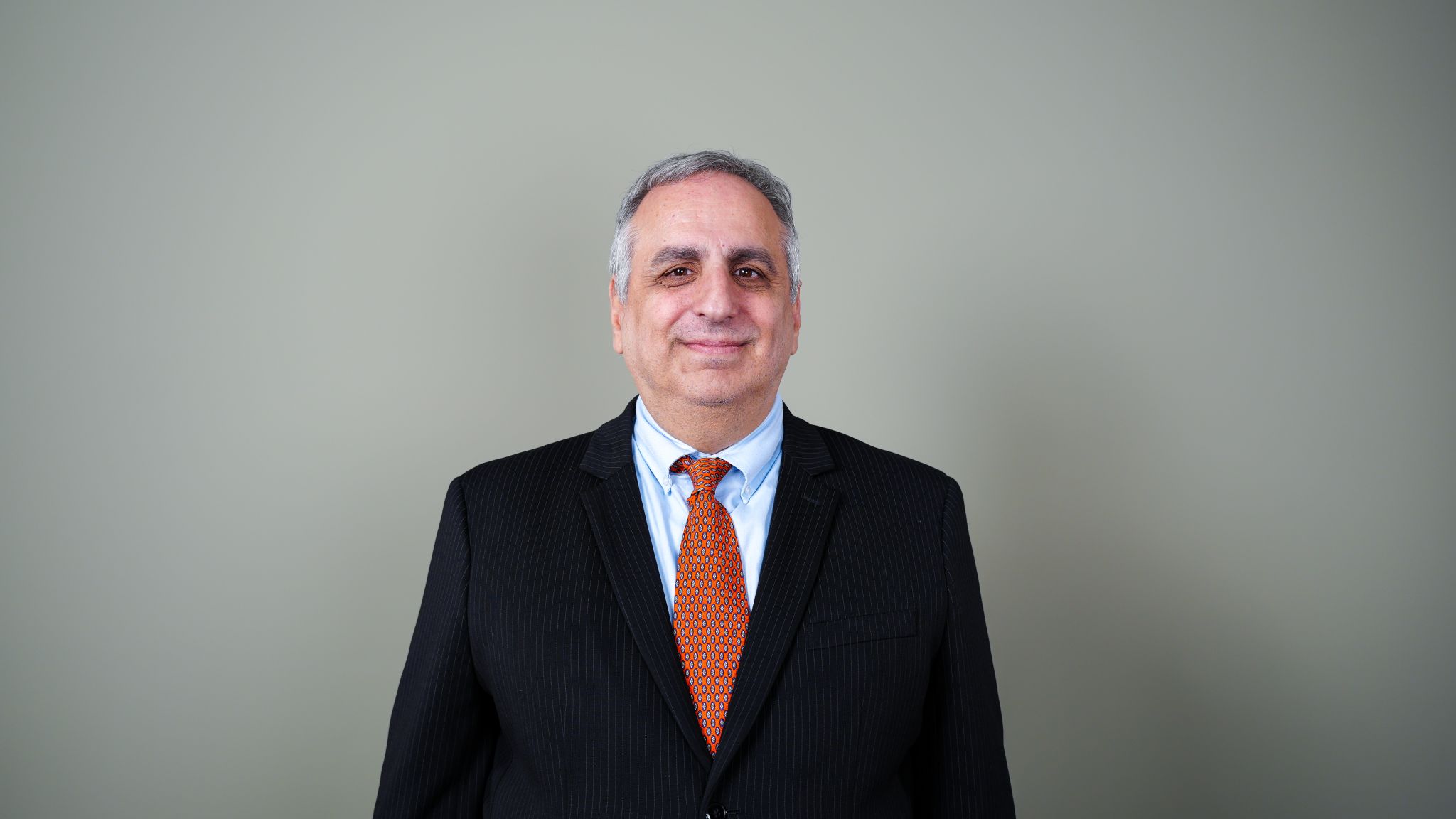
After stints in Istanbul’s banks, on business television, and in university lecture halls across two continents, the Turkish American finance academic brings three decades of practical market experience to the classroom at Plekhanov University Dubai.
Long before risk management became a standard module in finance programmes, Dr. Vedat Akman was writing about it for Turkish bankers. In 2001 he and a group of colleagues published Bankalarda Risk Yönetimine Giriş, an introduction to risk management in banks, at a time when Turkey’s financial sector was going through one of the hardest stretches in its modern history. The book came out of work he knew from the inside. Before he ever stood in front of a lecture hall, Akman worked as a research manager at major Turkish banks and stock exchange brokerage firms in Istanbul.
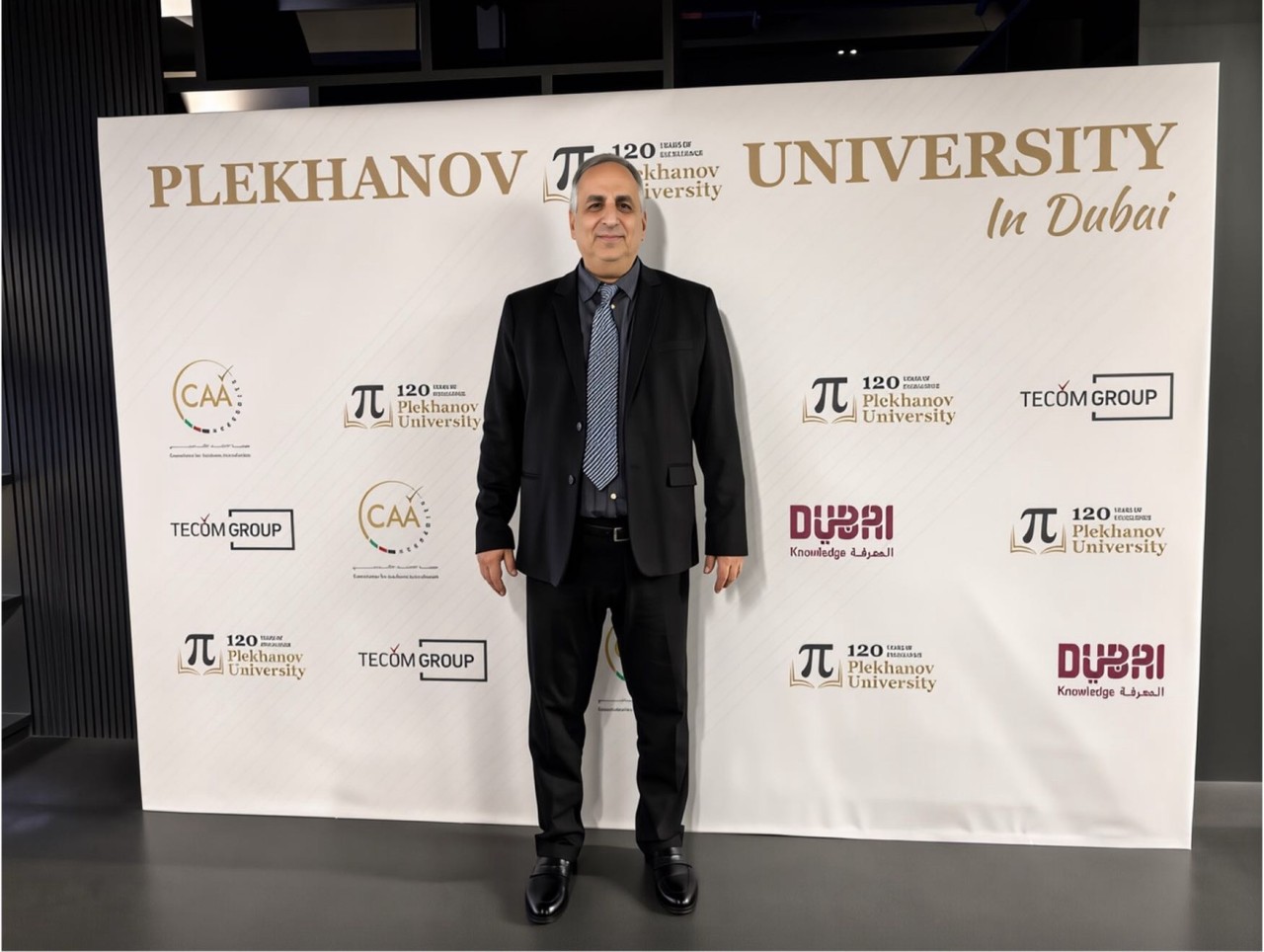
Today he is an Associate Professor of Finance at the Dubai campus of Plekhanov Russian University of Economics, where he is full time faculty, and an adjunct faculty member at the American University in Dubai. The route from Istanbul’s trading floors to a lecture hall in the Gulf ran through New York, Nottingham, and a long list of degrees, and it left him with a habit that is rarer than it sounds in academic finance: he explains money the way people who have handled it do.
An education built across three financial centres
Vedat Akman was born in Istanbul and went to a British high school there before moving to New York. At Brooklyn College, part of the City University of New York, he earned a bachelor’s degree in economics in 1990 and a master’s in 1992. He then crossed to the United Kingdom for an LL.M. in international commercial law at the University of Nottingham, completed in 1995.
The law degree matters more than it might seem on a finance professor’s CV. International trade runs on contracts, guarantees and documentary credit, and Akman later turned that grounding into a Turkish language book on letters of credit, covering their definition, their types, and how they are treated in the accounts. For students who will go on to work in trade finance or corporate banking, that is the unglamorous plumbing that keeps cross border deals moving.
He completed a PhD in finance and banking at Kadir Has University in Istanbul in 2010, followed by an MBA from Fordham University in New York in 2011 and an Executive MBA from Kadir Has in 2012. Few academics collect degrees in economics, commercial law, banking and management from institutions in three countries. Akman’s mix reads less like credential gathering and more like a deliberate effort to understand finance from every desk it touches.
From the trading floor to the television studio
Akman’s early career was spent close to the markets. Alongside his research roles at Turkish banks and brokerage houses, he produced business programmes for television and wrote newspaper columns, translating market movements for a general audience. That experience of explaining finance to people outside the industry shows up in his later work.
In 2007 he co authored Bilimsel Araştırma ve Çalışma Yöntemleri, a guide to scientific research methods, with Uğur Özgöker. He went on to teach at Kadir Has University and then at Beykent University in Istanbul, where he was a faculty member in the English language Finance and Banking programme within the Faculty of Economics and Administrative Sciences.
When the pandemic hit, Vedat Akman kept working in public. During 2020 he presented at academic conferences in Turkey and abroad, served as a referee, and sat on scientific boards. He also joined economist Taner Özdeş for a pair of Turkish language webinars on what COVID 19 meant for the world economy. That year the Institute of Economic Development and Social Research (İKSAD) gave him its Science Award, which Beykent University announced in January 2021.
Leadership outside the lecture hall
Dr. Akman’s profile extends well beyond banking. Through Junior Chamber International, the global network of young professionals, he was named the Turkey country winner of the Ten Outstanding Young Persons programme in 1998. He later compiled Global Immigrant Stories, a collection of firsthand accounts by immigrants, which won Best Publication in Europe at the JCI European Conference in Maastricht in 2007.
He also founded the JCI Istanbul Crossroads International Short Film Festival, built around the slogan “Young Entrepreneurs Hand by Hand with Young Film Directors,” and helped found CINEJ Cinema Journal, a refereed publication hosted by the University of Pittsburgh. For a finance academic, it is an unusual sideline. It also says something about how he works: he likes building platforms that put people from different fields in the same room.
That instinct carries into his art. Akman began as a photographer, with his first solo exhibition at the Brooklyn College Art Gallery in 1990, and later turned to painting at his Cetus Art Studio in Bodrum. His 2026 book, On the Trail of the Negative, looks at the photographic negative as a way of rebuilding reality from an inverted view, a theme that would not be out of place in a seminar on contrarian investing.
Teaching finance in Dubai
Dubai has spent the last two decades positioning itself as a regional hub for banking, trade and investment, and its universities feed that ecosystem with graduates. At Plekhanov University’s Dubai campus and at the American University in Dubai, Akman teaches business management, banking and finance to students, many of whom are headed for the same kinds of banks and investment firms he once worked for.
That is where the long CV pays off. A lecture on credit risk lands differently when it comes from someone who has sat inside a bank’s research department. A session on trade finance carries more weight from someone who wrote the book on letters of credit. And a discussion of how markets react to a global shock means more from someone who spent 2020 explaining exactly that to a live audience.
Dr. Vedat Akman has now spent more than twenty years in university teaching, after a first career in banking and financial media. The common thread is a belief that finance is best understood by people who can see it from more than one angle, whether that angle is a balance sheet, a contract, or the inverted image on a strip of film.







Comment