
How Digital Printing and On Demand Production Changed the Way Team Uniforms Are Made

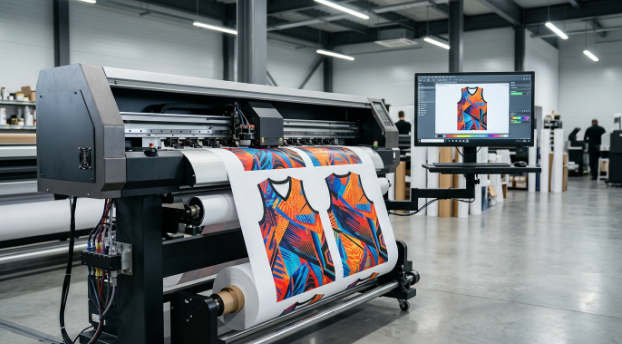
Twenty years ago, a youth basketball team that wanted its own uniform had two choices: buy plain jerseys and have a local shop screen print the numbers, or place a large order with a supplier and wait months. Today the same team can design a full color jersey on a screen, approve a digital mockup, and have the finished uniforms made one at a time. Three technologies made that shift possible: dye sublimation printing, cloud based design tools, and on demand manufacturing. This article explains what each one does and why the combination changed a whole industry.
The old model: minimums, inventory and guesswork
Traditional uniform production was built around screen printing and cut and sew factories. Screen printing needs a separate screen for every color, so setup costs were high and only made sense when hundreds of pieces shared the same design. Factories protected themselves with minimum order quantities, often 50 to 100 pieces per style. Teams that could not reach the minimum had to settle for stock jerseys with a printed number.
The bigger problem was forecasting. Suppliers had to guess which colors and sizes would sell, then hold that stock. Coresight Research surveyed US apparel brands and retailers that were using or planning on demand manufacturing and found overproduction and excess inventory among the main problems pushing them toward it. The summary is at Coresight Research: The On Demand Manufacturing Revolution in Apparel.
What dye sublimation actually does
Dye sublimation is the printing method behind most modern sports uniforms. The design is first printed with special dyes onto transfer paper. The paper is then pressed against polyester fabric at around 200 degrees Celsius. At that temperature the dye turns from a solid straight into a gas and bonds with the polyester fibers themselves. The color becomes part of the fabric, not a layer sitting on top of it. A clear technical overview is on Dye sublimation printing.
For uniforms this changes four things:
- Unlimited colors cost the same as one color, because there are no screens to set up.
- Gradients, patterns and photo style graphics print as easily as flat shapes.
- The print cannot crack, peel or fade the way a plastisol print can, because nothing sits on the surface.
- Names and numbers are printed in the same pass as the body design, so personalizing every jersey adds almost no labor.
This is why custom basketball uniforms with full side panels, fades and individual player names are now common at the youth and high school level, when a decade ago that look was limited to college and professional programs.
Why the market keeps growing
Sublimation is one segment of a larger shift toward digital textile printing. Straits Research valued the global digital textile printing market at about USD 8.1 billion in 2025 and projects it to reach roughly USD 23 billion by 2034, a growth rate near 12 percent a year. The report names personalized apparel and on demand manufacturing as two of the main drivers. Full figures are at Straits Research: Digital Textile Printing Market.
The reason is simple economics. A digital printer does not care whether the next job is one jersey or one thousand. The file changes, the fabric does not. That removes the setup cost that made small orders unprofitable under screen printing, and it is the technical foundation for the no minimum order model that many team apparel suppliers now offer.
Design software and the digital mockup
Printing is only half the story. Before sublimation can run, the design has to exist as a print ready file. In the past that meant a designer working from a sketch and a client approving a physical sample weeks later. Now the workflow looks like this:
- The team sends a logo, colors and roster, often by email or a web form.
- A designer builds the jersey in vector software and renders a 3D or flat mockup, usually within a day.
- The team reviews it on a phone, asks for changes, and approves online.
- The approved file is split into panels, sized for each player, and sent to the printer.
Because the mockup is a digital file, revisions are nearly free. Approval happens before any fabric is cut, which removes most of the risk of making the wrong thing. Many suppliers now treat the mockup as the contract: nothing is produced until the customer signs off on the image.
On demand manufacturing: make it after it is sold
On demand production flips the traditional sequence. Instead of forecast, produce, then sell, the order comes first and production starts after it. Textile World describes it as a pull based system where customer demand triggers each garment, compared with a push based system where forecasts drive quantities. The per piece cost is usually higher, but there is no unsold stock, no warehousing and no markdowns. That trade off is covered in detail at Textile World: On Demand Production.
For team uniforms this model fits unusually well. Every order is already unique, so there was never much value in holding finished stock. What on demand adds is the ability to accept a single replacement jersey midseason, or a 14 piece order from a club that could never meet a factory minimum before.
How a modern order moves from screen to field
Put the three pieces together and the timeline of a typical order in 2026 looks like this:
- Day 1: team shares logo, colors and sizes.
- Day 1 to 2: digital mockup is delivered and revised.
- Day 2 to 7: team approves the final design.
- Week 2 to 4: fabric is printed, pressed, cut, sewn and checked.
- Week 4 to 5: order ships direct to the coach or school.
Suppliers built around this workflow, for example Hamco Sports Inc, typically quote production in two to three weeks after approval with no minimum order, something that would have been impossible under the screen printing and bulk inventory model.
What it means for small teams and small brands
The practical effect is that a design level once reserved for well funded programs is now available to a recreation league, a club team or a startup apparel brand testing its first run. There is no mold, screen or minimum to fund up front. The cost of being wrong is low, because the design is approved on screen before production and only the ordered quantity is made.
There are limits. Sublimation only works on polyester and polyester blends, so cotton heavy garments still need other methods. Very dark fabrics cannot be printed lighter, which is why sublimated garments start as white fabric. And on demand production shifts the pressure onto turnaround time, since there is no stock to ship from. Teams still need to plan a few weeks ahead of their season.
The bottom line
Dye sublimation removed the color and setup limits of screen printing. Design software made approval fast and nearly free. On demand manufacturing made small orders viable. None of these technologies is new on its own, but together they turned custom team apparel from a bulk order business into a made to order one. For anyone comparing suppliers, the useful questions are now about turnaround, fabric weight and mockup process rather than minimum quantities.







Comment