For decades, metal casting carried a reputation as one of manufacturing’s most traditional, least “digital” trades — hot metal, sand molds, and processes that hadn’t changed much since the industrial revolution. That reputation is now badly out of date.
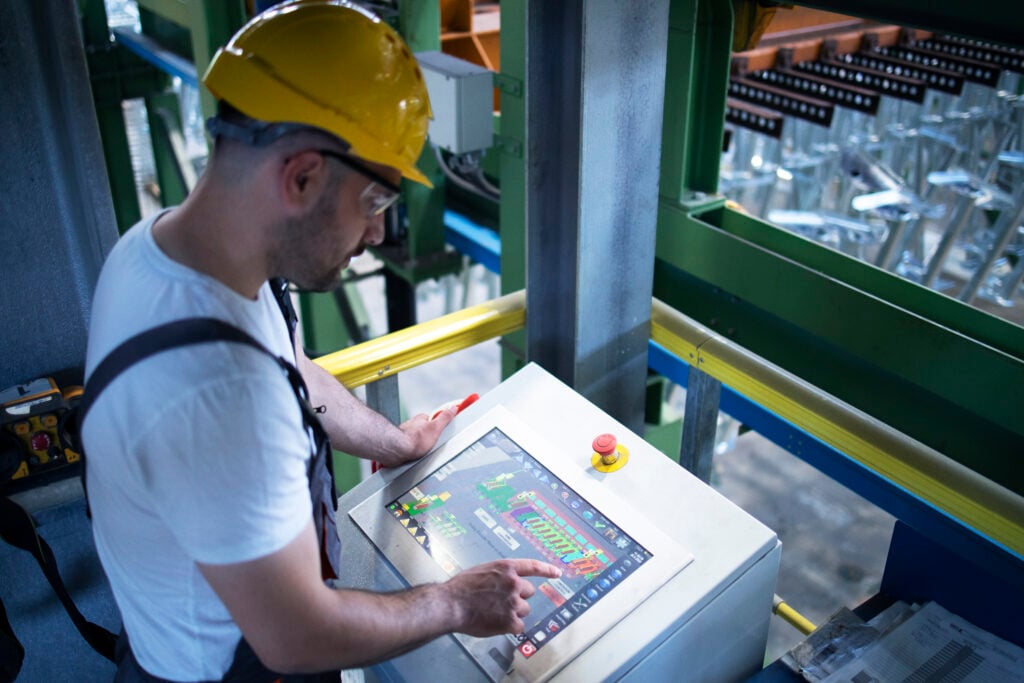
Across the sand casting industry, foundries are integrating simulation software, real-time process monitoring, and data-driven quality control into workflows that were once governed almost entirely by operator experience and trial-and-error. The result is a sector that looks less like a relic of heavy industry and more like a precision manufacturing discipline — one where digital tools are directly responsible for tighter tolerances, faster development cycles, and dramatically less scrap.
From Guesswork to Simulation
Traditionally, developing a new casting meant building a physical pattern, pouring a test batch, and hoping the metal filled correctly, cooled evenly, and avoided porosity or shrinkage defects. Any problems meant reworking the pattern and starting over — an expensive, slow feedback loop.
Modern foundries now run mold-filling and solidification simulations before a single pattern is cut. Engineers can model how molten iron flows through a cavity, where it’s likely to cool too quickly, and where porosity is likely to form — then adjust gating and risering digitally, long before physical tooling is committed. Kurt Foundry, a sand casting manufacturer based in Weifang, Shandong, has built much of its casting workflow around this simulation-first approach, using it to compress design iteration cycles for clients developing new components from scratch.
Data-Driven Quality Control
The second major shift is in quality control. Spectrometric analysis of melt chemistry, systematic dimensional inspection, and structured non-destructive testing have moved quality control from a final checkpoint to a continuous process tracked at every stage of production. For B2B buyers sourcing castings internationally — often without the ability to physically inspect a supplier’s shop floor — this kind of documented, data-backed quality process has become a baseline expectation rather than a differentiator.
This matters most in custom and low-to-mid volume production, where there’s no long production run to “average out” defects. A single casting has to be right the first time. Foundries that have invested in simulation-driven capabilities for producing complex, application-specific iron parts — flywheels, bearing housings, custom brackets — are better positioned to deliver those components without the costly trial-and-error that used to define custom metalwork.
What This Means for Buyers
For procurement teams and engineers evaluating casting suppliers, the practical takeaway is this: the gap between a foundry that treats casting as a craft and one that treats it as an engineered, data-driven process has never been more visible in outcomes — lead times, defect rates, and first-article success rates all reflect it. As more of the industry adopts simulation and structured quality systems, “digital foundry” is quickly becoming less of a marketing phrase and more of a genuine operational standard.
The foundries that will lead the next decade of industrial manufacturing won’t be the ones with the biggest furnaces — they’ll be the ones that have figured out how to combine decades of metallurgical know-how with the kind of process control that used to only exist in electronics and semiconductor manufacturing.