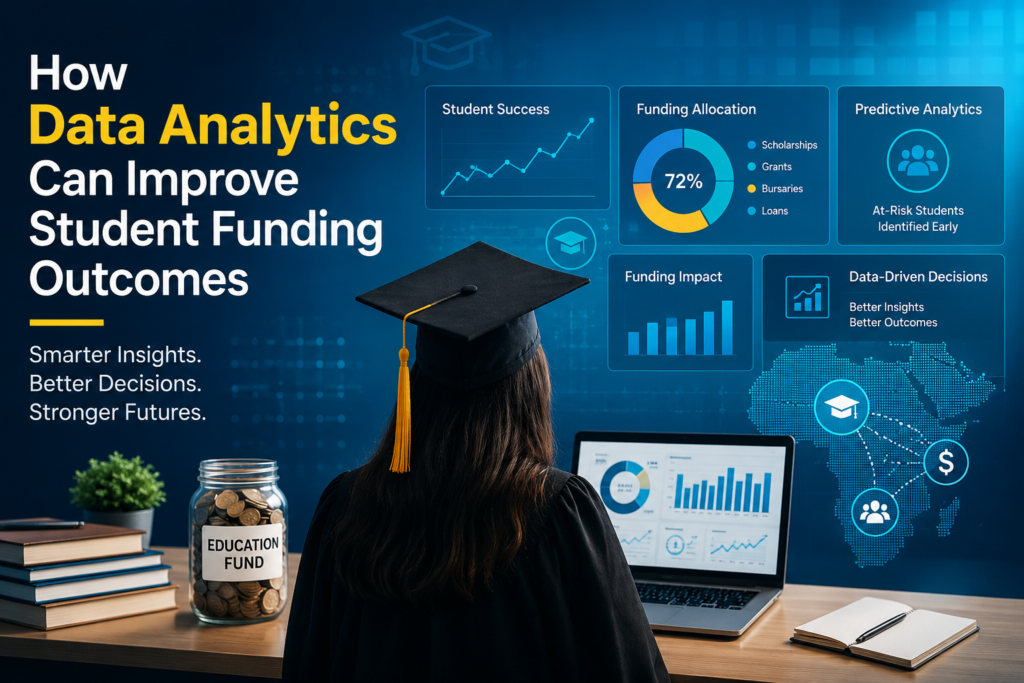
Student funding programs are essential for expanding access to higher education. Scholarships, grants, bursaries, and financial aid help millions of students enroll in and complete their studies. However, many funding systems still struggle with challenges such as inefficient allocation, delayed approvals, fraud, administrative complexity, and limited visibility into student outcomes.
As educational institutions and funding agencies collect increasing amounts of information, data analytics has emerged as a powerful solution. By using data-driven insights rather than relying solely on manual reviews and historical practices, organizations can identify students most in need, predict risks, optimize funding distribution, and improve program effectiveness. The result is a funding ecosystem that is more efficient, equitable, and responsive to student needs.
Why Better Decision-Making Is Needed
The cost of higher education continues to rise globally, while governments, universities, and private organizations face pressure to ensure funding reaches deserving students and delivers measurable outcomes.
Traditional funding systems often encounter several problems:
- Manual verification processes
- Incomplete application information
- Slow decision-making
- Limited tracking of long-term outcomes
- Inefficient use of limited funds
- Difficulty identifying at-risk students
- Fraudulent applications and misuse of funds
Without data-driven oversight, funding providers may struggle to maximize the impact of available resources.
Understanding Data Analytics in Student Funding
Data analytics involves collecting, organizing, analyzing, and interpreting information to support informed decision-making.
In student funding programs like NSFAS scholarship, analytics can use data from:
- Academic performance records
- Enrollment information
- Household income data
- Attendance patterns
- Student engagement metrics
- Application histories
- Graduation rates
- Employment outcomes
- Financial aid utilization
Using statistical methods, predictive models, and machine learning algorithms, organizations can uncover patterns and insights that would otherwise remain hidden.
Different forms of analytics serve different purposes:
- Descriptive analytics examines past performance.
- Diagnostic analytics identifies causes of challenges.
- Predictive analytics forecasts future outcomes.
- Prescriptive analytics recommends optimal actions.
Together, these approaches help institutions move from simply reporting data to actively improving funding outcomes.
Early Identification of Students at Risk
One of the most valuable applications of data analytics is early risk detection.
Financial hardship is a major factor behind student dropout rates. Many students leave education due to financial stress rather than academic difficulties. Predictive analytics can analyze factors such as academic progress, attendance records, funding utilization, socioeconomic indicators, and engagement levels to identify students who may encounter financial challenges.
Once identified, funding providers can intervene through:
- Emergency grants
- Additional bursaries
- Flexible payment arrangements
- Academic support services
- Financial counseling
Early intervention helps students remain enrolled and often costs less than addressing the consequences of student attrition later.
Optimizing Funding Allocation
Funding resources are limited, making effective allocation critical.
Data analytics enables organizations to answer important questions:
- Which funding programs improve graduation rates most effectively?
- Which student groups benefit most from additional support?
- What funding levels generate the best outcomes?
- Which institutions deliver the strongest return on investment?
Rather than distributing resources based on assumptions, organizations can allocate funds according to measurable evidence.
For example, analytics may reveal that transportation assistance improves student retention more than textbook subsidies. Decision-makers can then adjust funding priorities to maximize educational success.
This evidence-based approach improves both efficiency and student outcomes.
Reducing Fraud and Strengthening Verification
Fraud remains a significant concern in large-scale student funding programs. Common issues include false income declarations, identity fraud, duplicate applications, manipulated documents, and ineligible beneficiaries.
Modern analytics systems can detect anomalies that may go unnoticed during manual reviews. Machine learning tools can identify:
- Suspicious application patterns
- Unusual financial information
- Duplicate records
- Behavioral inconsistencies
When combined with digital identity verification technologies, analytics improves program integrity while reducing administrative workload.
Personalizing Financial Aid Support
Students have different financial circumstances and support needs. A first-generation student from a low-income household may require different assistance than a student facing temporary financial hardship.
Advanced analytics enables institutions to develop personalized funding strategies, including:
- Need-based financial aid
- Merit scholarships
- Housing assistance
- Food support programs
- Technology grants
- Transportation allowances
By tailoring support to individual circumstances, funding providers can improve both student satisfaction and program effectiveness.
Measuring Long-Term Impact
Many organizations focus heavily on approving applications but pay less attention to long-term outcomes. Analytics helps institutions evaluate whether funding programs are achieving their intended goals.
Key questions include:
- Are funded students graduating?
- Are retention rates improving?
- Are employment outcomes improving?
- Which programs generate the greatest social impact?
Common performance indicators include:
- Retention rates
- Graduation rates
- Academic achievement
- Employment outcomes
- Income mobility
- Student satisfaction
Tracking these metrics provides a clearer understanding of funding effectiveness and helps guide future policy decisions.
The Growing Role of Artificial Intelligence
Artificial intelligence is expanding the capabilities of traditional analytics systems. AI-powered platforms can:
- Process large volumes of applications
- Automate eligibility assessments
- Detect fraud patterns
- Predict student success
- Generate funding recommendations
- Improve support services through chatbots
International organizations increasingly recognize the importance of data-driven approaches in education. As AI technologies continue to advance, student funding systems are expected to become more proactive and efficient.
A Practical Example: South Africa
South Africa’s National Student Financial Aid Scheme (NSFAS) demonstrates why analytics is becoming increasingly important in student funding.
Large-scale funding programs generate extensive datasets, including application records, academic performance information, funding disbursements like NSFAS Wallet, and student progression metrics. By analyzing this information, funding agencies can gain valuable insights into approval bottlenecks, funding demand trends, retention patterns, resource allocation efficiency, and fraud prevention opportunities.
These insights can improve both operational performance and student success outcomes.
Challenges to Implementation
Despite its advantages, implementing data analytics requires careful planning. Common challenges include:
- Poor data quality
- Privacy and compliance concerns
- Integration of disconnected systems
- Shortages of skilled analysts and data professionals
Addressing these issues is essential for maximizing the value of analytics initiatives.
Best Practices for Funding Organizations
Organizations seeking better funding outcomes should:
- Establish strong data governance policies
- Integrate academic and financial datasets
- Develop predictive risk models
- Monitor funding effectiveness continuously
- Improve data literacy across teams
- Implement fraud detection systems
- Use real-time dashboards
- Measure long-term student success outcomes
Institutions that base decisions on evidence rather than assumptions are more likely to achieve sustainable improvements.
Conclusion
The future of student funding is increasingly data-driven. As student populations grow and financial pressures intensify, governments, universities, scholarship providers, and aid agencies must find smarter ways to allocate resources.