How AI Is Changing the Way Financial Markets Analyze Data in Real Time

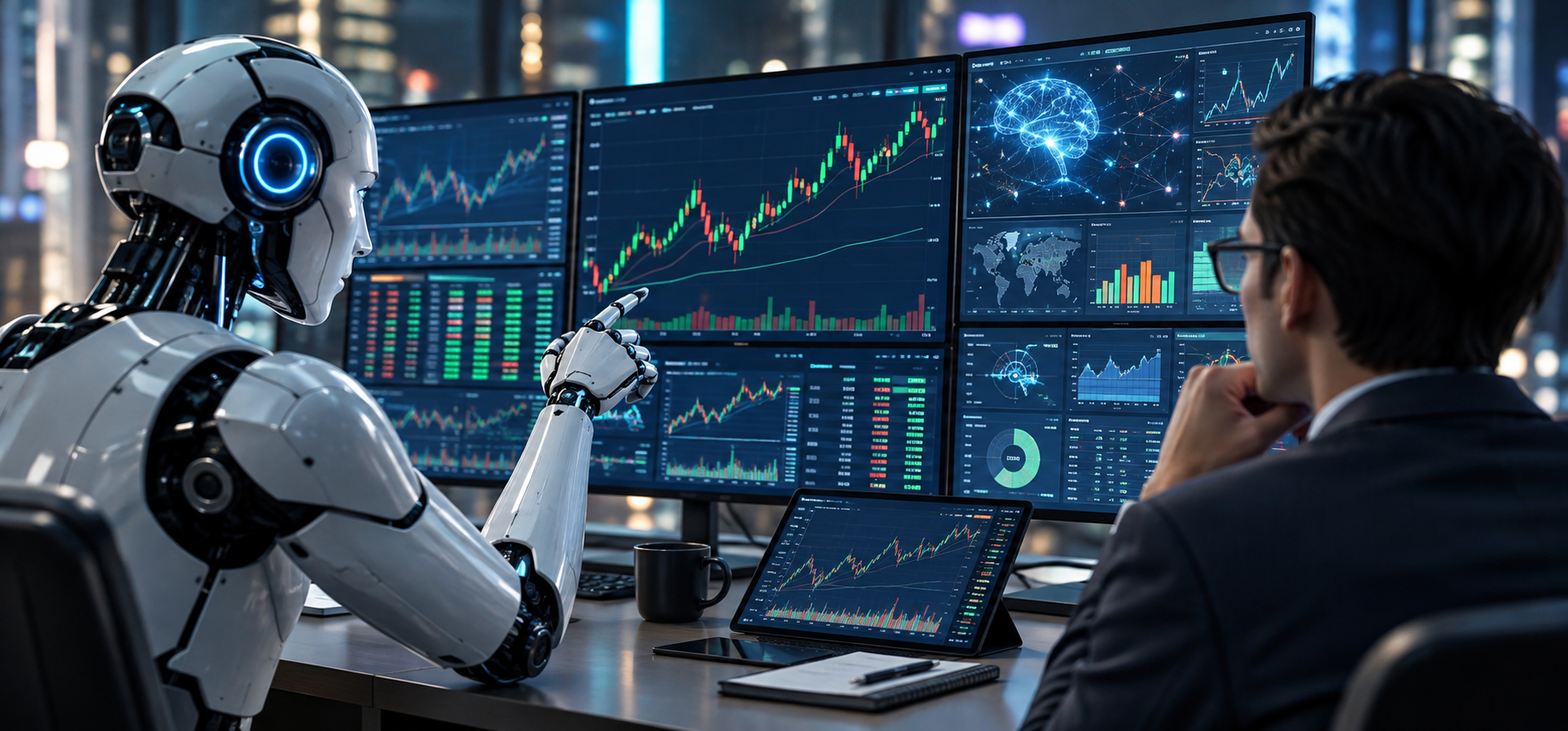
A decade ago, a trading desk that wanted a same-day read on inflation, earnings sentiment, and options flow needed three separate teams and a lot of coffee. Now a single model can pull all three together before the opening bell rings. That shift — quiet, incremental, and now impossible to ignore — is what’s actually driving a lot of the market noise in 2026, not just the headline AI stock rally.
None of this is limited to equities and bonds, either. The same appetite for instant, machine-assisted context has spread into crypto markets, where prices move on a scale and speed that make traditional research cycles almost useless. Someone checking solana price today isn’t necessarily making a long-term call — they’re often just trying to catch up with a market that’s already moved three times since breakfast, which is exactly the kind of environment these AI-driven monitoring tools were built for.
Look at the last few weeks alone. The four major hyperscalers pushed their combined AI infrastructure budget for the year to roughly $750 billion, with analysts expecting that figure to cross $1 trillion in 2027. Some of that spending is chips and cooling systems, sure. But a growing slice of it is going toward the analytics layer sitting on top of the infrastructure — the part that actually reads market data and turns it into a signal a trader or a risk manager can act on. Inflation data landed at 3.9% year-over-year in June, banks beat earnings, and semiconductor stocks still sold off the same week. A human analyst chasing that combination in real time would need hours. A well-tuned model can flag the divergence in seconds and hand a portfolio manager a ranked list of what to look at first.
That’s the actual value proposition, and it’s not glamorous. Real-time market analysis isn’t about a chatbot predicting next week’s S&P close. It’s pattern recognition at a scale no analyst desk can match — cross-referencing earnings call transcripts, options positioning, macro releases, and even satellite imagery of parking lots, all before a human finishes their first coffee. Firms running these systems aren’t trying to “beat the market” in some dramatic sense. They’re trying to shrink the gap between when information exists and when someone can act on it.
Risk teams have picked this up fastest, honestly. Instead of running overnight batch reports, some desks now stress-test portfolios continuously, updating exposure estimates as news breaks rather than waiting for the next scheduled review. When a tariff headline hits — and there’s been no shortage of those this summer, with fresh trade action reportedly on the table — a model can reprice sector exposure across a book in the time it takes a person to read the headline twice.
It’s worth being honest about the limits, too. These systems are good at surfacing patterns, not at explaining why a pattern matters, and they still get blindsided by genuinely new events — a court ruling, a surprise resignation, a geopolitical flashpoint nobody modeled for. The firms doing this well treat AI as a filter that narrows what a human needs to look at, not a replacement for the judgment call at the end. That distinction is probably the one thing separating the desks getting real value from this shift and the ones just burning compute budget to say they tried.