
How AI Is Changing Commercial Vehicle Operations

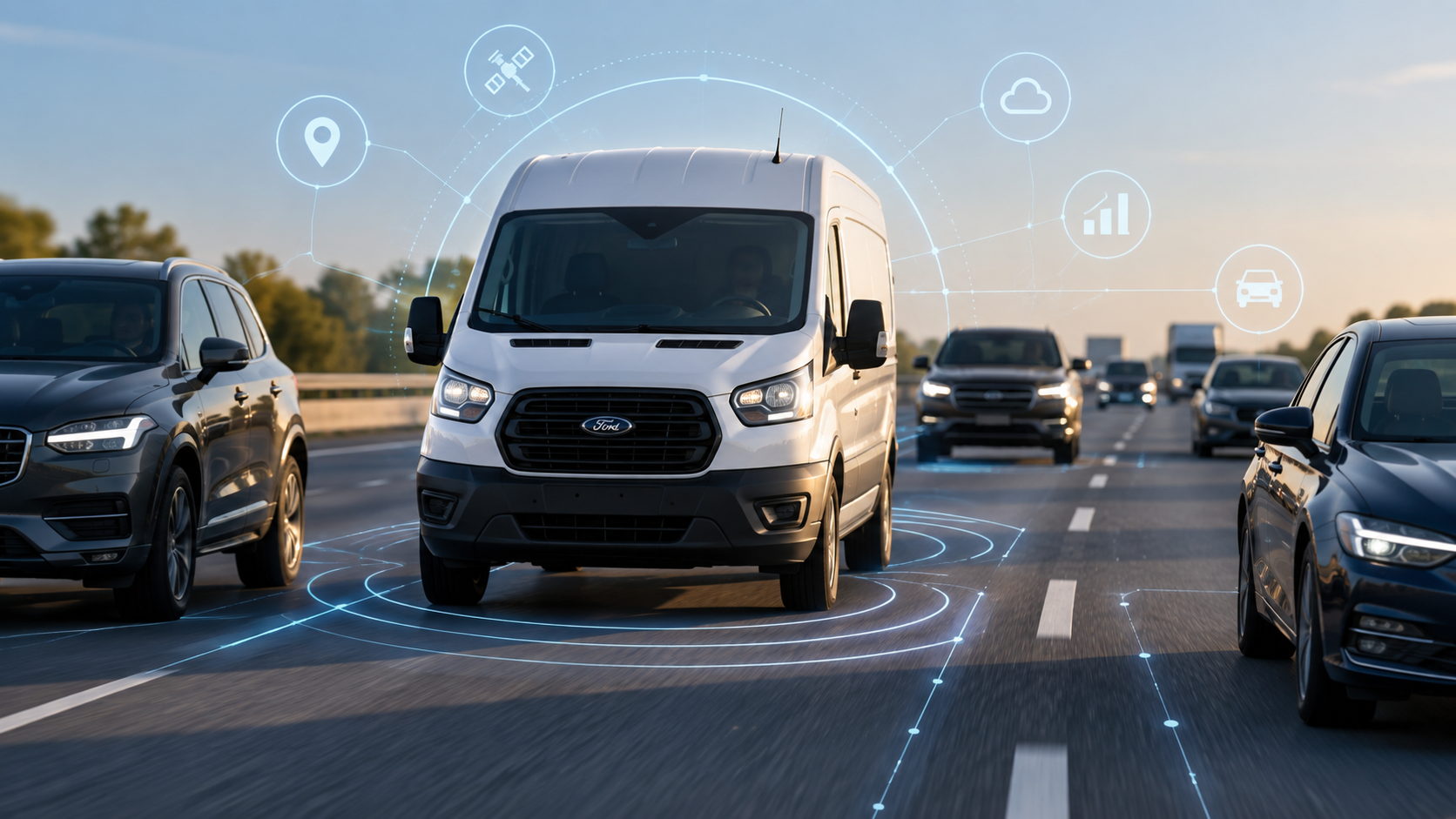
Commercial vehicles keep businesses moving across construction, utilities, deliveries, servicing, haulage and local trades. As operating costs rise and organisations become more dependent on their vehicles, even a single breakdown, theft or unexpected delay can quickly affect productivity and revenue.
That is why technology is becoming part of everyday fleet management rather than an optional extra. Alongside practical safeguards such as maintenance, driver training and appropriate commercial vehicle insurance, businesses are increasingly using artificial intelligence, telematics and connected vehicle systems to understand what is happening across their vehicles in real time.
Commercial vehicles are becoming more connected
Commercial vehicle operations generate an enormous amount of information, from location and mileage to fuel use, vehicle diagnostics, driver behaviour and maintenance history. Connected platforms are making more of this information available to businesses as vehicles become increasingly software-enabled. The scale of road-based commercial activity is substantial: Eurostat reported 1,869 billion tonne-kilometres of EU road freight transport in 2024, up 0.6% from 2023. Source: Eurostat
For operators managing anything from a single work vehicle to a large fleet, the opportunity is not simply to collect more data. It is to use that data to reduce downtime, improve security, control operating costs and make day-to-day decisions more quickly.
The challenge is turning that information into useful decisions. This is where newer commercial vehicle technology is beginning to make a practical difference.
AI is moving from dashboards to everyday decisions
Traditional fleet systems are good at recording information. Newer AI-powered platforms are designed to interpret it.
Instead of asking a fleet manager to manually review thousands of data points, AI can identify patterns and flag the information that requires attention. This can include unusual fuel consumption, repeated harsh braking, unexpected route changes, excessive idling or a vehicle beginning to show signs of a maintenance problem.
The result is not a vehicle that manages itself. It is a business that can make faster decisions using information that may previously have been difficult to spot.
Predictive maintenance could reduce unexpected downtime
One of the most useful applications of AI in commercial vehicles is predictive maintenance. Connected systems can monitor vehicle data over time and identify changes that may indicate a developing fault before it results in a breakdown.
For a business that relies on vehicles every day, the benefit is straightforward: maintenance can be planned around operations rather than triggered by an unexpected failure.
AI-assisted systems can help operators monitor areas such as:
- Changes in engine or battery performance.
- Unusual fuel or energy consumption.
- Recurring fault codes or warning patterns.
- Tyre and braking behaviour where connected sensors are available.
- Maintenance intervals based on actual vehicle usage.
This does not replace regular servicing or professional inspections, but it can give operators an earlier warning that a vehicle may need attention.
Commercial vehicle security is becoming more connected
Security is another area where connected commercial vehicle technology is developing quickly. GPS tracking has been available for years, but newer systems can combine location data with driver behaviour, cameras, geofencing and automated alerts.
Potential security features include:
- Live vehicle location and route monitoring.
- Alerts when a vehicle moves outside approved hours.
- Geofencing around depots, sites or operating areas.
- Driver authentication and access controls.
- AI-enabled video monitoring.
- Automated alerts for unusual vehicle behaviour.
- Cloud-based fleet dashboards.
The technology is increasingly being brought together rather than operated as separate tools. Modern fleet platforms can combine live tracking, AI-enabled video telematics, driver behaviour analysis and predictive insights across applications including haulage, logistics, utility fleets and construction.
AI can also support safer driving
For fleet operators, the value of AI extends beyond maintenance and security. Connected systems can identify driving patterns such as harsh acceleration, sudden braking, speeding or repeated risky manoeuvres and turn them into practical coaching information. The potential impact of these systems is significant. NHTSA estimates that a proposed heavy-vehicle automatic emergency braking standard could prevent 19,118 crashes and 8,814 injuries annually once covered vehicles are equipped. Source: NHTSA
Some newer platforms are also designed to make large volumes of fleet information easier to use. AI assistants can help fleet managers interrogate vehicle data, identify trends and surface suggested improvements without manually searching through multiple reports.
Used carefully, these tools can help businesses spot recurring risks, support drivers and make fleet management more proactive. The technology should support human judgement rather than replace it, particularly where safety, maintenance or insurance decisions are involved.
The future of commercial vehicle management
Commercial vehicle technology is moving towards a more connected model in which maintenance, security, routing, driver behaviour and operating costs can be viewed together rather than as separate issues.
For smaller businesses, this may mean receiving a warning before a vehicle develops a serious fault. For larger fleets, it could mean identifying patterns across dozens or hundreds of vehicles and acting before a problem becomes expensive.
AI will not remove the risks involved in running commercial vehicles, but it can give businesses better information about those risks. As the technology becomes more accessible, the companies that benefit most are likely to be those that use it for practical decisions: keeping vehicles secure, reducing avoidable downtime, supporting safer driving and protecting the continuity of day-to-day operations.







Comment