
How AI Face Search Is Changing Online Identity Verification

The way people establish their identities online has changed significantly over the past decade. Social networks, dating platforms, professional communities, marketplaces, and other digital services all rely heavily on visual information. A profile photo can be an important part of how someone presents themselves, but it can also be copied, altered, or reused without permission.
As artificial intelligence becomes more capable of analyzing images, businesses and individuals have new ways to examine visual information. One of the most interesting developments is the use of facial recognition and image-matching technologies to help determine whether a particular face appears in other publicly available online images.
What Is AI Face Search?
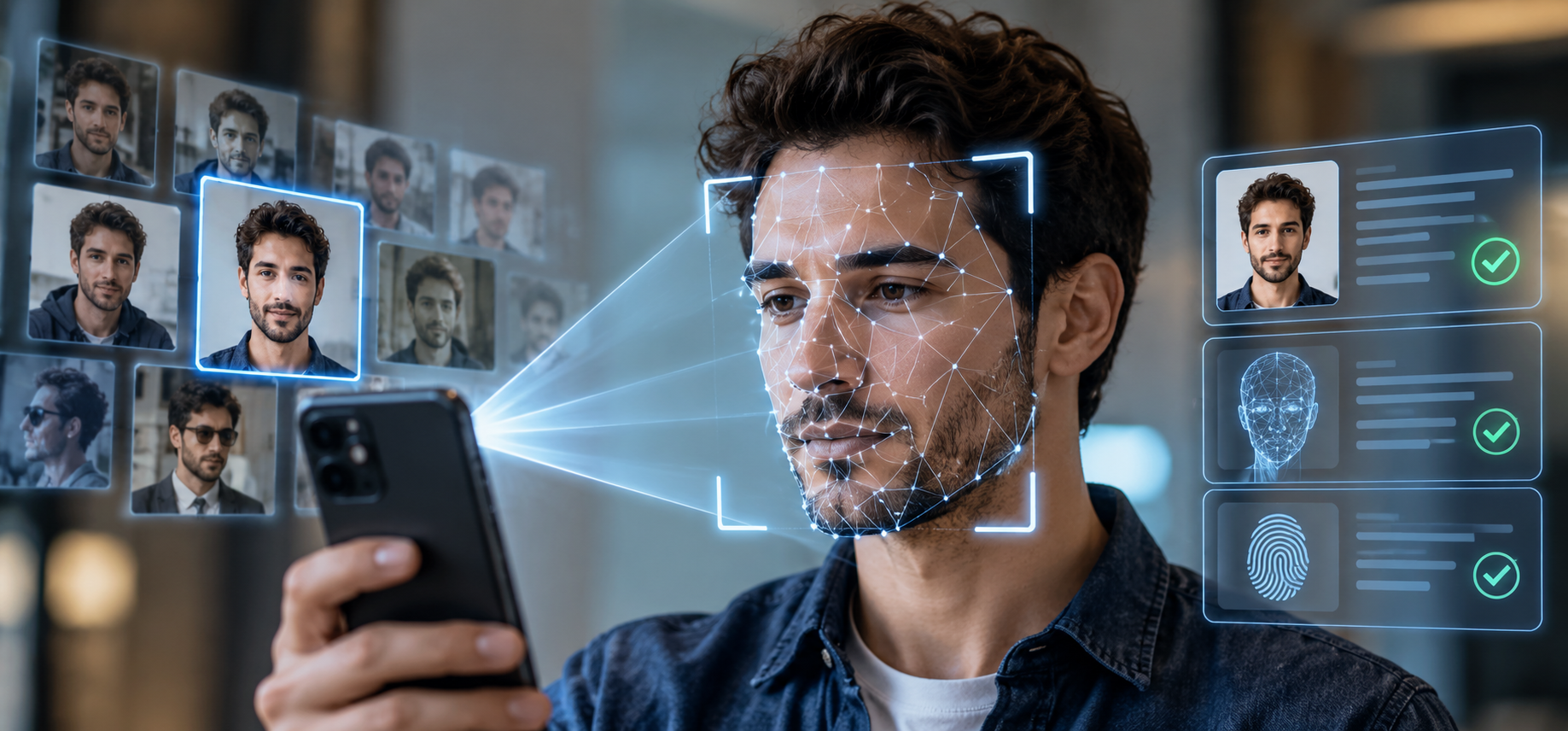
AI face search is a technology that uses artificial intelligence to analyze a person’s facial features and compare them with images available within a searchable collection.
Unlike a traditional keyword search, which depends on words associated with an image, facial search focuses on visual characteristics. An AI system can analyze features such as the relative position of the eyes, nose, mouth, and other facial characteristics and convert them into a mathematical representation.
This representation can then be compared with other images. When the system finds sufficiently similar facial patterns, it can identify potential matches for further investigation.
The technology has applications across multiple industries, including security, identity verification, fraud prevention, and online research.
How Does Facial Matching Work?
Modern facial recognition systems generally involve several stages. First, software identifies a face within an image. The system then analyzes its visual characteristics and creates a numerical representation, often called a facial embedding.
The embedding allows the system to compare faces mathematically rather than simply comparing two images pixel by pixel. This distinction is important because the same person can appear different across photographs due to lighting, camera angles, facial expressions, hairstyles, or image quality.
The system can compare the resulting representation against other images and determine which ones have similar characteristics. The output is typically a collection of potential matches rather than an absolute identification.
This means users still need to examine the available information and consider the context surrounding each result.
Why Is AI Face Search Becoming More Useful?
The growth of online profiles has created a large amount of visual information. People frequently use photographs across several platforms, sometimes without realizing how widely those images may circulate.
For example, a photograph originally uploaded to one social network may later appear on another website or profile. In some situations, someone may use another person’s photograph to create a misleading account.
This creates a need for tools that can help people investigate images beyond traditional text-based searches.
An ai face search tool can help users explore whether a particular face appears in other publicly accessible images, giving them another way to examine potentially reused profile photographs.
The technology can therefore complement traditional search methods when the available information is primarily visual rather than textual.
Applications Beyond Social Media
Although online profiles are an obvious application, facial image matching can be useful in several other contexts.
Businesses can use image analysis as part of fraud-prevention processes. For example, organizations dealing with online transactions may need to investigate suspicious identities or detect patterns involving reused photographs.
Researchers and journalists may also use image-matching technologies when investigating publicly available information. A photograph can sometimes provide a useful starting point when a person’s name, organization, or other identifying details are unknown.
Consumers can benefit as well. Someone communicating with an unfamiliar online profile may want to understand whether the profile photograph appears elsewhere on the internet before deciding how much information to share.
These applications demonstrate that facial search is not limited to law enforcement or large technology companies. As the technology becomes easier to access, it is becoming another tool for navigating an increasingly visual internet.
AI Face Search and Fake Profiles
Fake profiles are one area where visual search can provide additional context.
Creating an online profile can require little more than an email address, a username, and a photograph. A person attempting to create a misleading identity may use a photograph taken from someone else’s social media account or another publicly available source.
A facial search can potentially reveal that the same photograph, or images containing the same face, appears in multiple places. This does not automatically prove that a profile is fraudulent, but it can provide a useful signal that deserves further investigation.
Users should consider multiple factors rather than relying on a single search result. Account history, profile information, communication patterns, image metadata, and other publicly available details can all provide additional context.
Privacy and Responsible Use
The growing availability of facial search technology also raises important privacy questions.
Facial information is highly personal, and users should understand how a particular service obtains, processes, and stores images. Responsible use means limiting searches to legitimate purposes and respecting applicable privacy laws and the rights of individuals.
Search results should also be interpreted carefully. A visual similarity does not necessarily establish that two images depict the same person, and even a strong match does not explain why an image appears in a particular location.
For these reasons, facial search should generally be treated as an investigative aid rather than an unquestionable source of identity information.
What Should Users Look For in a Face Search Tool?
Anyone considering an AI-powered face search service should look beyond the basic ability to upload an image.
Accuracy is important, but so are the quality and scope of the searchable sources. Users should also consider how results are presented, whether the service explains its privacy practices, and whether searches can be performed without unnecessary collection of personal information.
Another consideration is transparency. A useful service should help users understand that search results represent potential matches and may require additional verification.
Finally, users should consider whether the technology is appropriate for their particular purpose. Responsible image searching involves balancing the usefulness of the information with the privacy and security considerations surrounding facial data.
The Future of Visual Identity Research
AI-powered image analysis is likely to continue developing as computer vision models become more sophisticated. Improvements in image quality, facial matching, and large-scale visual databases could make it easier to investigate how photographs circulate online.
At the same time, responsible use will remain important. Technology can make information easier to discover, but users still need to evaluate results critically and understand the limitations of automated systems.
As more aspects of everyday life move online, visual identity will become increasingly important. AI face search provides one way to navigate that environment, helping users investigate images and identify potential connections that might be difficult to discover through traditional text-based searches alone.







Comment