
How AI and Digital Transformation Are Reshaping Business Operations in 2026

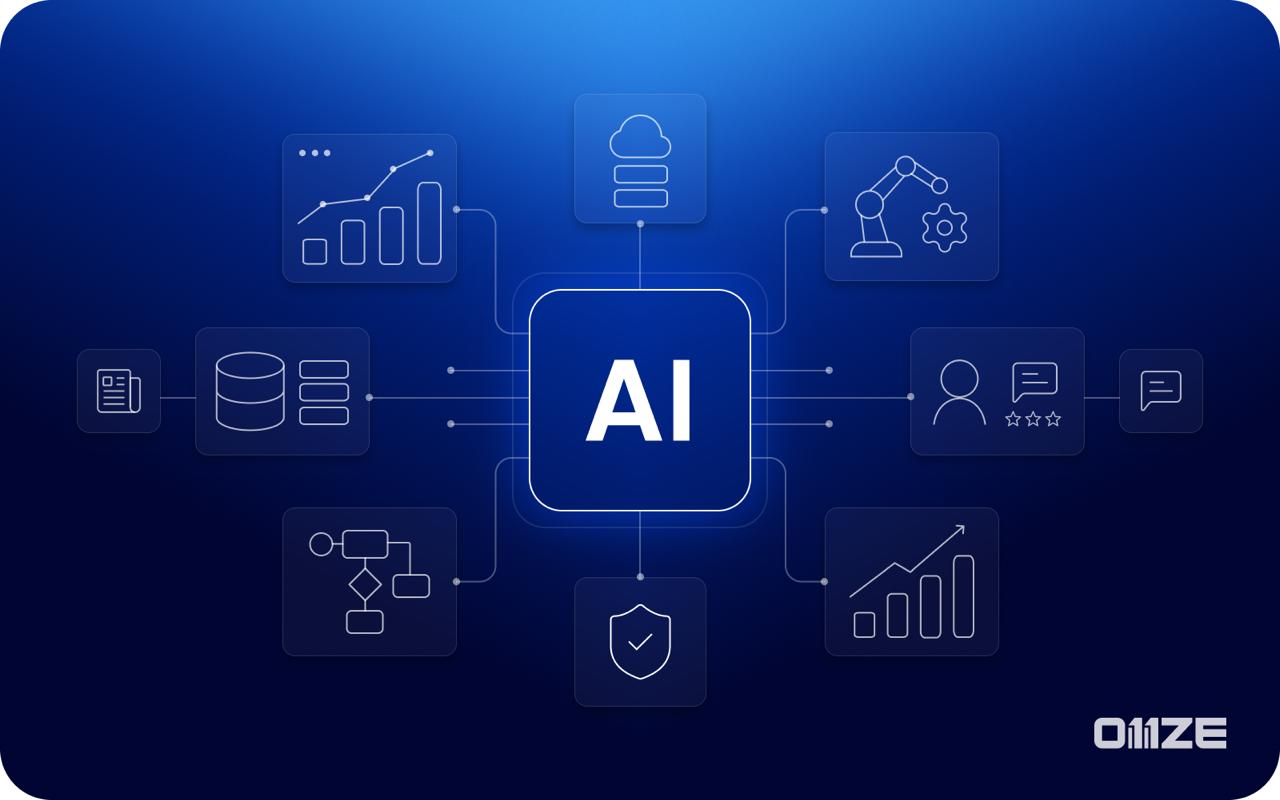
Business technology is no longer changing in small, isolated steps. In 2026, companies are rethinking how work gets done, how decisions are made, and how teams respond to customers. Artificial intelligence, automation, cloud platforms, and connected digital systems are becoming part of everyday operations rather than remaining experimental tools.
For many organizations, this shift is less about adopting the newest technology and more about finding practical ways to work smarter. When implemented thoughtfully, AI and digital transformation can reduce repetitive work, improve visibility across operations, and help businesses scale without adding unnecessary complexity.
For companies considering how to implement AI in business, the starting point should be a clear operational problem and a measurable objective. Technology creates more value when it improves an existing process or business capability rather than being introduced simply because AI is available.
AI Is Becoming Part of Everyday Operations
AI for business has moved beyond simple chatbots and automated responses. Companies are using artificial intelligence for data analysis, customer support, forecasting, document processing, quality control, and internal workflows.
The advantage is not simply speed. AI can help teams process larger volumes of information, identify patterns that are difficult to detect manually, and automate specific steps within established business processes.
A custom AI chatbot, for example, can do more than answer general questions when it is securely connected to relevant product information, internal knowledge, or customer-service systems. Similarly, predictive tools can support forecasting or operational planning when the underlying data is reliable enough for business use.
The real value emerges when AI is integrated with the systems a company already relies on. Businesses may require custom models, APIs, data pipelines, workflow integrations, or machine learning development tailored to their operations rather than another disconnected application.
This is where production-focused AI engineering becomes important. Moving AI into everyday operations requires more than selecting a model: businesses need reliable integrations, appropriate access controls, performance monitoring, and a clear understanding of what happens when the system produces an uncertain or incorrect result.
Companies evaluating artificial intelligence development services or custom AI development should therefore consider how the technology will operate inside the wider business environment, not only how well it performs in a demonstration.
Automation Is Changing How Teams Work
Automation is another major part of digital transformation. Many businesses still spend significant time transferring information between systems, checking records, preparing routine reports, processing documents, or completing repetitive administrative tasks.
Modern automation can connect these steps and reduce unnecessary manual effort.
For example, an order-management workflow may move information from a customer request into inventory, billing, logistics, and reporting systems without requiring employees to re-enter the same data several times. The value comes not only from saving time, but also from reducing duplicated work and the possibility of inconsistent information.
Effective AI automation services should begin by examining the process itself.
Automating an inefficient workflow does not necessarily improve it. In some cases, it simply allows the same inefficient process to run faster. Businesses should first identify where delays, duplication, or unnecessary decisions occur and then determine which parts are suitable for automation.
The strongest opportunities are usually repetitive processes with clear inputs, predictable decision rules, and measurable outcomes. Tasks involving significant ambiguity, financial risk, or sensitive customer decisions may still require human review.
Better Technology Can Improve Decision-Making
Businesses generate large amounts of information, but having more data does not automatically produce better decisions.
Customer platforms, finance systems, marketing tools, websites, operational software, and internal applications may each contain useful information. The challenge is turning fragmented data into a consistent view of what is happening across the organization.
AI data analytics can help identify patterns, highlight anomalies, support forecasting, and make large datasets easier to interpret. Decision-makers may gain a more current view of customer behaviour, operational performance, or changing demand instead of relying exclusively on historical reports.
However, analytical output is only as dependable as the data behind it.
If systems use inconsistent definitions, contain duplicate records, or fail to exchange information correctly, AI can produce sophisticated-looking results without solving the underlying information problem. Data quality, integration, and governance therefore remain important even when advanced analytics are introduced.
This is also why IT strategy and AI adoption increasingly need to be considered together. AI implementation consulting can be useful when organizations need to determine where AI can create measurable value, what data and infrastructure are required, and how a new capability should connect with existing technology.
ONZE Technologies works across AI engineering, software development, and IT strategy, helping businesses consider AI capabilities as part of a broader technology environment rather than as isolated tools.
The objective should not be to introduce AI into every decision. It should be to improve access to reliable information where faster or better-informed decisions create a meaningful business advantage.
Scalability Is Becoming a Technology Priority
Growth often exposes weaknesses that remain hidden while a business is smaller.
A process that works for 20 employees may become inefficient at 200. The same applies to databases, communication systems, customer-service workflows, integrations, and internal applications. Increasing customer or transaction volumes can turn previously manageable technical limitations into operational bottlenecks.
Digital transformation gives businesses an opportunity to address these limitations before they become major constraints.
Cloud infrastructure, integrated software, automation, and AI can help organizations handle larger workloads, but scalability depends on how those components are designed to work together.
Simply adding more cloud services or SaaS platforms can create another problem: a growing collection of disconnected systems that becomes increasingly difficult and expensive to manage.
A well-planned custom cloud software architecture can create a stronger foundation by defining how applications, APIs, data stores, permissions, and cloud resources interact as usage grows.
This matters particularly when AI becomes part of core operations. Increased usage can affect model costs, infrastructure demand, data processing, API traffic, and monitoring requirements. Businesses should therefore evaluate not only whether a solution works today, but whether its operating model remains practical as demand increases.
Scalability is not simply the ability to handle more users. It is the ability to grow without creating disproportionate cost, complexity, or operational risk.
The Human Side Still Matters
Despite rapid progress in AI, successful digital transformation is not purely a technology project.
Employees need to understand why new systems are being introduced, how those systems will affect their work, and where human responsibility remains important.
Training, communication, and gradual implementation can significantly influence adoption. Employees are more likely to use new tools effectively when technology removes unnecessary work rather than creating additional steps or forcing teams to adapt to poorly designed processes.
Human judgment also remains essential.
AI can process information quickly, recognize patterns, and automate defined tasks, but businesses still need people to:
- establish priorities;
- assess unusual situations;
- evaluate risk;
- understand customer context;
- review high-impact decisions;
- determine whether technology is actually improving the business.
The most effective operating model is therefore rarely “AI instead of people.” It is more often a division of work in which technology handles repetitive or data-intensive tasks while employees retain responsibility for decisions that require context, accountability, and judgment.
Looking Ahead
AI and digital transformation are reshaping business operations because they are changing more than individual tasks. They are influencing how companies organize information, manage workflows, serve customers, make decisions, and prepare for growth.
In 2026, the organizations that benefit most are unlikely to be those using the largest number of AI tools. More important is whether technology is connected to genuine operational needs and integrated into the systems and processes the business already depends on.
That requires a more disciplined approach to digital transformation: identifying the business problem first, choosing the appropriate technology second, and measuring whether the implementation actually creates value.
The next stage of business transformation is therefore not simply about becoming more digital. It is about building operations that are more connected, adaptable, measurable, and efficient while keeping human responsibility at the center of important decisions.
FAQs
1. How is AI helping businesses in 2026?
AI is helping businesses analyze information, automate repetitive processes, support customer-service teams, improve forecasting, and make large volumes of operational data easier to use. The strongest results generally come when AI is connected to a clearly defined business process rather than introduced as a standalone tool.
2. Why is digital transformation important for growing companies?
Digital transformation can help companies integrate systems, reduce manual processes, improve access to information, and create a technology foundation capable of supporting increasing users, transactions, and operational complexity.
3. Does adopting AI mean replacing employees?
Not necessarily. Many business applications of AI are designed to support employees by handling repetitive or data-intensive work while people remain responsible for tasks requiring judgment, communication, context, and accountability.
4. What role does IT strategy play in AI adoption?
A clear IT strategy helps a business determine where AI fits within existing systems, what data and infrastructure are required, how risks should be managed, and whether the investment supports broader operational and growth objectives.







Comment