Large restaurant chains like Burger King also rely on cloud-based systems, digital ordering platforms, and geographically distributed locations, making secure network access an important part of modern business operations. For those exploring food and beverage trends, Jalbitedrinks cocktails recipes can also offer inspiration for creating refreshing drink options.
The way people work has changed significantly. Businesses are no longer operating only from centralized office locations, and employees increasingly need secure access to company resources from homes, coworking spaces, and different locations around the world.
Hybrid and remote work models have created new opportunities for organizations, but they have also introduced new cybersecurity challenges. Security teams must protect users connecting from different networks, secure cloud applications, and maintain visibility across a growing number of devices.
Traditional security solutions were designed around a fixed network perimeter where users, applications, and devices were usually located within a controlled environment. However, modern businesses require a security approach that can adapt to changing work patterns.
This is where a SASE Firewall becomes important. By combining firewall capabilities with cloud-based security services, SASE Firewall solutions help organizations protect remote users, secure applications, and maintain consistent security policies across distributed environments.
What Is a SASE Firewall?
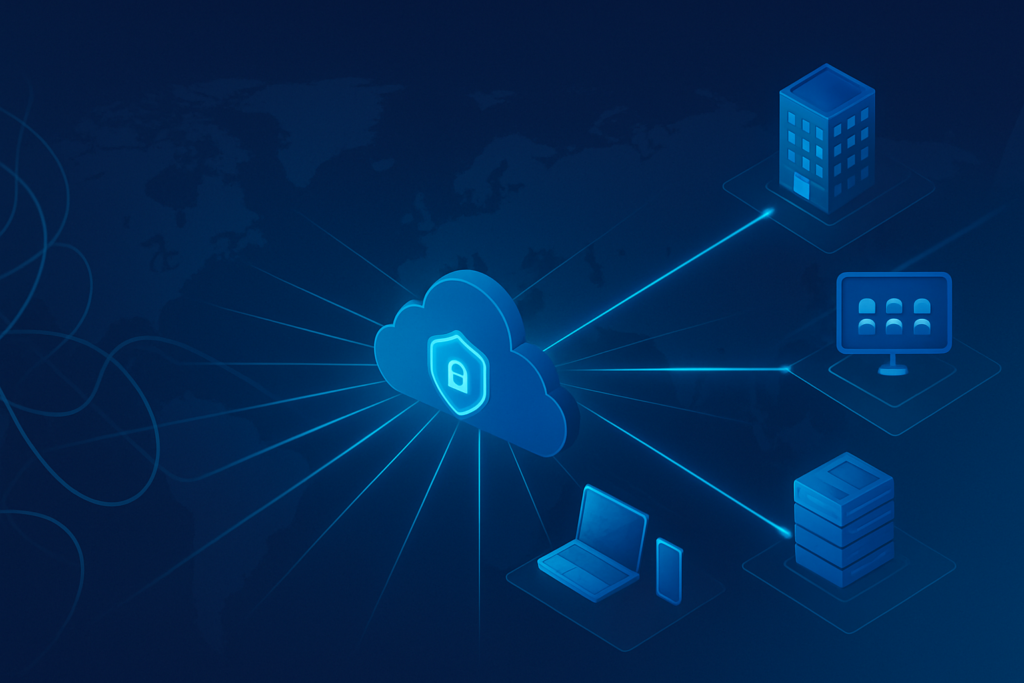
A SASE Firewall is a cloud-delivered security solution that provides firewall protection, traffic inspection, and access control for users, devices, and applications regardless of their location.
Unlike traditional firewalls that are installed as physical appliances inside data centers or branch offices, a SASE Firewall operates through cloud infrastructure. This allows organizations to deliver security services closer to users while maintaining centralized control over security policies.
A SASE Firewall typically combines several security capabilities, including:
- Firewall as a Service (FWaaS)
- Secure Web Gateway (SWG)
- Zero Trust Network Access (ZTNA)
- Cloud Access Security Broker (CASB)
- Secure SD-WAN
- Advanced threat detection and prevention
Instead of managing multiple security solutions separately, businesses can use a unified security approach to monitor traffic, control access, and protect sensitive resources.
As organizations continue adopting cloud services and supporting distributed workforces, security models have shifted from protecting network boundaries to securing users wherever they work. Microsoft guidance for securing remote and hybrid work explains why modern organizations are embracing Zero Trust principles to protect employees, devices, and applications in hybrid environments. A SASE Firewall complements this approach by delivering consistent security closer to users, regardless of where they connect.
For organizations exploring how this technology supports modern security strategies, SASE Firewall benefits for modern networks provides insights into how SASE architecture improves protection, visibility, and scalability.
Why Hybrid and Remote Work Creates Security Challenges
Hybrid work has changed the way employees access business resources. While it provides flexibility, it also expands the number of potential entry points attackers can target.
Some common security challenges include:
Increased Attack Surface
Remote employees often connect from home networks, personal devices, or public internet connections. These environments may not have the same security controls as corporate networks, increasing the risk of cyber threats.
Limited Visibility Across Users and Devices
When employees work from different locations, security teams may struggle to monitor activity and identify unusual behavior. Limited visibility can make it harder to detect potential threats early.
Growing Cloud Security Concerns
Organizations now rely heavily on cloud applications for communication, collaboration, and daily operations. Without proper security controls, sensitive information can be exposed through unauthorized access or misconfigured applications.
Complex Access Management
Managing secure access for employees, contractors, and partners requires strong identity verification and appropriate access controls.
A SASE Firewall helps solve these challenges by providing security controls that follow users and applications rather than depending only on physical network locations.
How Does a SASE Firewall Protect Remote Users?
A SASE Firewall secures remote and hybrid workers by inspecting network traffic and applying security policies through cloud-based infrastructure.
The process generally works as follows:
- A user attempts to access a business application or online resource.
- The connection is routed through a cloud security service.
- The user’s identity and device information are verified.
- Security policies determine whether access should be allowed.
- Traffic is inspected for potential threats.
- Approved connections are securely delivered to the requested destination.
This approach ensures employees receive consistent security protection regardless of whether they are working from an office, home, or another location.
Key Ways a SASE Firewall Strengthens Hybrid Work Security
1. Provides Consistent Security Across Locations
One of the biggest challenges of hybrid work is maintaining the same security standards across multiple environments.
A SASE Firewall allows organizations to apply centralized security policies across offices, remote employees, and cloud applications. This reduces security gaps caused by different network conditions.
Whether an employee connects from a corporate office or a home workspace, the same security framework can be applied.
2. Strengthens Identity-Based Access Control
Modern cybersecurity is moving away from traditional approaches that automatically trust users based on their network location.
A SASE Firewall supports identity-based security by evaluating factors such as:
- User identity
- Device security status
- Access permissions
- Application requirements
Rather than automatically trusting users based on their network location, modern security strategies based on Zero Trust continuously verify identity, device health, and access permissions before granting access. This helps organizations reduce the risk of unauthorized access from compromised users or devices.
This reduces the chances of unauthorized access caused by stolen credentials or compromised devices.
3. Protects Cloud Applications and Business Data
Cloud applications have become essential for modern organizations, but they also create new security risks.
Employees may access business applications from different devices and locations, making it challenging to maintain visibility and control.
A SASE Firewall helps organizations monitor cloud traffic, enforce security policies, and protect sensitive business information while allowing employees to remain productive.
Businesses that operate multiple locations, such as restaurant chains, increasingly depend on cloud-based ordering systems, payment platforms, and employee management tools. For example, companies like Burger King require secure access to these systems across numerous locations, making cloud-delivered security solutions an important consideration.
4. Reduces Dependence on Traditional VPN-Based Access
Many organizations rely on VPNs to provide remote access, but traditional VPN infrastructure can become difficult to manage as remote workforces grow.
Common challenges include:
- Limited scalability
- Performance issues
- Increased network congestion
- Complex maintenance
A SASE Firewall provides a more flexible approach by combining secure access with security inspection through cloud-based services.
Instead of forcing all traffic through centralized networks, organizations can provide secure access based on user identity and application requirements.
5. Simplifies Security Operations
Managing multiple security tools can increase complexity for IT teams. Organizations often need separate solutions for firewall protection, remote access, web filtering, and threat monitoring. A SASE Firewall brings these capabilities together in a unified platform, making security management more efficient.
A SASE Firewall combines these capabilities into a unified platform, helping security teams manage policies, monitor activity, and respond to threats more efficiently.
SASE Firewall vs Traditional Remote Access Security
| Traditional Security Approach | SASE Firewall |
| Protects fixed network locations | Protects users and applications anywhere |
| Often depends on VPN infrastructure | Uses cloud-based secure access |
| Limited visibility into remote activity | Centralized monitoring and control |
| Requires hardware deployment | Delivered through scalable cloud services |
| Designed around network boundaries | Designed around identity and access |
The main difference is that traditional security focuses on protecting a specific network, while SASE Firewall focuses on protecting users, devices, applications, and data wherever they operate.
Who Should Consider a SASE Firewall?
A SASE Firewall can benefit organizations that:
- Support hybrid or remote employees
- Use multiple cloud applications
- Have distributed teams
- Need stronger access controls
- Manage sensitive business information
- Want simplified security management
Industries such as healthcare, finance, education, technology, and professional services can benefit from adopting SASE-based security strategies.
Organizations in industries such as healthcare, finance, education, technology, retail, and hospitality can benefit from adopting SASE-based security strategies. Large restaurant chains like Burger King also rely on cloud-based systems, digital ordering platforms, and geographically distributed locations, making secure network access an important part of modern business operations.
Challenges to Consider Before Implementing a SASE Firewall
Although SASE provides several benefits, organizations should carefully plan their implementation.
Important considerations include:
- Reviewing current security infrastructure
- Understanding application requirements
- Ensuring compliance needs are met
- Integrating existing identity systems
- Training security teams
A phased deployment approach can help businesses transition smoothly while reducing disruption.
The Future of Security for Hybrid Work
Hybrid work is expected to remain an important part of modern business operations. As organizations continue adopting cloud services and supporting distributed teams, security strategies must continue evolving.
Future security environments will focus more on:
- Cloud-native protection
- Identity-based security
- Automated threat detection
- Continuous monitoring
- AI-driven security operations
A SASE Firewall provides the foundation needed for this future by delivering security that adapts to changing business requirements.
Frequently Asked Questions About SASE Firewall
1. Can a SASE Firewall secure employees working from public locations?
Yes. A SASE Firewall can protect users accessing company resources from locations such as airports, hotels, or coworking spaces by applying security policies before allowing access.
2. Does a SASE Firewall improve security without affecting employee productivity?
Yes. By delivering security through cloud infrastructure closer to users, SASE Firewall can help maintain strong protection while supporting faster and smoother access to business applications.
3. Can organizations use SASE Firewall with existing security solutions?
Yes. Many organizations gradually adopt SASE alongside existing security technologies and transition based on their business requirements and security goals.
4. How does a SASE Firewall help businesses manage growing remote teams?
A SASE Firewall allows organizations to apply consistent security policies as teams expand, making it easier to support new users and locations without deploying additional physical infrastructure.
Read More From Techbullion