Booking a new hot water cylinder is one of those jobs most people only do once every decade or two, which is exactly why the process feels like a mystery the first time around. Between choosing a cylinder type, working out whether the job needs consent, and figuring out how long you’ll be without hot water, it helps to know what a typical installation looks like before a tradesperson ever turns up at your door.
Before Anyone Picks Up a Spanner
A proper installation starts well before the physical work. A licensed plumber (and, for gas systems, a registered gasfitter) will typically want to see the site first, either in person or via photos, to check a few things: where the existing cylinder sits, how old the pipework is, what the water pressure is like, and whether the space suits the replacement system you’re after. This is also when they’ll flag anything unusual — an awkward roof cavity, a cylinder that’s outgrown its cupboard, or old copper pipework that may need attention alongside the main job.
This is also the point where most homeowners start comparing quotes. Get more than one if you can — the scope of work (and therefore the price) can vary surprisingly between two quotes for what looks like “the same” job on paper.
What Determines the Scope of the Job
A mains-pressure cylinder installed outdoors — a common setup where roof or cupboard space is limited.
Not all installations are equal, and the difference usually comes down to whether you’re doing a straightforward swap or a system change.
A like-for-like replacement — same type, same size, same location — is generally the simplest and quickest job, since the pipework, wiring, and mounting are already in place. Moving from one system type to another is a bigger undertaking. Switching from a low-pressure to a mains-pressure cylinder, for instance, often means new pipework and possibly an upgraded electrical or gas connection. Moving from electric storage to a heat pump hot water system adds outdoor unit placement and refrigerant line work into the mix. And converting to gas — particularly a continuous-flow unit — brings gas line installation and flueing into the job, which is a big part of why gas hot water installation tends to sit at the more involved end of the spectrum compared with a straight electric cylinder swap.
Site access plays a role too. A cylinder tucked into a tight roof space or an awkward airing cupboard takes longer to remove and reinstall than one in an open garage or basement, and that extra time and labour shows up in the final invoice.
Indoor or Outdoor: Why It Matters for the Install
Where the cylinder lives changes the practical side of the job. Indoor installations — in a cupboard, laundry, or roof space — have to account for weight (a full cylinder is heavy, so flooring and bracing matter), access for future servicing, and adequate drainage in case of a leak or pressure relief valve discharge. Roof-space installations in particular usually need a properly built platform and safe tray, plus easy access for the installer.
Outdoor installations, common for heat pump and some mains-pressure systems, call for a stable, level base, some weatherproofing, and enough clearance around the unit for airflow and servicing — heat pump systems especially need unobstructed air intake and exhaust to run efficiently. Positioning matters for noise too, since heat pump compressors do produce some running noise that a nearby bedroom window or neighbour might pick up on.
Neither location is inherently better — it depends on your home’s layout, the system you’re choosing, and sometimes council rules about setback from boundaries for outdoor equipment.
Consents, Compliance, and Why You Shouldn’t DIY This
An indoor cylinder installation in a dedicated cupboard space.
Hot water cylinder work in New Zealand isn’t a weekend DIY project, and for good reason — a badly installed cylinder is a genuine safety and property-damage risk, from scalding through to flooding a ceiling cavity. Installation work generally needs to be carried out or supervised by a suitably licensed plumbing professional, and gas work specifically needs a registered gasfitter. Depending on the scope — particularly for pressure changes, structural work, or a full system relocation — building consent from your local council may also be required.
Requirements can vary depending on your council and the specifics of the job, so confirm directly with your installer or council rather than assuming your situation matches a neighbour’s or something you read in a forum post. A reputable installer will usually know straight away whether your job needs a consent and will handle the paperwork as part of the quote.
On Installation Day
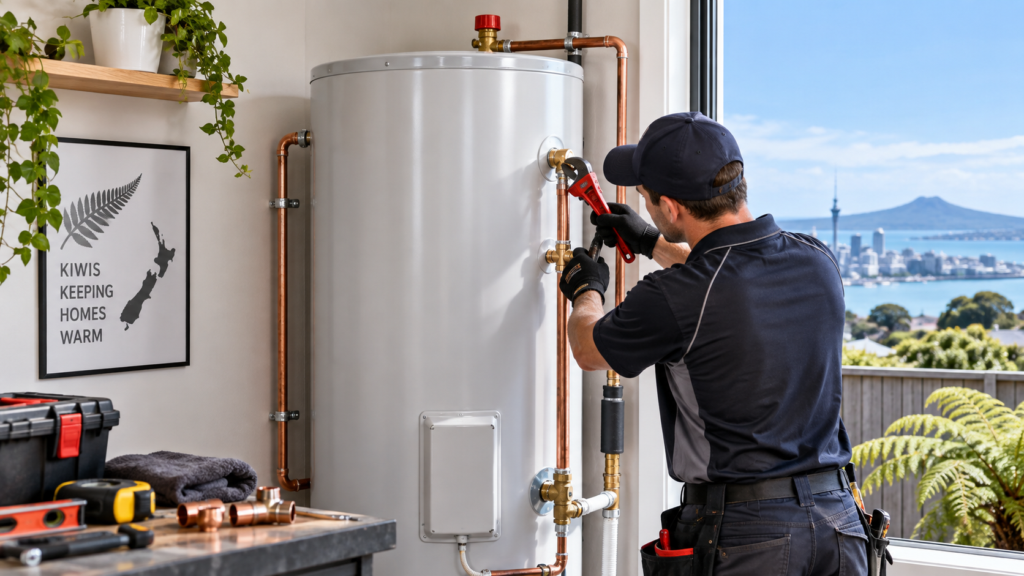
For a straightforward swap, many installations are completed in a single day, though more involved jobs — new gas lines, pressure upgrades, or awkward access — can stretch over two or more days. The general sequence looks like this: the old cylinder is drained and disconnected, isolated from water, power, or gas supply as needed; it’s removed (sometimes the trickiest part, depending on access); the new unit is positioned and connected to plumbing, and electrical or gas supply as relevant; the system is filled, pressure-tested, and checked for leaks; and finally, safety devices like the pressure relief valve and any temperature controls are tested before the installer talks you through basic operation and maintenance.
You should expect the hot water to be off for at least part of the day, so it makes sense to time the job for a day when that’s manageable, and to raise this with your installer in advance.
What Drives the Cost
This is usually the first question homeowners want answered, and the honest answer is that it depends on several variables rather than one flat number. Cylinder type is the biggest factor — entry-level electric storage systems generally sit at the more affordable end, while heat pump and gas continuous-flow systems typically involve higher upfront costs, offset over time by different running-cost profiles. Cylinder size, brand (well-known NZ-market names include Rheem, Thermann, Rinnai, Apricus, Haier, Reclaim, and EcoSpring), site access, and whether the job is a like-for-like swap or a full system change will all move the number as well. Any additional electrical, gas, or plumbing work uncovered during the site visit — old wiring, corroded pipework, undersized gas lines — can also add to the final figure.
Because of that variability, quoted price ranges you see online are only ever a rough guide. The most reliable way to know what your specific job will cost is to get an actual hot water cylinder installation cost estimate based on your home, your existing setup, and the system you’re considering, rather than relying on a generic average that may not reflect your situation at all.
Getting Ready to Book
If you’re at the stage of comparing options, get a few things ready before you call for quotes: your current cylinder type and rough age, the number of bathrooms and household size (which affects sizing), whether you’re open to changing system type, and any known access constraints like roof space or narrow hallways. Coming to that first conversation with those details means the quote you get back is more likely to reflect the real cost of your actual job, rather than a generic estimate that changes once someone sees the site in person.